
 Worksheets
6.6E- Chemical Changes TEST REV 25
Total questions: 45
Worksheet time: 36mins
Liam and Aria are having a debate: Is burning wood a chemical or physical change? Help them settle this by choosing the correct option!
chemical
physical
Mia and Rohan are in a science class. Mia asks, "Hey Rohan, do you think glass breaking is a (a) change?"
chemical
physical
Evelyn and Kai found an old bicycle in the backyard. Is the rusting bicycle a chemical or physical change?
chemical
physical
Zoe and Liam are building a treehouse! Hammering wood together to create their masterpiece is a (a) change.
chemical
physical
Nora and Mia are conducting a science experiment. Which of the following examples shows that a chemical reaction has occurred?
A rock breaks into smaller pieces when it is struck with a hammer.
Rust forms on a hammer that has been left outside too long.
A cup of water turns pink when a few drops of red food coloring are added.
A solid is formed when heat is removed from a sample of water.
During a fun science experiment, Kai, Arjun, and Samuel are observing different scenarios. Which of the following shows clear evidence of a chemical reaction taking place?
A sample of zinc is placed in water and it settles to the bottom
A solid block of ice is heated and it completely melts into a liquid.
Sugar that is burned gives off an odor and turns brown and then black.
A tomato is placed into a blender and chopped up into smaller pieces.
Nora and Emma are in the lab, and they notice something fascinating! Evidence of a chemical reaction is anything that shows -
a new substance has formed
a solid dissolved in a liquid
interaction between 2 gases
a change in the state of matter
In a magical potion class, Luna and Scarlett mixed two mysterious liquids. What surprising result did they observe? A precipitate is a
liquid that forms when two solids are reacted
a solid that forms when two liquids are mixed
a gas that forms when vinegar and baking soda react
a change of color in a solution
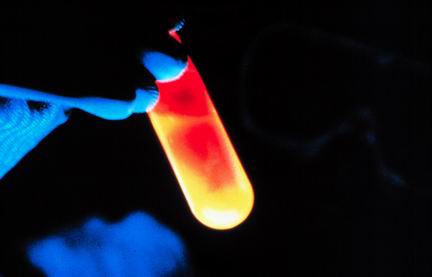
(a) is NOT an example of a physical change.

Which experiment describes a chemical change? (a)
Experiment 3
Experiment 4

The student inferred that a chemical reaction occurred. What evidence supports this inference?
The zinc metal remained silver-colored and shiny

In an experiment, two flasks of unknown, clear liquids are combined in a beaker and the following observations are obtained:
I. Solution color remains clear;
II. The amount of solution in the beaker increased;
III. Solution temperature changed from 10C to 20C; and
IV. Some of the liquid remained in the flasks.
How many of the listed observations indicate a new substance was formed?
1
2
3
4
Check every box that identifies evidence of chemical reactions?
Changes the state of matter
Color change (Unexpected)
Gas, bubbles or fizzing
Emits light, sound or heat
Precipitate


An gel ice pack getting cold after you put it in the freezer for an hour.
Chemical Change
Physical Change
This is when heat is absorbed, it is an (a)
When heat is released it is an
exothermic reaction
endothermic reaction
both
none
If a chemical reaction is EXOTHERMIC, the temperature would (a)
In an endothermic reaction, heat is (a)
A chemical change has occurred if the substance (a)
Match the following observations with the type of evidence for a chemical change.
Production of a gas
Bubbles forming in a liquid
Change in thermal energy
Heat being released or absorbed
Formation of a precipitate
Solid forming in a solution
Color change
Substance changing color
Match the following observations with the correct conclusions.
A physical change has occurred
The shape of a solid changes but no new substance is formed.
A chemical change has occurred
Two substances react and produce heat and a new substance.
No change has occurred
There is no observable change in the properties of the substances.
The chemicals are dissolving
A solid dissolves in a liquid without any temperature change.
During an experiment, a student observes a color change when two substances are mixed. This provides (a)

Dissolving sugar in water is a (a) change.
Which of the following is an example of a chemical change?
Melting ice
Burning paper
Boiling water
Breaking glass

What category of elements is shaded in the periodic table?
Metals
Nonmetals
Metalloids
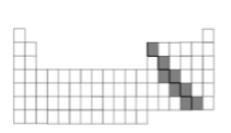
What category of elements is shaded in the periodic table?
Metalloids
Metals
Nonmetals
Roger is examining an object in science class. It is dull, yellow, and a brittle solid. The sample is most likely a—
Metal
Nonmetal
Metalloid
Nobel gas
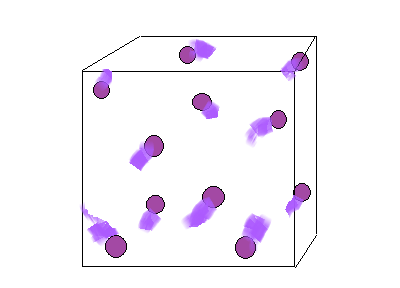
Match the following phases with their descriptions.
Solids
Has a definite shape and volume
Liquids
Flows and takes the shape of its container
Gas
Expands to fill its container
Carousso
Fictional phase

Which of the following substances is more dense? Why?
A - more compact
A - less compact
B - more compact
B - less compact

Which solid object shown is most dense?
Object 1
Object 2
Object 3
Object 4

Identify which images are HETEROGENEOUS MIXTURES! (Check all that apply)


In a thrilling science lab adventure, sixth-grade students, including the curious Aiden, the inventive Avery, and the brilliant Maya, embarked on an experiment to uncover the mysteries of density. Dive into their findings and select TWO correct statements from the results of their experiment.
The cork is denser than wood because the cork floated in the water.
The wood is less dense than water because the wood floated in the water.
The aluminum is denser than tap water because the aluminum sinks in tap water.
The aluminum is less dense than tap water because the aluminum sinks in tap water.
Match the following descriptions with the correct classification for air:
pure substance - element
Contains only one type of atom
pure substance - compound
Composed of two or more elements chemically combined
homogenous mixture
Uniform composition throughout
heterogeneous mixture
Non-uniform composition with distinct phases

