
 Worksheets
Tech+ 3.3 Questions
Total questions: 28
Worksheet time: 14mins
What is an Internet Service Provider (ISP)?
A company that provides Internet access
A type of computer software
A hardware device
A social media platform
Fill in the blank: Many ISPs offer _______ addresses and website hosting.
postal
physical
temporary
What is one of the key factors to consider when selecting an Internet Service Provider (ISP)?
The color of the ISP's logo
The ISP's performance reports
The ISP's office location
The ISP's employee uniforms.
A modem is a device that _______ the Internet signal to a form that your devices can use.
A) amplifies
B) modulates and demodulates
C) encrypts
D) compresses
What is the typical range for download speed allocation by ISPs?
10% to 20%
20% to 30%
80% to 90%
95% to 100%
An asymmetric Internet connection means the download speed is much faster than the ______ speed.
upload
download
broadband
high-speed

What are the basic elements required for cable Internet?
Coaxial cable, modem, router
Fiber optic cable, modem, router
Satellite dish, modem, router
DSL line, modem, router

Cable Internet speed can range from ___ to ___.
1 Mbps to 100 Mbps
10 Mbps to 2 Gbps
5 Mbps to 500 Mbps
20 Mbps to 1 Gbps
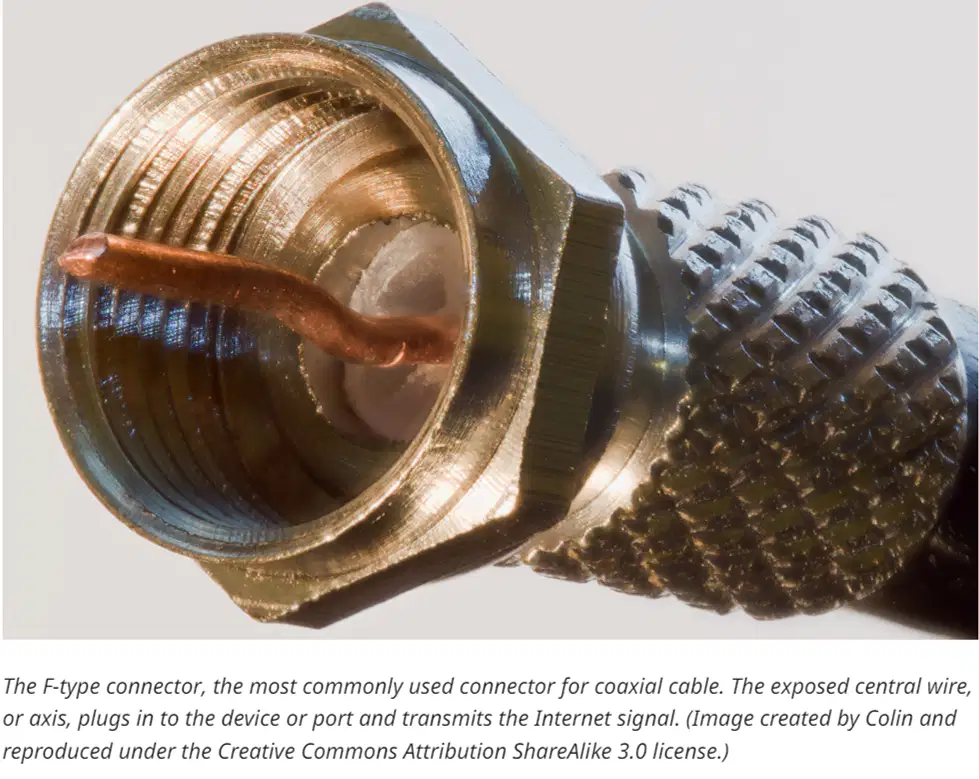
What is the most commonly used connector for coaxial cable?
USB Connector
HDMI Connector
F-type Connector
Ethernet Connector
Cable Internet is different from other Internet services because the connection to a house or business is ______ with other people nearby.
faster
slower
shared
private
What equipment is required for DSL Internet?
A) Telephone line, modem, router
B) Fiber optic cable, modem, router
C) Satellite dish, modem, router
D) Coaxial cable, modem, router
DSL Internet speed can range from 5 Mbps up to ___ Mbps, depending on location and wire quality.
10
30
50
100

What is the main difference between ADSL and SDSL?
ADSL is faster for uploading than downloading
SDSL has equal upload and download speeds
ADSL is used by businesses
SDSL is slower than ADSL.

DSL Internet can go as fast as ___ Mbps, but some can reach up to ___ Mbps.
A) 10, 50
B) 30, 100
C) 50, 150
D) 100, 200
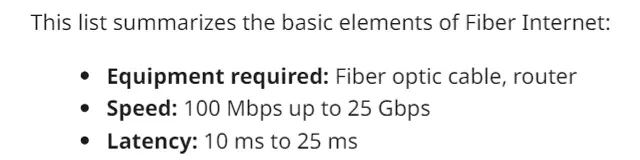
What is the required equipment for Fiber Internet?
Copper wires and modem
Fiber optic cable and router
Satellite dish and receiver
Coaxial cable and modem
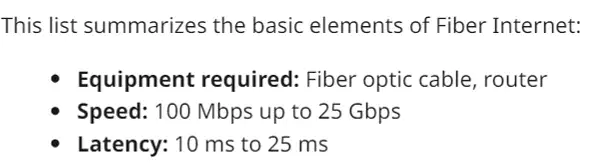
Fiber optic cables can achieve speeds up to ___ Gbps.
10
25
50
100
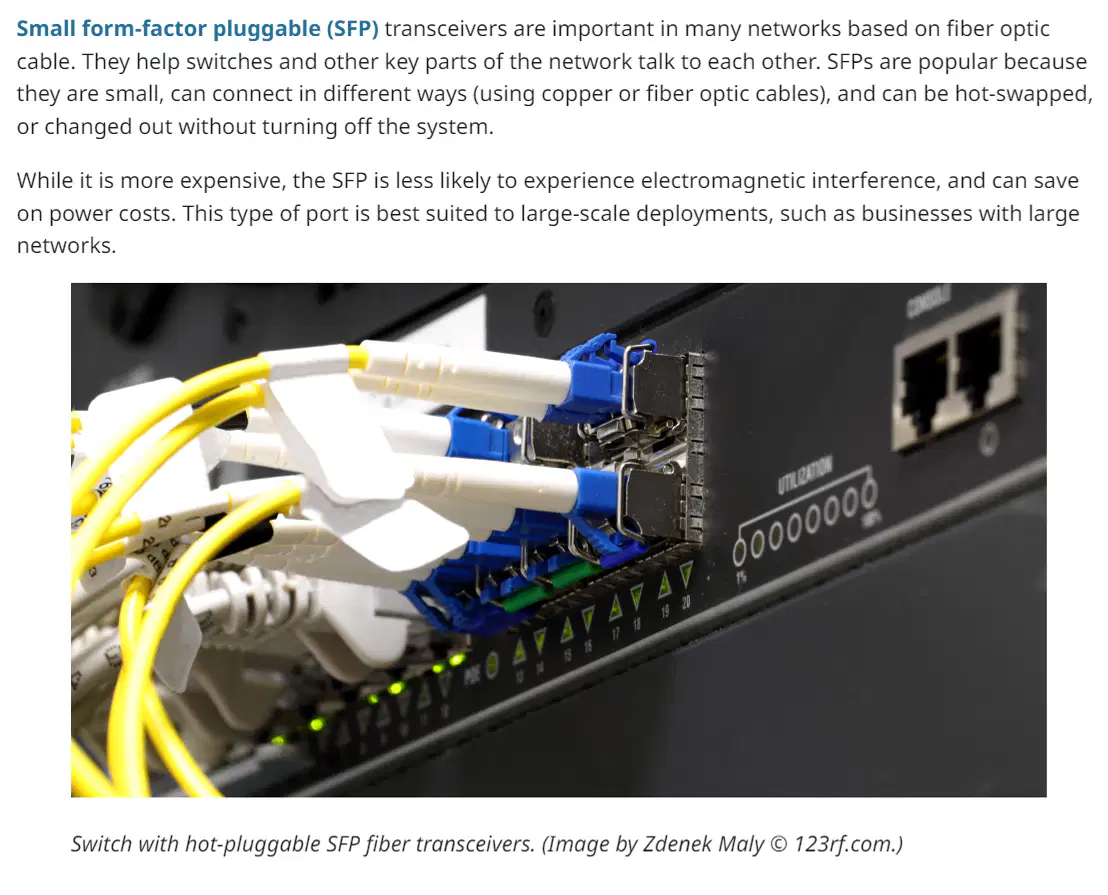
What is one advantage of using Small form-factor pluggable (SFP) transceivers in networks?
They are more expensive
They can be hot-swapped
They require a modem
They are less reliable.
Fiber Internet is different from traditional cable and DSL because it doesn't need a ______.
Router
Modem
Switch
Hub
What is the maximum speed that fiber optic cables have been able to achieve?
10 Gbps
25 Gbps
50 Gbps
100 Gbps
Fiber optic cables offer very high speed symmetric connections. If you have a download speed of 500 Mbps, what will your upload speed be?
250 Mbps
400 Mbps
500 Mbps
750 Mbps
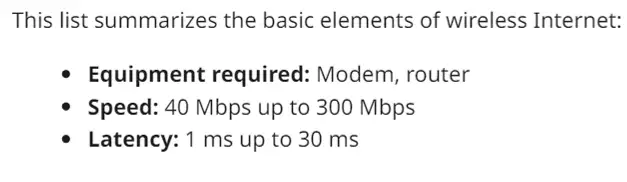
What equipment is required for wireless Internet?
A) Modem, router
B) Cable, modem
C) Satellite, router
D) Antenna, modem
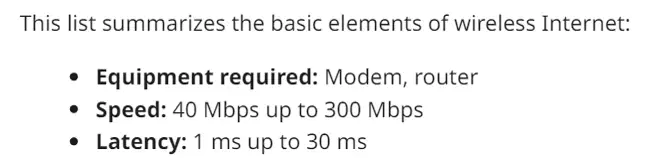
Fill in the blank: Wireless Internet speed ranges from 40 Mbps up to ____ Mbps.
100
200
300
400
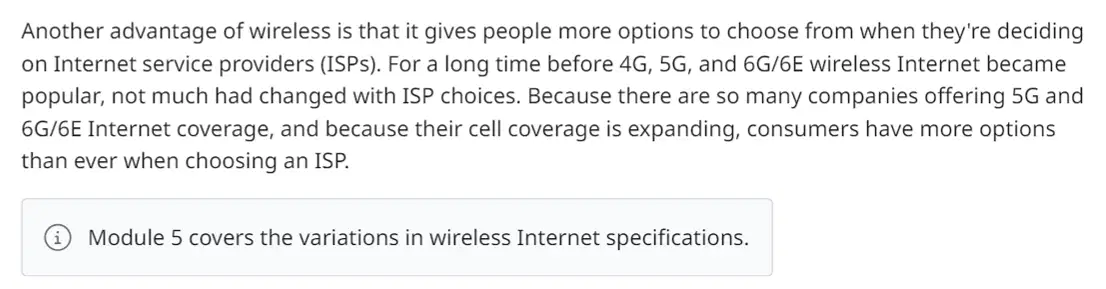
What is the newest kind of network technology mentioned in the text?
4G
5G
6G and 6E
3G
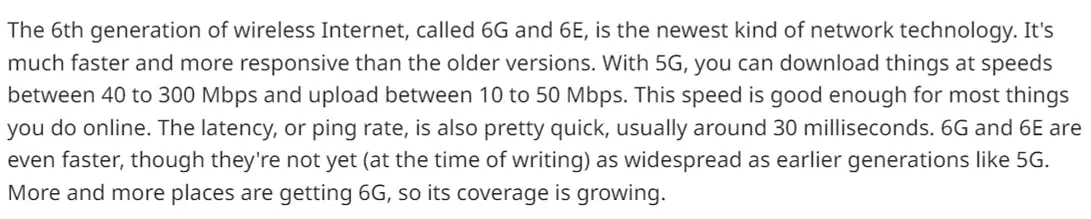
With 5G, you can download things at speeds between 40 to ___ Mbps.
100
200
300
400
Which of the following is NOT a provider of satellite Internet?
HughesNet
Viasat
Starlink
Comcast
Satellite Internet is often the only option in ______ areas where other types of Internet can't reach.
urban
rural
suburban
coastal
What is the main equipment required for setting up fixed wireless Internet?
A) Antenna, modem, router
B) Fiber cable, modem, router
C) Satellite dish, modem, router
D) Coaxial cable, modem, router
Fixed wireless Internet speeds generally range from 15 to 30 Mbps for download. In the right environment, speeds can be as fast as ___ Mbps.
50
75
100
150

