wayground logo

Free Printable Worksheets

Font size

S
M
L
XL
Worksheets

L5 Ore Deposits Classification

Total questions: 148

Worksheet time: 1hrs 6mins

Name
Class
Date
1.
What are the four main bases for classifying ore deposits?
a)
Origin, mineralogy, host rocks, and formation processes
b)
Depth, temperature, pressure, and composition
c)
Color, texture, hardness, and structure
d)
Age, location, size, and accessibility
2.
Which of the following is an example of a magmatic ore deposit?
a)
Skarn
b)
Chromite
c)
Placer gold
d)
Banded iron formations
3.
Which type of ore deposit forms from circulating hot, metal-rich fluids?
a)
Magmatic ore deposits
b)
Hydrothermal ore deposits
c)
Sedimentary ore deposits
d)
Metamorphic ore deposits
4.
Porphyry deposits are a subtype of which ore deposit class?
a)
Hydrothermal
b)
Magmatic
c)
Sedimentary
d)
Supergene
5.
Which ore deposit type forms from chemical precipitation or sedimentary processes?
a)
Sedimentary ore deposits
b)
Magmatic ore deposits
c)
Hydrothermal ore deposits
d)
Metamorphic ore deposits
6.
Which ore deposit type is associated with metamorphic processes, often involving fluid movement?
a)
Supergene ore deposits
b)
Metamorphic ore deposits
c)
Hydrothermal ore deposits
d)
Sedimentary ore deposits
7.
What is an example of a sedimentary ore deposit?
a)
Banded iron formations (BIFs)
b)
Chromite
c)
Skarn
d)
Platinum group elements
8.
Which type of ore deposit forms through the weathering and enrichment of primary mineral deposits?
a)
Supergene ore deposits
b)
Magmatic ore deposits
c)
Hydrothermal ore deposits
d)
Metamorphic ore deposits
9.
Which of the following is a type of ore deposit classified based on shape and form?
a)
Vein deposits
b)
Layered mafic intrusions
c)
Magmatic metasomatic deposits
d)
Epithermal deposits
10.
Disseminated deposits are characterized by:
a)
Ore minerals spread diffusely throughout the host rock
b)
Ore minerals concentrated in fractures
c)
Large, homogeneous bodies of ore
d)
Thin layers of ore minerals within host rocks
11.
Which of the following is an example of an igneous-hosted ore deposit?
a)
Chromite in ultramafic rocks
b)
Placer gold
c)
Banded iron formations
d)
Mississippi Valley-type lead-zinc deposits
12.
Metamorphic-hosted ore deposits are commonly associated with which geological feature?
a)
Greenstone belts
b)
Banded iron formations
c)
Ultramafic intrusions
d)
Kimberlite pipes
13.
Which ore deposit type is associated with orogenic belts?
a)
Orogenic gold deposits
b)
Porphyry copper deposits
c)
VMS deposits
d)
Mississippi Valley-type deposits
14.
Which type of ore deposit forms at divergent plate boundaries, typically along mid-ocean ridges?
a)
VMS deposits
b)
BIFs
c)
Orogenic gold deposits
d)
Epithermal gold deposits
15.
Which tectonic setting is associated with porphyry copper deposits?
a)
Continental and island arcs
b)
Stable cratonic regions
c)
Passive margins
d)
Foreland basins
16.
Which deposit type is characterized by iron-oxide Cu-Au (IOCG) mineralization?
a)
Orogenic gold deposits
b)
Porphyry copper deposits
c)
Epithermal gold deposits
d)
Iron-oxide copper-gold deposits
17.
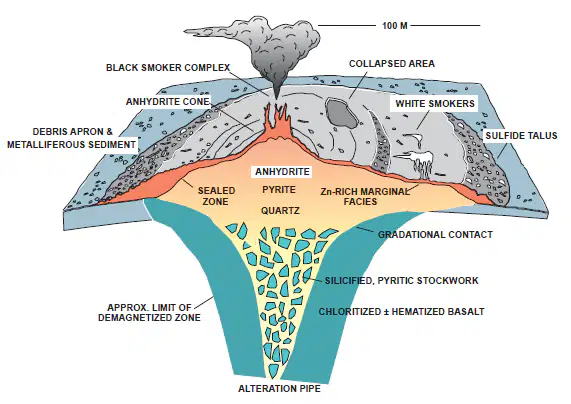
Which ore deposit type forms in mid-ocean ridge settings and is often associated with black smokers?
a)
VMS deposits
b)
Orogenic gold deposits
c)
Epithermal deposits
d)
Kimberlite pipes
18.
Which type of deposit is typically associated with convergent margins and contains high concentrations of copper, molybdenum, and gold?
a)
Porphyry systems
b)
Epithermal systems
c)
Mississippi Valley-type deposits
d)
Skarn deposits
19.
Which geological feature often hosts large volumes of mineralized veins in porphyry systems?
a)
Stockwork veins
b)
Kimberlite pipes
c)
BIFs
d)
Pegmatites
20.
Which alteration zone in porphyry deposits typically contains the highest concentrations of metals?
a)
Potassic zone
b)
Phyllic zone
c)
Argillic zone
d)
Propylitic zone
21.
What is a key characteristic of porphyry deposits?
a)
High metal concentrations in small ore bodies
b)
Large, low-grade ore bodies
c)
Deep-sea formation
d)
Formation at high pressure and temperature
22.
Which type of alteration zone is typically closest to the core of a porphyry deposit?
a)
Phyllic
b)
Potassic
c)
Argillic
d)
Propylitic
23.
What geological structure often hosts the ore in porphyry systems?
a)
Stockwork veins
b)
Kimberlite pipes
c)
Banded iron formations
d)
Magmatic intrusions
24.
Porphyry deposits are most commonly associated with which plate boundary type?
a)
Divergent
b)
Transform
c)
Convergent
d)
Passive margins
25.
In porphyry deposits, which metal is typically found in the core zone?
a)
Lead
b)
Copper
c)
Molybdenum
d)
Gold
26.
Which of the following processes contributes to the formation of porphyry deposits?
a)
Magmatic differentiation
b)
Evaporation
c)
Erosion of sedimentary rocks
d)
Sedimentary exhalation
27.
Which exploration technique is commonly used to identify sulfide-rich ore bodies in porphyry systems?
a)
Gravity surveys
b)
Electromagnetic surveys
c)
Seismic surveys
d)
Thermal imaging
28.
What is the primary purpose of reverse circulation (RC) drilling in exploration for porphyry deposits?
a)
To analyze surface rocks
b)
To quickly and cost-effectively obtain drill samples
c)
To extract continuous core samples
d)
To map subsurface geophysical anomalies
29.
In porphyry exploration, which of the following is typically analyzed for metal anomalies?
a)
Magnetic anomalies
b)
Soil samples
c)
Igneous rock outcrops
d)
Banded iron formations
30.
Epithermal deposits typically form in which part of the Earth's crust?
a)
Upper crust
b)
Lower crust
c)
Mantle
d)
Mid-ocean ridges
31.
Which mineral is commonly associated with epithermal low-sulfidation deposits?
a)
Quartz
b)
Chromite
c)
Magnetite
d)
Ilmenite
32.
High-sulfidation epithermal deposits are typically enriched in which elements?
a)
Gold, silver, copper
b)
Zinc, lead, iron
c)
Platinum, palladium, rhodium
d)
Cobalt, nickel, manganese
33.
What geological process is key to the formation of epithermal gold and silver deposits?
a)
Magma cooling
b)
Boiling of hydrothermal fluids
c)
Erosion of host rocks
d)
Deep-sea sedimentation
34.
Which geological feature often controls the movement of hydrothermal fluids in epithermal systems?
a)
Faults and fractures
b)
Plutonic intrusions
c)
Sedimentary basins
d)
Banded iron formations
35.
Low-sulfidation epithermal deposits are commonly associated with which alteration type?
a)
Quartz-adularia-sericite alteration
b)
Skarn alteration
c)
Propylitic alteration
d)
Argillic alteration
36.
Volcanogenic massive sulfide (VMS) deposits typically form in which tectonic environment?
a)
Mid-ocean ridges
b)
Convergent margins
c)
Stable cratonic basins
d)
Continental shelves
37.
Which metals are typically found in VMS deposits?
a)
Copper, zinc, lead
b)
Gold, silver, platinum
c)
Nickel, cobalt, manganese
d)
Uranium, thorium, rare earth elements
38.
Which geological process is responsible for the formation of VMS deposits?
a)
Hydrothermal circulation in volcanic settings
b)
Magma crystallization in ultramafic intrusions
c)
Chemical precipitation in sedimentary basins
d)
Weathering of primary mineral deposits
39.
What type of alteration commonly surrounds VMS deposits?
a)
Sericite-chlorite-quartz alteration
b)
Potassic alteration
c)
Skarn alteration
d)
Argillic alteration
40.
Which feature often marks the surface expression of a VMS deposit?
a)
Gossans
b)
Kimberlites
c)
Pegmatites
d)
Porphyritic intrusions
41.
VMS deposits are typically zoned with which metal concentrated near the hydrothermal vent?
a)
Copper
b)
Zinc
c)
Lead
d)
Iron
42.
What is the primary metal found in Mississippi Valley-Type (MVT) deposits?
a)
Lead
b)
Copper
c)
Gold
d)
Iron
43.
Which type of rock typically hosts MVT deposits?
a)
Carbonates (limestone and dolostone)
b)
Ultramafic rocks
c)
Granitic intrusions
d)
Banded iron formations
44.
MVT deposits are formed from which type of fluid?
a)
Low-temperature basinal brines
b)
High-temperature magmatic fluids
c)
Hydrothermal fluids from subduction zones
d)
Meteoric water infiltrating fault zones
45.
Which tectonic setting is associated with the formation of MVT deposits?
a)
Passive margins
b)
Stable continental interiors
c)
Mid-ocean ridges
d)
Convergent margins
46.
What is the main method for identifying subsurface MVT deposits?
a)
Geochemical surveys of surface rocks
b)
Drilling and analyzing core samples
c)
Remote sensing and aerial photography
d)
Surface mapping of gossans
47.
Which mineral is commonly found in association with lead and zinc in MVT deposits?
a)
Barite
b)
Quartz
c)
Chromite
d)
Hematite
48.
Which process is most important for the formation of skarn deposits?
a)
Metasomatism
b)
Sedimentary deposition
c)
Magma crystallization
d)
Subduction zone tectonics
49.
Skarn deposits are most commonly associated with which type of host rock?
a)
Carbonate rocks
b)
Ultramafic rocks
c)
Banded iron formations
d)
Shale and sandstone
50.
Which minerals are typically formed in skarn deposits?
a)
Garnet, pyroxene, and wollastonite
b)
Chromite, magnetite, and ilmenite
c)
Pyrite, chalcopyrite, and molybdenite
d)
Quartz, feldspar, and mica
51.
What is the typical host rock for porphyry copper deposits?
a)
Porphyritic intrusive rocks
b)
Carbonates
c)
Ultramafic intrusions
d)
Shales and sandstones
52.
In porphyry systems, which metal is typically found in the outer zones?
a)
Zinc
b)
Copper
c)
Molybdenum
d)
Lead
53.
What is the typical size and grade of porphyry copper deposits?
a)
Small and high-grade
b)
Large and low-grade
c)
Small and low-grade
d)
Large and high-grade
54.
What type of survey is commonly used to detect magnetic anomalies associated with porphyry intrusions?
a)
Electromagnetic surveys
b)
Magnetic surveys
c)
Seismic surveys
d)
Gravity surveys
55.
Which mineral is most commonly associated with porphyry copper deposits?
a)
Chalcopyrite
b)
Magnetite
c)
Chromite
d)
Pyroxene
56.
Which type of alteration zone in porphyry deposits is often the most economically valuable?
a)
Potassic
b)
Phyllic
c)
Argillic
d)
Propylitic
57.
What is a key characteristic of epithermal deposits?
a)
They form near the Earth's surface
b)
They are associated with ultramafic rocks
c)
They are exclusively found at great depths
d)
They only contain iron ores
58.
Which type of hydrothermal deposit is often enriched in gold and silver?
a)
Epithermal deposits
b)
VMS deposits
c)
Skarn deposits
d)
BIF deposits
59.
Which type of fluid is involved in the formation of low-sulfidation epithermal deposits?
a)
Neutral to slightly acidic fluids
b)
Highly acidic fluids
c)
Alkaline magmatic fluids
d)
Meteoric water
60.
What is the primary metal extracted from high-sulfidation epithermal deposits?
a)
Gold
b)
Silver
c)
Zinc
d)
Platinum
61.
Which alteration type is associated with high-sulfidation epithermal deposits?
a)
Advanced argillic alteration
b)
Quartz-adularia-sericite alteration
c)
Propylitic alteration
d)
Skarn alteration
62.
Which geological structure is commonly associated with epithermal ore deposits?
a)
Faults and fractures
b)
Ultramafic intrusions
c)
Kimberlite pipes
d)
Banded iron formations
63.
Which tectonic setting is associated with the formation of VMS deposits?
a)
Divergent plate boundaries
b)
Convergent plate boundaries
c)
Passive margins
d)
Continental rift zones
64.
What is the typical metal zonation pattern in VMS deposits?
a)
Copper near the vent, zinc and lead farther away
b)
Lead near the vent, copper and zinc farther away
c)
Silver near the vent, gold and copper farther away
d)
Zinc near the vent, lead and copper farther away
65.
Which geological feature is typically found at the surface of VMS deposits?
a)
Gossans
b)
Kimberlites
c)
Pegmatites
d)
Banded iron formations
66.
What type of alteration commonly surrounds VMS deposits?
a)
Sericite-chlorite-quartz alteration
b)
Potassic alteration
c)
Advanced argillic alteration
d)
Quartz-adularia alteration
67.
Which geological process leads to the formation of VMS deposits?
a)
Hydrothermal circulation at volcanic centers
b)
Chemical precipitation in marine environments
c)
Crystallization of magmatic fluids
d)
Weathering of primary ore deposits
68.
VMS deposits are a major source of which metals?
a)
Copper, zinc, lead
b)
Gold, silver, platinum
c)
Nickel, cobalt, iron
d)
Uranium, thorium, rare earth elements
69.
What is a significant surface indicator of VMS deposits?
a)
Gossans
b)
Kimberlites
c)
Placer gold
d)
Pegmatites
70.
Which type of deposit forms in carbonate rocks due to hydrothermal fluids?
a)
Mississippi Valley-Type (MVT) deposits
b)
Porphyry copper deposits
c)
Kimberlite deposits
d)
Epithermal gold deposits
71.
What is the typical host rock for Mississippi Valley-Type (MVT) deposits?
a)
Limestone or dolostone
b)
Ultramafic intrusions
c)
Shales and sandstones
d)
Banded iron formations
72.
What type of fluid forms MVT deposits?
a)
Low-temperature basinal brines
b)
High-temperature magmatic fluids
c)
Meteoric water
d)
Hydrothermal fluids from mid-ocean ridges
73.
Which metal is most commonly associated with MVT deposits?
a)
Lead
b)
Copper
c)
Gold
d)
Iron
74.
Which tectonic setting is typically associated with MVT deposits?
a)
Stable continental interiors
b)
Divergent plate boundaries
c)
Orogenic belts
d)
Mid-ocean ridges
75.
Which alteration type is most common in skarn deposits?
a)
Calc-silicate alteration
b)
Propylitic alteration
c)
Quartz-adularia alteration
d)
Phyllic alteration
76.
What geological feature is typically found near skarn deposits?
a)
Igneous intrusions
b)
Sedimentary basins
c)
Ultramafic rocks
d)
Mid-ocean ridges
77.
Which minerals are commonly found in skarn deposits?
a)
Garnet, pyroxene, and wollastonite
b)
Chromite, magnetite, and ilmenite
c)
Pyrite, chalcopyrite, and sphalerite
d)
Quartz, feldspar, and mica
78.
Which type of ore deposit forms from the interaction between magmatic fluids and carbonate rocks?
a)
Skarn deposits
b)
BIFs
c)
VMS deposits
d)
Epithermal deposits
79.
Which metal is commonly found in skarn deposits?
a)
Copper
b)
Gold
c)
Zinc
d)
Lead
80.
Which mineralogical process is responsible for the formation of skarn deposits?
a)
Metasomatism
b)
Hydrothermal circulation
c)
Magmatic differentiation
d)
Chemical precipitation
81.
Which of the following deposits is commonly associated with volcanic arcs and back-arc basins?
a)
VMS deposits
b)
Skarn deposits
c)
Kimberlite deposits
d)
Placer deposits
82.
What process is critical to the formation of hydrothermal VMS deposits?
a)
Seafloor hydrothermal circulation
b)
Sedimentary deposition
c)
Crystallization of magma
d)
Chemical weathering
83.
Which type of deposit forms from the rapid precipitation of metals from hydrothermal fluids at the seafloor?
a)
VMS deposits
b)
Porphyry deposits
c)
Skarn deposits
d)
Epithermal deposits
84.
What is the typical alteration associated with the footwall of a VMS deposit?
a)
Chlorite and sericite alteration
b)
Skarn alteration
c)
Quartz-adularia alteration
d)
Potassic alteration
85.
Which metal is typically concentrated in the more distal parts of a VMS deposit?
a)
Lead
b)
Copper
c)
Gold
d)
Iron
86.
Which mineral is a common indicator of the proximal zone in a VMS deposit?
a)
Chalcopyrite
b)
Magnetite
c)
Chromite
d)
Ilmenite
87.
What is the primary metal found in banded iron formations (BIFs)?
a)
Iron
b)
Copper
c)
Lead
d)
Zinc
88.
Banded iron formations (BIFs) are associated with which type of tectonic setting?
a)
Cratonic basins
b)
Convergent plate boundaries
c)
Mid-ocean ridges
d)
Rift zones
89.
What geological event is linked to the formation of banded iron formations (BIFs)?
a)
The Great Oxidation Event
b)
Subduction of oceanic plates
c)
Erosion of ancient continents
d)
Meteor impacts
90.
What mineral is typically found in the iron-rich layers of banded iron formations?
a)
Hematite
b)
Chalcopyrite
c)
Pyroxene
d)
Mica
91.
Which model explains the formation of banded iron formations in shallow marine environments?
a)
Upwelling model
b)
Hydrothermal circulation model
c)
Subduction model
d)
Impact model
92.
What is the primary characteristic of banded iron formations (BIFs)?
a)
Alternating layers of iron-rich and silica-rich minerals
b)
Massive sulfide bodies
c)
Thin, disseminated veins of gold
d)
Carbonate-rich layers interbedded with shale
93.
Which mineral commonly forms in the silica-rich layers of banded iron formations (BIFs)?
a)
Chert
b)
Magnetite
c)
Garnet
d)
Feldspar
94.
What is a key factor in the precipitation of iron in banded iron formations?
a)
Increase in atmospheric oxygen
b)
Decrease in ocean temperature
c)
Subduction of oceanic plates
d)
Crystallization of magmatic fluids
95.
Banded iron formations (BIFs) primarily formed during which geological eon?
a)
Precambrian
b)
Mesozoic
c)
Paleozoic
d)
Cenozoic
96.
Which of the following is a common feature of Superior-type BIFs?
a)
Formed in large, stable cratonic basins
b)
Found near volcanic centers
c)
Associated with glacial deposits
d)
Found exclusively in rift zones
97.
What is a typical depositional environment for Algoma-type BIFs?
a)
Deep marine basins near volcanic activity
b)
Shallow continental shelves
c)
Mid-ocean ridges
d)
Passive continental margins
98.
Which type of banded iron formation is associated with Neoproterozoic "Snowball Earth" events?
a)
Rapitan-type BIFs
b)
Superior-type BIFs
c)
Algoma-type BIFs
d)
Clinton-type BIFs
99.
Rapitan-type BIFs are typically associated with which geological event?
a)
Snowball Earth glaciation
b)
Subduction of oceanic plates
c)
The Great Oxidation Event
d)
Meteor impacts
100.
Which BIF type is associated with glacial deposits and dropstones?
a)
Rapitan-type BIFs
b)
Superior-type BIFs
c)
Algoma-type BIFs
d)
Clinton-type BIFs
101.
Which of the following is a characteristic of Clinton-type ironstones?
a)
They are associated with shallow marine environments
b)
They are exclusively found in volcanic settings
c)
They form through deep-sea hydrothermal processes
d)
They are associated with Precambrian greenstone belts
102.
Which type of ironstone deposit formed during the Phanerozoic, especially in the Ordovician to Silurian periods?
a)
Clinton-type ironstones
b)
Algoma-type BIFs
c)
Rapitan-type BIFs
d)
Superior-type BIFs
103.
What geological environment is typically associated with Clinton-type ironstones?
a)
Shallow marine and continental shelf environments
b)
Deep marine basins near volcanic centers
c)
Rift valleys and passive margins
d)
Subduction zones and back-arc basins
104.
Which mineral is often present in Clinton-type ironstones?
a)
Oolitic iron oxides
b)
Magnetite
c)
Chalcopyrite
d)
Pyroxene
105.
What is the primary metal extracted from Carlin-type gold deposits?
a)
Gold
b)
Silver
c)
Lead
d)
Zinc
106.
Carlin-type gold deposits are commonly hosted in which type of rocks?
a)
Paleozoic sedimentary rocks
b)
Ultramafic rocks
c)
Igneous intrusions
d)
Banded iron formations
107.
Which alteration type is commonly associated with Carlin-type gold deposits?
a)
Silicification and argillic alteration
b)
Propylitic alteration
c)
Potassic alteration
d)
Advanced argillic alteration
108.
Carlin-type gold deposits are associated with which region?
a)
Basin and Range Province of the western United States
b)
Canadian Shield
c)
Mid-ocean ridges
d)
Appalachian Mountains
109.
Which metal is commonly found alongside gold in Carlin-type deposits?
a)
Arsenic
b)
Copper
c)
Lead
d)
Zinc
110.
What is a key geological feature that controls the mineralization in Carlin-type gold deposits?
a)
Faults and fractures
b)
Large igneous intrusions
c)
Kimberlite pipes
d)
Marine sedimentary layers
111.
Which mineral is typically found in the core zone of a porphyry copper deposit?
a)
Molybdenum
b)
Lead
c)
Zinc
d)
Silver
112.
Porphyry copper deposits are associated with which type of tectonic setting?
a)
Convergent plate boundaries
b)
Divergent plate boundaries
c)
Mid-ocean ridges
d)
Stable cratonic interiors
113.
Which geological feature is often targeted during exploration for porphyry deposits?
a)
Stockwork veins
b)
Kimberlite pipes
c)
Banded iron formations
d)
Black shales
114.
What is a key exploration technique for porphyry copper deposits?
a)
Induced polarization (IP) surveys
b)
Seismic reflection surveys
c)
Remote sensing
d)
Radiometric surveys
115.
Which of the following is an important characteristic of porphyry copper systems?
a)
Large, low-grade ore bodies
b)
Small, high-grade veins
c)
High concentrations of lead
d)
Formation in oceanic crust
116.
Which type of alteration zone is commonly associated with the highest metal grades in porphyry deposits?
a)
Potassic alteration
b)
Phyllic alteration
c)
Argillic alteration
d)
Propylitic alteration
117.
Epithermal gold deposits are typically formed at which depth?
a)
Less than 2 kilometers from the surface
b)
5 to 10 kilometers below the surface
c)
Greater than 10 kilometers deep
d)
At mid-ocean ridges
118.
Which alteration type is typically associated with low-sulfidation epithermal deposits?
a)
Quartz-adularia-sericite alteration
b)
Advanced argillic alteration
c)
Skarn alteration
d)
Phyllic alteration
119.
Which type of fluid is involved in the formation of high-sulfidation epithermal deposits?
a)
Acidic fluids
b)
Neutral fluids
c)
Meteoric water
d)
Alkaline fluids
120.
What is the key geological control for epithermal deposit formation?
a)
Faults and fractures
b)
Igneous intrusions
c)
Continental rift zones
d)
Subduction zone complexes
121.
Which element is commonly enriched in high-sulfidation epithermal deposits?
a)
Gold
b)
Iron
c)
Manganese
d)
Lead
122.
Low-sulfidation epithermal deposits are often characterized by which type of veins?
a)
Quartz veins
b)
Chalcopyrite veins
c)
Magnetite veins
d)
Ilmenite veins
123.
Which geological feature is commonly associated with the deposition of volcanogenic massive sulfide (VMS) deposits?
a)
Black smokers
b)
Kimberlite pipes
c)
Continental shelves
d)
Ultramafic intrusions
124.
Which metals are commonly found in VMS deposits?
a)
Copper, zinc, lead
b)
Gold, silver, platinum
c)
Nickel, cobalt, chromium
d)
Iron, manganese, titanium
125.
Which tectonic setting is typically associated with the formation of VMS deposits?
a)
Mid-ocean ridges
b)
Continental rift zones
c)
Foreland basins
d)
Cratonic interiors
126.
What is the typical zonation of metals in a VMS deposit?
a)
Copper near the hydrothermal vent, zinc and lead farther away
b)
Gold near the vent, silver and lead farther away
c)
Zinc near the vent, copper and iron farther away
d)
Lead near the vent, zinc and copper farther away
127.
Which type of alteration is commonly associated with the footwall of a VMS deposit?
a)
Chlorite-sericite alteration
b)
Potassic alteration
c)
Advanced argillic alteration
d)
Quartz-adularia alteration
128.
Which mineral is commonly found in the proximal zone of a VMS deposit?
a)
Chalcopyrite
b)
Pyroxene
c)
Quartz
d)
Mica
129.
Mississippi Valley-Type (MVT) deposits are typically hosted in which type of rock?
a)
Carbonate rocks
b)
Igneous rocks
c)
Shales and sandstones
d)
Ultramafic intrusions
130.
What is the primary metal extracted from MVT deposits?
a)
Lead
b)
Copper
c)
Gold
d)
Nickel
131.
Which fluid is responsible for the formation of MVT deposits?
a)
Low-temperature basinal brines
b)
High-temperature magmatic fluids
c)
Meteoric water
d)
Hydrothermal fluids from mid-ocean ridges
132.
What is the typical geological setting for the formation of MVT deposits?
a)
Stable continental interiors
b)
Convergent plate boundaries
c)
Mid-ocean ridges
d)
Subduction zones
133.
Which mineral is commonly associated with lead and zinc in MVT deposits?
a)
Barite
b)
Hematite
c)
Chalcopyrite
d)
Magnetite
134.
Which exploration method is commonly used to locate MVT deposits?
a)
Drilling
b)
Remote sensing
c)
Electromagnetic surveys
d)
Seismic reflection surveys
135.
Skarn deposits are typically formed by the interaction of magmatic fluids with which type of host rock?
a)
Carbonate rocks
b)
Shale and sandstone
c)
Igneous intrusions
d)
Banded iron formations
136.
Which mineral is commonly associated with skarn deposits?
a)
Garnet
b)
Chromite
c)
Quartz
d)
Chalcopyrite
137.
What type of alteration is characteristic of skarn deposits?
a)
Calc-silicate alteration
b)
Potassic alteration
c)
Phyllic alteration
d)
Propylitic alteration
138.
Which tectonic setting is commonly associated with skarn deposits?
a)
Convergent plate boundaries
b)
Divergent plate boundaries
c)
Passive margins
d)
Continental rift zones
139.
Which of the following metals is commonly found in skarn deposits?
a)
Copper
b)
Lead
c)
Gold
d)
Nickel
140.
Which mineralogical process is primarily responsible for the formation of skarn deposits?
a)
Metasomatism
b)
Sedimentary precipitation
c)
Magmatic differentiation
d)
Hydrothermal circulation
141.
Identify the types of deposits formed.
142.

Genetic classification of Ore Deposits

Categorize the following

Formed from the crystallization of magmas.

Examples: Chromite, magnetite, and platinum group elements in layered mafic intrusions.

Formed from hot, metal-rich fluids circulating through rocks.

Porphyry deposits: Large, disseminated deposits of copper, molybdenum, and gold.

Epithermal deposits: High- and lowsulfidation deposits rich in gold and silver.

Volcanogenic massive sulfides (VMS): Copper, zinc, and lead deposits formed at mid-ocean ridges.

Formed by chemical precipitation or sedimentary processes.

Examples: Banded iron formations (BIFs), placer gold deposits, and sediment-hosted copper deposi

Formed by metamorphic processes, typically involving fluid movement during metamorphism.

Examples: Gold in orogenic belts, skarn deposits

Magmatic
Hydrothermal
Sedimentary
Metamorphic
143.

Genetic classification of Ore Deposits

a)

Magmatic

1.

crystallization of magma

b)

Hydrothermal

2.

hot, metal-rich fluids

c)

Sedimentary

3.

chemical precipitation or sedimentary pr

d)

Metamorphic

4.

metamorphic processes

e)

Supergene

5.

weathering and enrichment of 1° minerals

144.

Match the following

a)

Magmatic

1.

Chromite, magnetite, and platinum group

b)

Hydrothermal

2.

Porphyry, Epithermal, VMS

c)

Sedimentary

3.

BIFs, placer, sediment-hosted

d)

Metamorphic

4.

Au-orogenic belts, skarn

e)

Supergene

5.

bauxite, 2° Cu deposits

145.

Morphological classification (based on shape and form):

Categorize the following

Ore minerals fill fractures or cracks in rocks, forming veins.

Ore minerals are spread diffusely throughout the host rock

porphyry copper deposits

Large, homogeneous bodies of ore

VMS deposits

Ore minerals are concentrated in layers or strata within the host rock

chromite, BIFs, coal seams

Vein deposits
Disseminated
Massive
Layered/Stratiform
146.

Host rock classification

Categorize the following

chromite in ultramafic rocks, rare metal granites

Mississippi Valley-type lead-zinc deposits

(e.g., orogenic gold deposits in greenstone belts

Igneous-hosted
Sedimentary-hosted
Metamorphic-hosted
147.

Economic classification (based on commodity)

Categorize the following

Gold, silver, platinum group metals

Copper, lead, zinc, nickel

Nonmetallic minerals such as limestone, phosphate, gypsum

Coal, uranium, oil shale

epithermal gold deposits

porphyry copper deposits

sedimentary phosphorite deposits

coal seams, uranium roll-front deposits

Precious metal deposits
Base metal deposits
Industrial mineral deposits
Energy mineral deposits
148.

Tectonic Setting Classification

Categorize the following

orogenic (mountain-building) belts, typically associated with convergent plate boundaries

divergent plate boundaries, typically VMS deposits

Formed within stable continental interiors
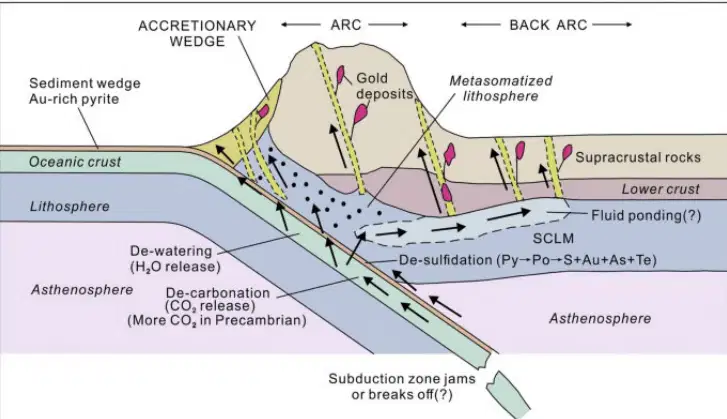
Orogenic deposits
Mid-ocean ridge deposits
Intracratonic deposits

Similar Resources on Wayground