
 Worksheets
Exploring the Old Stone Age
Total questions: 20
Worksheet time: 16mins

What materials were early human tools typically made from?
Clay, fabric, paper, and leather
Copper, aluminum, steel, and ceramic
Stones, wood, bone, and horn
Plastic, metal, glass, and rubber

What is the significance of cave paintings in understanding early human life?
Cave paintings were created for artistic expression without any meaning.
Cave paintings were primarily used for navigation purposes.
Cave paintings are mainly decorative and have no cultural significance.
Cave paintings are significant as they offer a glimpse into the culture, beliefs, and daily life of early humans.

How did early humans obtain their food during the Old Stone Age?
Early humans obtained their food by hunting animals and gathering plants.
By scavenging leftovers from other predators.
By farming crops and domesticating animals.
By trading with neighboring tribes for food.
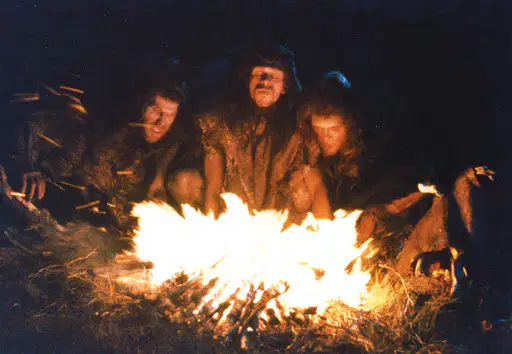
What role did fire play in the lives of early humans?
Fire was primarily used for decoration and art.
Fire had no significant impact on early human survival.
Fire was essential for warmth, cooking, protection, and socialization.
Fire was only used for signaling to other tribes.

What social structures existed among early human groups?
Hierarchical societies with strict class divisions.
Nomadic tribes led by a single powerful chief.
Complex city-states with formal governments.
Family-based bands with egalitarian relationships and informal leadership.

What were some common migration patterns of early humans?
Migration solely based on climate change without following resources
Migration from Africa to other continents, following animal herds and seasonal vegetation..
Migration from Europe to Asia for trade purposes.
Settling permanently in one location without movement.

How did the development of tools impact early human survival?
Tools made hunting more dangerous for early humans.
The use of tools led to a decrease in food variety.
The development of tools significantly enhance early human survival by improving hunting, gathering, and protection.
Tools had no effect on early human social structures.
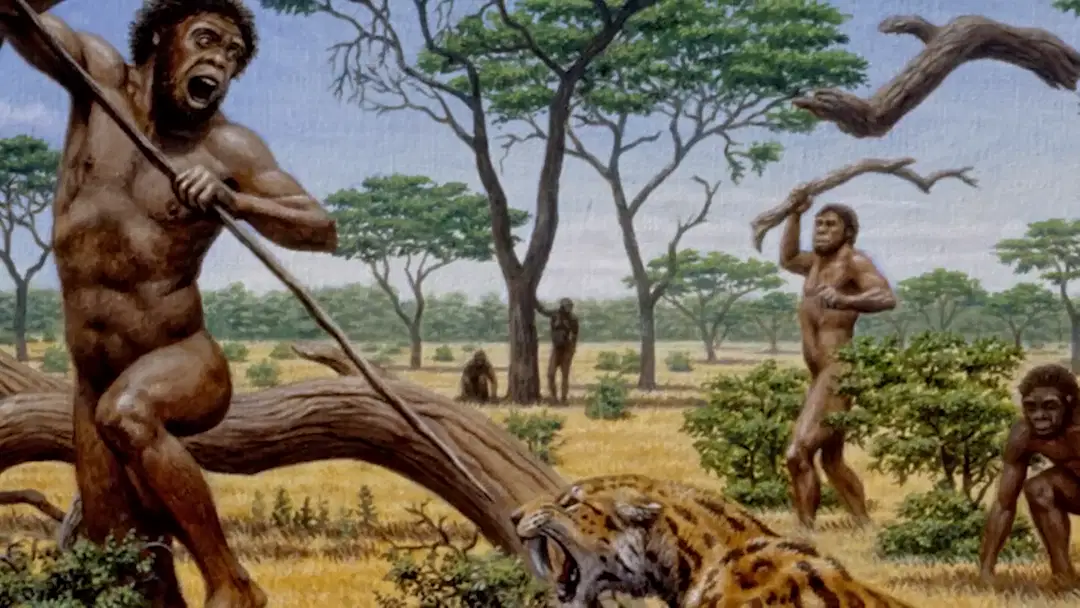
What types of animals did early humans hunt?
Fish and amphibians
Insects and arachnids
Domestic animals like cats and dogs
Large mammals (mammoths, bison, deer) and smaller animals (rabbits, birds)

How did the use of fire change the way early humans lived?
Fire made early humans more aggressive and territorial.
Fire was primarily used for creating tools and weapons.
Fire had no significant impact on early human social structures.
The use of fire changed early humans' lives by providing warmth, cooking food, enhancing safety, and promoting social interaction.

What evidence do we have of social interactions among early humans?
Fossilized footprints of dinosaurs
Written records from ancient civilizations
Modern human behavior studies
Archaeological findings, communal burials, cave paintings, shared tools, and genetic studies.

How did climate changes affect the migration of early humans?
Early humans migrated primarily due to social conflicts, not climate changes.
Climate changes prompted early humans to migrate in search of resources and suitable habitats.
Climate changes had no impact on early human migration.
Climate changes made habitats more stable, reducing the need for migration.

What were some of the first tools created by early humans?
Wooden clubs
Metal knives
Stone tools, hand axes, spears, and arrowheads.
Plastic tools

How did gathering plants contribute to the diet of early humans?
Early humans relied solely on animal protein for their diet.
Gathering plants was primarily for medicinal purposes rather than nutrition.
Gathering plants provided only fiber and no nutrients.
Gathering plants contributed essential nutrients and energy to a more healthy diet of early humans.

What role did language play in the development of early human societies?
Language had no significant impact on social interactions.
Language facilitated communication, cooperation, and the sharing of knowledge among early humans.
Language was primarily used for artistic expression.
Language only emerged after the establishment of complex societies.

How did the domestication of animals influence early human lifestyles?
Domestication of animals had no effect on human lifestyles.
It allowed for more stable food sources and contributed to the development of agriculture.
Domestication led to increased nomadic behavior.
It primarily served as a status symbol among early humans.

What were the primary methods of shelter used by early humans?
Permanent stone houses and skyscrapers.
Temporary structures made from natural materials like wood, leaves, and animal hides.
Underground bunkers and modern buildings.
Only caves were used as shelters.
Draw a scene that shows how early humans developed a community culture


Mention at least three expresions of culture developed by early humans shown in the movie Quest for Fire

What role did climate play in where humans choose to settle?
Humans prefered to settle in places with a mild weather.
Good climate was good for agriculture, so humans decide to settle in places with good weather.

Which of the following geographical feautures determined the way in which humans live?
Mountains
Rivers
Climate
All of the above
None of the above

