
 Worksheets
Y7 Chem 7_4 Chemical Bonds 01
Total questions: 25
Worksheet time: 25mins
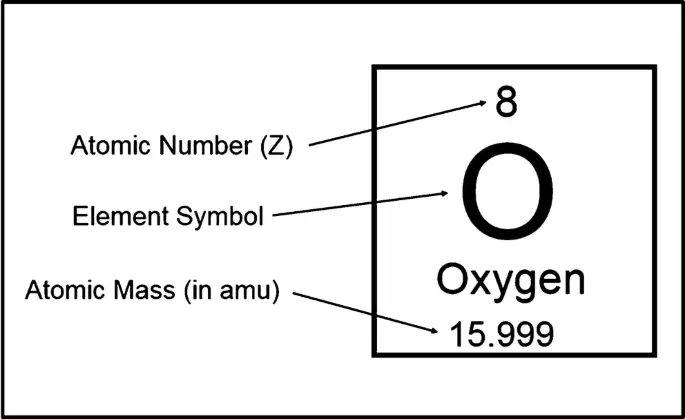
Atomic numbers = number of protons and also = number of (a)

Energy levels are also called (a)

The first electron shell can hold up to a maximum of (a)

The second energy level can hold up to (a)

The third energy level can hold up to (a) (The third energy level can actually hold up to 18 electrons, so it is not really filled when it has 8 electrons in it. But when the third level contains 8 electrons, the next 2 electrons go into the fourth level.)
The (a) rules states that atoms tends to gain or lose or share up to 8 electrons
The 3 type of bonds are:
I...... bonds
C,,,,,,, bonds
M.......bonds
Ionic
Covalent
Metallic
Double
Single

Metallic bonds occur between...
two nonmetals
a metal and a nonmetal
two metals

Ionic bonds occur between...
a metal and a non-metal
two metals
two non-metals

Covalent bonds take place between...
two metals
two non-metals
a metal and a non-metal
Sara and Angel
The weakest of the three types of chemical bonds is the...
ionic bond
covalent bond
metallic bond
What is the rule for figuring out if it is ionic bond and NOT a covalent Bond?
Covalent bonds form between two metals.
Ionic bonds form between two metals.
Covalent bonds form between a metal and a non-metal.
Ionic bonds form between a metal and a non-metal.
K Br
Ionic
Covalent
C H
Ionic
Covalent
Na Cl
Ionic
Covalent
H H
Ionic
Covalent
Na F
Ionic
Covalent
N H
Ionic
Covalent
C O
Ionic
Covalent
(a) is the (b) of (c) needed by a non metal atom to achieve the (d) electron (e) (Or configuration)
The 1st shell (energy level) can hold up to ___ electrons, while the 2nd and 3rd shells can hold up to 8 electrons.
2
4
6
8
Other than H and He, how many electrons do atoms want to have in their outer shell to be FULL and HAPPY?
4
6
8
10
An ion will always have a(n) _____ , so it will never be neutral.
sweet odor
low boiling point
electrical charge
With covalent bonds, electrons are _____ between the atoms.
lost and gained
shared
With ionic bonding, electrons are _____ between the atoms.
lost and gained
shared

