
 Worksheets
Carbon and Nitrogen Cycles
Total questions: 22
Worksheet time: 14mins

According to this diagram, animals get proteins from eating ______________
decomposers
bacteria
plants
sunlight

According to this diagram, plants use nitrogen to make ________
bacteria
proteins
animals
decomposers

How nitrogen is "fixed" into useable form for plants
only through action of bacteria
only through lightning
through action of bacteria & lightning
through photosynthesis

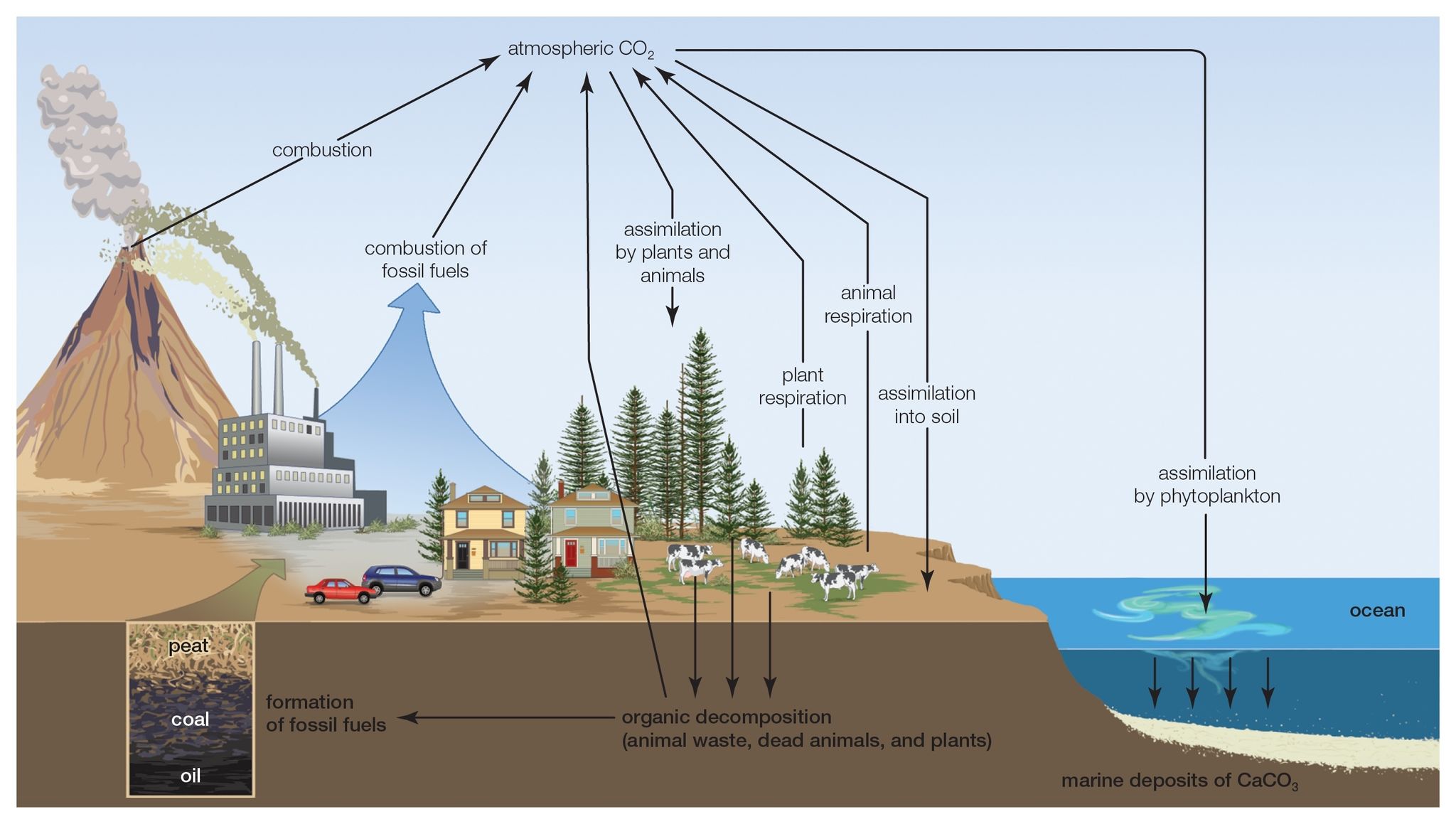
What part of the carbon cycle is represented by A?
photosynthesis
decomposition
combustion
cellular respiration

What part of the carbon cycle is represented by cow releasing CO2 back into the atmosphere?
photosynthesis
decomposition
respiration
combustion

What process is represented by D?
nitrification
assimilation
decomposition
denitrification

What process of the carbon cycle is represented by 2?
decomposition
respiration
combustion
photosynthesis
Which process in the nitrogen cycle can involve storms and lightning to move nitrogen gas to the soil in precipitation?
nitrification
ammonification
assimilation
nitrogen fixation
Water also comes from plant leaves to the atmosphere through ________________.
Evaporation
Transpiration
Condensation
Precipitation
All of the carbon in existence is continually recycled in the carbon cycle.

The Carbon Cycle is the process of recycling carbon from _________________ to _________________.
Animals to Clouds
The Sun to Plants
Living things to Nonliving Things

Nitrogen moves through _____, ______ and ______.
Clouds, plants and soil
Air, water and animals
Air, water and soil
Nitrogen fixation...
animals eat the plants and other animals that contain nitrogen and release it through their waste
Bacteria in the soil and lightning in the atmosphere “fix” the nitrogen
Once in the ground, bacteria in the soil also nitrify the nitrogen
plants absorb nitrogen through their roots and return it back to the atmosphere
Denitrification...
animals eat the plants and other animals that contain nitrogen and release it through their waste
Bacteria in the soil and lightning in the atmosphere “fix” the nitrogen
nitrogen is released back into the atmosphere from the animal’s waste or decomposers
plants absorb nitrogen through their roots and return it back to the atmosphere
How does the chemical equation of photosynthesis:
6CO2 + 6H2O → C6H12O6 + 6O2,
model that this chemical reaction obeys the Law of Conservation of Matter?
because there are the same number of atoms of each element shown on both sides
because they both start and end with two sets of particles
because they both start and end with diatomic (two-atomed) molecules
because they both start and end with the same types of particles
According to the law of conservation of matter, in any food chain we know that
the amount of matter increases as the food web progresses from the producers to the consumers.
matter is created at the start of a food web and destroyed in the end.
matter is changed into various forms but the total quantity remains unchanged.
the quantity of matter in producers and consumers is always equal.

