
NEW
Font size
 Worksheets
Japanese American internment quiz prep
Total questions: 10
Worksheet time: 5mins
When Korematsu appealed his conviction concerning FDR's executive order, what was his claim?
his constitutional rights were violated
he was legally living in the U.S. and should not be deported
the camps were too dirty and unfit for people to live in
the draft was not fair to Japanese Americans
Based on the excerpt below, the result of Japanese Americans being interred was because of ...
Along the vital Pacific coast over 112,000 potential enemies, of Japanese extraction, are at large today. There are indications that these were organized and ready for concerted action at a favorable opportunity. The very fact that no sabotage was taken place to date is a disturbing and confirming indication that such action will be taken."
well founded evidence that Japanese-Americans posed an immediate threat to U.S. national security
clear actions from Japanese-Americans who were actually sabotaging the American war effort
fears they posed a threat to national security although no sabotage had been carried out by Japanese Americans
attacks carried out by a small minority of Japanese Americans
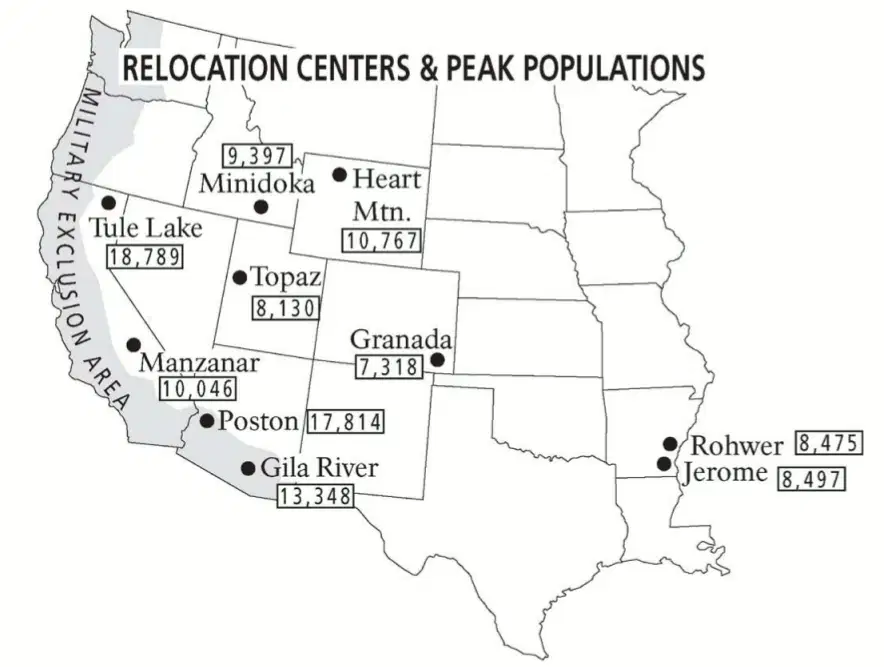
Looking at the map, where were most of the internment camps located in the United States?
the southern U.S.
The central part of the U.S.
Northern cities
the western U.S.
In 1988, President Reagan signed the Civil Liberties Act which formally apologized to Japanese-Americans sent to internment camps and gave them ...
A free trip to Walt Disney world
reparation payments of $20,000 to each person interred
any property they had lost when they were removed to the camps
lifelong citizenship in the United States
The U.S. Supreme Court ruled in Korematsu v. U.S. that...
all people are equal regardless of race
Japanese internment camps were not necessary during the war because there was no evidence of sabotage
in times of war the U.S. govt. could suspend citizens' rights in the name of national security
Japanese Americans had the same legal rights as other Americans.
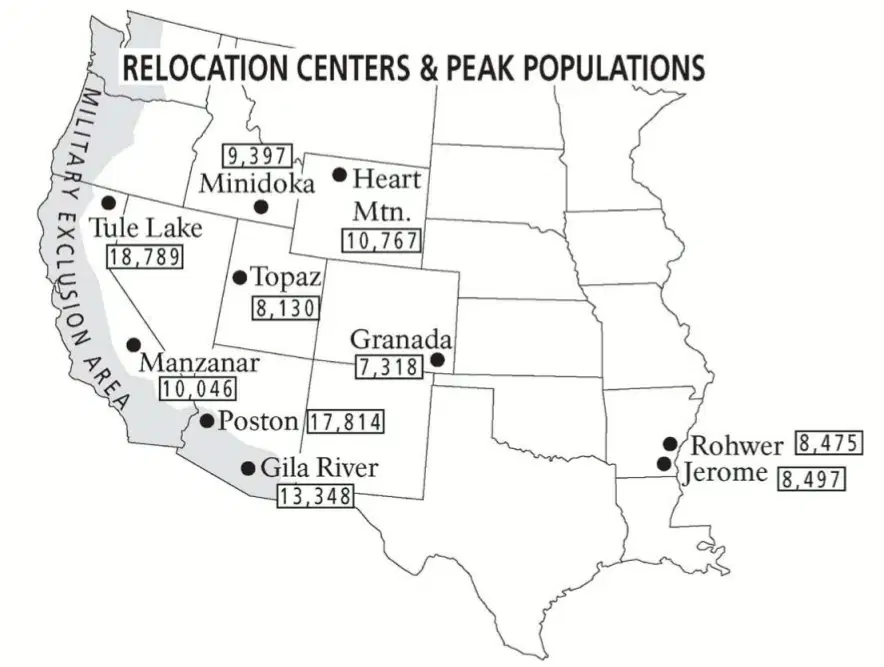
Of all the internment camps listed, which camp had the highest population of Japanese-Americans?
Rohwer
Tule Lake
Manzanar
Heart Mountain
After the bombing of Pearl Harbor, the U.S. declared most of the West Coast a military zone and ordered all people of Japanese ancestry to relocate to ....
Japan
the Sunbelt area of the U.S.
the Eastern Coast
internment camps
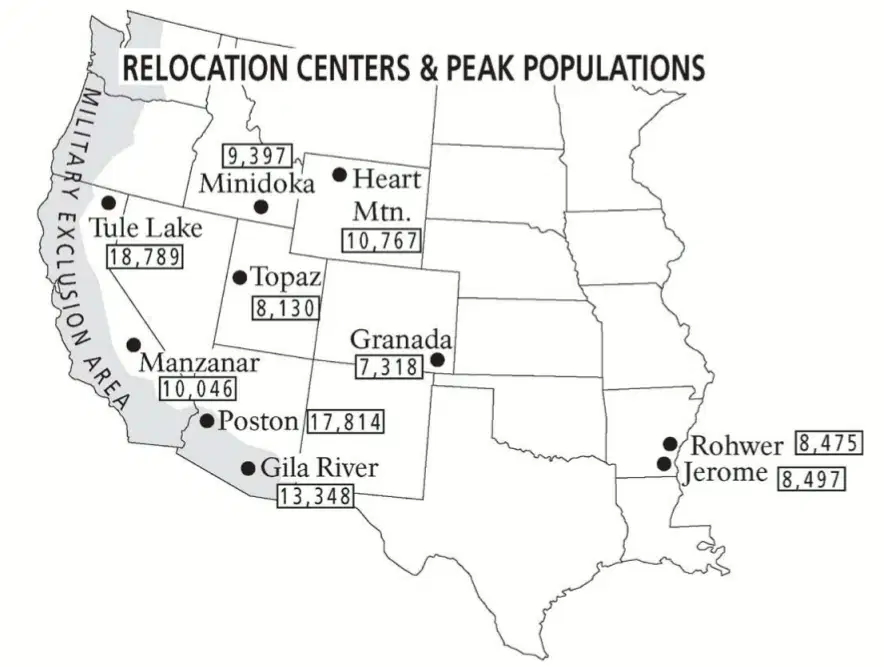
Looking at the map, what is significant about Arkansas regarding Japanese-American internment camps?
Arkansas was the ONLY state with two internment camps
Arkansas was included in the military exclusion area
the majority of all the internment camps were inside Arkansas
two internment camps were located inside Arkansas
After Pearl Harbor, Japanese Americans were suspected of:
possible traitors who would sabotage America
economic threats to white-Americans
helping America against Japan
Patriotism
What event in World War 2 caused thousands of Japanese-Americans to be placed in internment camps?
Invasion of the Philippines
The Invasion of Poland
The Pearl Harbor attack
The Battle of Britain

