
Font size
 Worksheets
Unit 5 Review
Total questions: 35
Worksheet time: 20mins
The attractive force that binds atoms in a molecule is known as a:
Chemical bond
Ionic force
Magnetic bond
Electromagnetic interaction
Which of the following elements is least likely to form a covalent bond?
H
N
Mg
Cl
A polar molecule is characterized by:
Symmetrical charge distribution
An uneven charge distribution
No charge distribution
A balanced ionic state
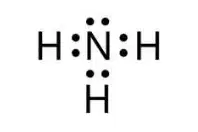
The correct Lewis dot structure for ammonia (NH3) illustrates that:
Nitrogen has three bonded pairs and one lone pair
Each hydrogen atom has a full octet.
Ammonia has only ionic bonds.
Nitrogen has no lone pairs.
The attraction of free-floating valence electrons for positively charged metal ions is called a metallic bond.
True
False
The electrostatic attraction that binds oppositely charged ions together by transferring electrons is called an ionic bond.
True
False
Atoms tend to react so as to acquire the stable electron configuration of a noble gas.
True
False
According to the VSEPR model, what is the molecular geometry of ammonia (NH3)?
Bent
Linear
Trigonal planar
Pyramidal
Identify the type of bond described as surrounded by a "sea" of free-flowing electrons, which is malleable and ductile:
Ionic bond
Covalent bond
Metallic bond
Molecular bond
Which of the following compounds is not covalent?
SCl2
KCl
HCl
PF3
If a bonding pair of electrons is unequally shared between atoms, the bond is:
Ionic
Nonpolar covalent
Coordinate covalent
Polar covalent
Which of these elements does not exist as a diatomic molecule?
I
F
He
H
How many valence electrons does an atom of any element in Group 3A have?
2
3
13
8
When an aluminum atom loses its valence electrons, what is the charge on the resulting ion?
What VSEPR geometry describes the molecule methane (CH4)?
Tetrahedral
Bent
Square
Trigonal monopyramidal
A covalent bond forms:
When an element becomes a noble gas
When atoms share electrons
Between metals and nonmetals
When electrons are transferred from one atom to another
Which of the following pairs of elements will most likely form an ionic bond?
Oxygen and krypton
Barium and gold
Sodium and fluorine
Calcium and copper
Which of these compounds would not have covalent bonds?
NO2
K2O
N2O4
H2O2
Metals are good conductors of electricity because they:
Form crystal lattices
Contain positive ions
Contain mobile valence electrons
Form ionic bonds

What is the error in the following Lewis dot structure of H2S?
Hydrogen is missing two lone pairs of electrons
The structure highlighted above is correct and has no errors
Sulfur will only have two lone pairs when bonded to hydrogen
Sulfur must be the central atom with hydrogens bonded on either side
An ionic compound is:
Held together by ionic bonds
Generally a salt
Composed of anions and cations
All of the above
Which of these is not a characteristic of most ionic compounds?
Solid at room temperature
Has a low melting point
Poor electrical conductor as a solid
Forms a crystal lattice
In forming chemical bonds, atoms tend to attain:
A state of higher energy
The electron configuration of noble gas atoms
The electron configuration of halogen atoms
All of the above
A substance found to be a soft, nonconducting solid at room temperature is most likely:
A molecular solid
A network solid
A metallic solid
An ionic solid
What causes water molecules to have a bent shape, according to VSEPR theory?
Interaction between the fixed orbitals of the unshared pairs of oxygen
Repulsive forces between unshared or lone pairs of electrons
Ionic attraction and repulsion
The unusual location of the free electrons
When Group 2 elements form ions, they:
Lose two protons
Lose two electrons
Gain two protons
Gain two electrons
The forces between atoms that create chemical bonds are a result of interactions between:
Protons and electrons.
Protons and neutrons.
Nuclei.
Electrons.
Which of the following compounds is primarily covalent?
NaBr
MgO
CO2
CaCl2
Metals are good conductors of electricity because they have:
High melting points
Fixed positions of atoms
What is a common error in the Lewis dot structure for carbon dioxide (CO2)?
Oxygen is missing one lone pair of electrons
Each oxygen atom should have two bonds with carbon
Carbon should have two lone pairs
There should be three atoms bonded together
Anions
Gain electrons, has an overall positive charge
Lose electrons, has an overall positive charge
Lose electrons, has an overall negative charge
Gain electrons, has an overall negative charge
Covalent bonds are between...
two or more nonmetals
sodium and chlorine
metals and metals
metals and nonmetals
Why do atoms share electrons?
To attain the electron configuration of a noble gas.
To become ions and take a charge
to increase the mass
it's a nice thing to do.
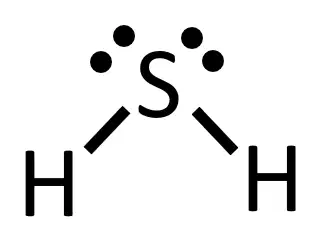
Will this molecule be polar or nonpolar? H2S
polar
nonpolar

The molecule shown in the diagram can best be classified as a
polar covalent molecule
nonpolar covalent molecule
ionic compound
nonpolar ionic compound

