
 Worksheets
HS1 Mid Term Review
Total questions: 113
Worksheet time: 1hrs 19mins
The shaft of the long bone is the:
diaphysis
endosteum
epiphysis
periosteum
Bone forming cells are called:
diaphysis
fontanels
osteoblasts
osteocytes
Students often have poor posture while sitting at their computers. Rounded shoulders head forward, and hunchback are symptoms that describe which condition?
kyphosis
lordosis
osteoporosis
scoliosis
John fell on an outstretched arm while running outside. John's fracture caused the bone to break through the skin. What type of fracture does John have?
comminuted
compound
greenstick
simple
David has uric acid crystal deposits in his joints and has pain in his great toe. These are symptoms of:
rheumatoid arthritis
osteoarthritis
osteoporosis
gout
The inner lining of long bones is the:
diaphysis
endosteum
epiphysis
periosteum
Which important function of the long bone is related to the production of healthy blood cells?
amphiarthroses
epiphysis
hemopoiesis
diarthroses
The axial skeleton includes bones of the:
arm
foot
leg
skull
Major organs of the body are located within the skull, ribs, and pelvis. What function of the skeletal system do these bones perform?
mineral storage
hemopoiesis
movement
protection
The end of the long bone is known as the:
diaphysis
endosteum
epiphysis
periosteum
Leah was involved in a motor vehicle accident. She has extreme pain and immobility in her left lower leg. There is bruising, but no open wound. What type of fracture may Leah have?
compound
greenstick
simple
stress
A patient presents uneven posture caused by an abnormal side-to-side curvature of the spine. The most likely diagnosis will be:
kyphosis
lordosis
osteoporosis
scoliosis
Which condition is triggered by the wearing down of cartilage in a joint?
gout
osteoarthritis
osteoporosis
rickets
A 76-year-old female was transported to the hospital following a fall. Upon examination, it was determined that she sustained a fracture to the head of her femur. The injury is most likely related to:
bone deformity
osteoporosis
acromegaly
myxedema
What type of joint is the elbow?
ball and socket
gliding
hinge
pivot
Helen is an 80-year-old woman with stiff, painful joints caused by loss of articular cartilage. She suffers from:
rheumatoid arthritis
osteoarthritis
osteoporosis
gout
True or false: Your brain sends signals to your muscles and tells them when to contract.
true
false
______ are bands of tissue that attach a muscle to a bone.
Tendons
Ligaments
Joints
Veins
Muscles that you can control are called _____ muscles.
voluntary
involuntary
Which of the following is not a voluntary muscle?
bicep (arm)
tricep (arm)
hamstring (leg)
heart
Muscles that you cannot control are called _____.
voluntary
involuntary
Which of the following is not made of involuntary muscle?
stomach
heart
bicep (arm)
intestines
Muscles that are attached to bones are called _____ muscles.
skeletal
smooth
cardiac
Your stomach and intestines are made of _____ muscle.
skeletal
cardiac
smooth
True or false: Some skeletal muscles work in pairs.
true
false
Which type of muscle cell is striated, voluntary and has multiple nuclei located at the periphery?
Cardiac
Smooth
Skeletal
Which of the following muscle cells are not striated, involuntary, and have one nucleus per cell?
Skeletal
Cardiac
Smooth
All muscles cross at least ___ joint(s).
1
2
3
4
All of the following are functions of the muscular system EXCEPT:
blood production
heat production
movement
posture & stability
Muscle contraction relies on the stimulus from the ______ system.
circulatory
endocrine
nervous
respiratory
Muscles have several properties that make them unique in the body. The ability to contract & stretch and then return to original length and condition is known as:
contractility
elasticity
extensibility
excitability

Identify the highlighted muscle
Deltoid
Biceps
Trapezius
Hamstring

Identify the highlighted muscle
Latissimus dorsi
Deltoid
Oblique
Quadriceps

Identify the highlighted muscle
Biceps
Gluteus Maximus
Triceps
Deltoid

Identify the highlighted muscle
BIceps
Triceps
Oblique
Trapezius

Identify the highlighted muscle
Hamstrings
Quadriceps
Sartorius
Gastrocnemius

Identify the highlighted muscle
Deltiod
Trapezius
Latissimus Dorsi
Sartorius

Identify the highlighted muscle
Tibialis Anterior
Gastrocneminus
Deltoid
Biceps

Identify the highlighted muscle
Hamstring
Gastrocnemius
Achilles Tendon
Trapezius

Identify the highlighted muscle
Hamstrings
Deltoid
Gluteus Maximus
Oblique


Arm pits

The epidermis has
blood vessels
no blood vessels
Connective tissue, nerve cells, muscle fibers, sweat glands, oil glands, and hair follicles are located in ...
epidermis
dermis
subcutaneous layer
Hair follicles usually have _____ associated with them that lubricate the skin and hair
acne
sebaceous glands
sweat glands
nerves and vessels

Skin produces vitamin D
true
false
This is the most painful burn.
first degree
second degree
third degree
fourth degree
This burn degree affects only the epidermis
1st
2nd
3rd
4th
This burn degree has blisters
1st
2nd
3rd


Which side is facing you?
Ventral
Dorsal
Lateral
Medial

Which side is facing you?
Anterior
Posterior
Dorsal
Inferior
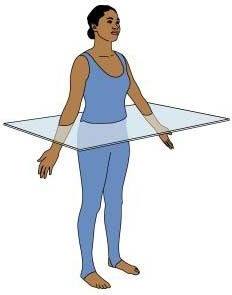
Divides body into top and bottom portions
Medial Plane
Sagittal
Proximal
Transverse Plane


The right shoulder is ______ to the sternum. (see pic for sternum)
medial
proximal
distal
lateral
Your elbows are proximal to your
shoulder
wrist
bicep
ears
The knee is _________ to the ankle
lateral
medial
proximal
distal

26. Which cavity is located on the posterior side of the body?
1 and 3
7 and 4
3 and 4
1 and 7

The plane of the body that divides the body into anterior and posterior.
sagittal plane
frontal plane
transverse plane
median plane

Identify this direction.
Deep
Medial
Lateral
Distal

Identify this direction.
Deep
Medial
Lateral
Distal

Which anatomical plane would separate the anterior from the posterior side?
sagittal
transverse
frontal
Which of these is distal to the wrist? Choose all that apply.
hand
fingers
elbow
palm
shoulder
Your skin is ___________ to your bones
deep
lateral
superficial
dorsal
_______ means towards the side of the body.
distal
proximal
medial
lateral
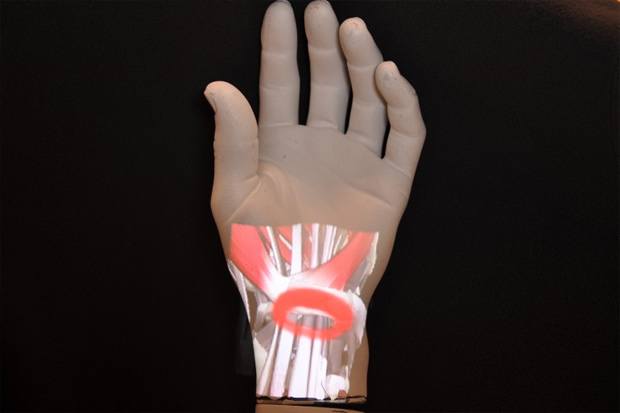
Which of these is found in one of the dorsal cavities?
brain
stomach
eye
bladder
Which of these separates the thoracic from the abdominal cavity?
stomach
rubcage
spleen
diaphragm
The shoulder blades are _______ to the ribs.
posterior
lateral
anterior
inferior
Which of these terms are opposite in meaning?
superficial and proximal
distal and proximal
medial and distal
posterior and inferior
How would you describe the relationship between the thoracic and vertebral cavities?
the thoracic cavity is superior to the vertebral cavity
the thoracic cavity is inferior to the vertebral cavity
the thoracic cavity is medial to the vertebral cavity
the thoracic cavity is ventral to the vertebral cavity
You need to perform open heart surgery on a patient. Which type of cut would you make?
Sagittal
Frontal
Transverse
Median

Which anatomical position is shown here?
supine
transverse
standard
prone
The navel is ________ to the hips/
medial
lateral
dorsal
posterior

Which anatomical position is shown here?
supine
prone
standard
horizontal

Which anatomical position is shown here?
supine
prone
standard
transverse
Which region is located in the upper middle part of the abdomen?
Epigastric region
Hypochondriac region
Umbilical region
Hypogastric region
Which region is located on the right side of the abdomen, just below the ribcage?
Epigastric region
Hypochondriac region
Umbilical region
Hypogastric region
Which region is located in the lower middle part of the abdomen?
Epigastric region
Hypochondriac region
Umbilical region
Lumbar region
Which region is located just above the umbilical region?
Epigastric region
Hypochondriac region
Lumbar region
Iliac region
Which quadrant is located in the upper part of the abdomen?
Right upper quadrant
none
Right lower quadrant
Left lower quadrant
Which quadrant is located in the lower part of the abdomen?
Right upper quadrant
Left upper quadrant
Right lower quadrant
None
Which region is located on the left side of the abdomen, just below the umbilical region?
Epigastric region
Hypochondriac region
Lumbar region
Iliac region
Which region is located just above the hypogastric region?
Epigastric region
Hypochondriac region
Lumbar region
Iliac region

What abdominal region is #1?
Right Hypochondriac Region
Left Hypochondriac Region
Right Lumbar Region
Right Lumbar Region

What abdominal region is #6?
Hypogastric
Right Inguinal
Left Lumbar
Umbilical
What abdominal region is #2?
Hypogastric
Right Inguinal
Epigastric
Umbilical
What abdominal region is #3?
Hypogastric
Left Hypochondriac Region
Epigastric
Umbilical
What abdominal region is #4?
Right Lumbar
Left Hypochondriac Region
Epigastric
Umbilical
What abdominal region is #5?
Right Lumbar
Left Hypochondriac Region
Epigastric
Umbilical
What abdominal region is #7?
Right Iliac
Left Hypochondriac Region
Epigastric
Left Iliac
What abdominal region is #8?
Right Iliac
Left Hypochondriac Region
Epigastric
Hypogastric
What abdominal region is #9?
Left Iliac
Left Hypochondriac Region
Epigastric
Hypogastric

What is a?
Right Upper Quadrant
Left Upper Quadrant
Right Lower Quadrant
Left Lower Quadrant
What is b?
Right Upper Quadrant
Left Upper Quadrant
Right Lower Quadrant
Left Lower Quadrant