
 Worksheets
Cell Structure and Biochemistry review (B.5ABCD)
Total questions: 20
Worksheet time: 34mins
Relate the functions of different types of biomolecules to the structure and function of a cell.
Energy source for cells; structural support in plant cell walls (cellulose); cell recognition markers on the cell membrane, attached to proteins and lipids, essential for cell-cell communication.
carbohydrates
Form the cell membrane as a bilayer creating a barrier between the cell interior and the environment; energy storage in the body
lipids
Control what enters and exits the cell; act as channels and pumps to facilitate the movement of molecules across the cell membrane; catalyze chemical reactions as enzymes; and regulate cellular processes.
proteins
Store and transmit genetic information (DNA and RNA)
nucleic acids
Match the biomolecules with its type -
Sugars & starches
carbohydrates
Fats, Oils, Waxes
lipids
Meats, Eggs, Nuts
proteins
DNA and RNA (vegetables)
nucleic acids
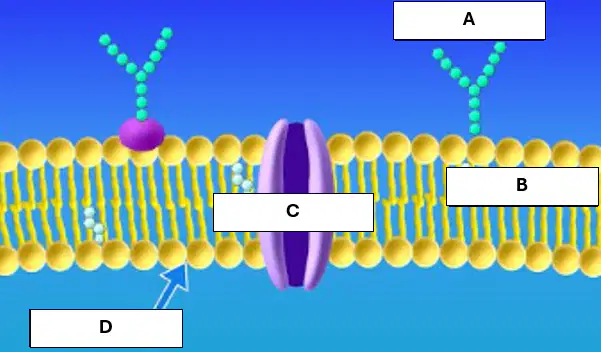
Relate the functions of different types of biomolecules to the structure and function of the cell membrane.
Carbohydrate cell recognition marker
A
Fatty acid hydrophobic 'tail'
B
Transport protein channel or pump
C
Phosphate-Glycerol hydrophilic 'head'
D
Compare and contrast prokaryotic and eukaryotic cells.
Have a NUCLEUS
Bigger and more complex
Have membrane-bound ORGANELLES
DNA is double-stranded and forms chromosomes
Can be multicellular organisms
Examples include; animals, plants, fungi & protists
Do not have a NUCLEUS
Do not have membrane-bound ORGANELLES
Simple and small
DNA is single-stranded and circular
Examples; Bacteria
All have a CELL WALL
Plants only have a CELL WALL
Have DNA
Have a CELL MEMBRANE
Have RIBOSOMES
Contain all biomolecules: Lipids, Proteins, Carbohydrates, Nucleic Acids
Can be unicellular
Compare and contrast animal and plant cells.
Has small VACUOLES
Has a CELL WALL
Have a NUCLEUS
Have a CELL MEMBRANE
Have RIBOSOMES
Contain all biomolecules: Lipids, Proteins, Carbohydrates, Nucleic Acids
Have CYTOPLASM
Has a single large VACUOLE
Has CHLOROPLASTS
Has LYSOSOMES
Has ER & Golgi apparatus
Have MITOCHONDRIA
Has CENTRIOLES
Match the cell organelle with its function.
Regulates what enters or exits the cell; maintains homeostasis; protects and supports the cell.
Cell membrane
Controls cell activities; contains genetic material
Nucleus
Synthesizes lipids; transports materials inside the cell
Smooth Endoplasmic Reticulum
Synthesizes proteins; transports materials inside the cell
Rough Endoplasmic Reticulum
Changes, packages and ships proteins outside the cell
Golgi Body
Match the cell organelle with its function.
Stores food, water, minerals and waste materials; maintains turgor pressure in plant cells
Vacuole
Gel-like fluid that contains all organelles
Cytoplasm
Provides support and protection for cells.
Plant cells, fungi & bacteria only.
Cell Wall
Make glucose energy. Site of photosynthesis.
Only in plant cells.
Chloroplasts
Synthesize proteins
Ribosomes
Match the cell organelle with its function.
Filled with enzymes, digest cell waste.
Mostly in animal cells.
Lysosomes
Organizes cell division
Centrioles
Make ATP energy from sugars, needed for the cell. Site of cellular respiration.
Mitochondria
Investigate homeostasis through the cellular transport of molecules.
Molecules move from an area of high concentration to an area of low concentration
Simple DIFFUSION
(passive)
Molecules move through transport proteins from an area of high concentration to an area of low concentration
Facilitated DIFFUSION
(passive)
Water molecules move through a semi-permeable membrane from an area of high concentration to an area of low concentration
OSMOSIS
(passive)
Large molecules are engulfed by the cell membrane and taken IN to the cell forming a vesicle inside the cell.
ENDOCYTOSIS
(active)
Large molecules are in a vesicle in the cell, which fuses with the cell membrane to expel the molecule OUT of the cell.
EXOCYTOSIS
(active)
Investigate homeostasis through the cellular transport of molecules.
Allowing certain substances to pass through but not others.
SEMI-PERMEABLE
A type of membrane transport that does not require energy to move substances across cell membranes.
PASSIVE TRANSPORT
An (ATP) energy-driven process where membrane proteins transport molecules across cells.
ACTIVE TRANSPORT
A carrier protein that moves sodium ions out of the cell and potassium ions into the cell using ATP energy.
SODIUM-POTASSIUM PUMP
(active)
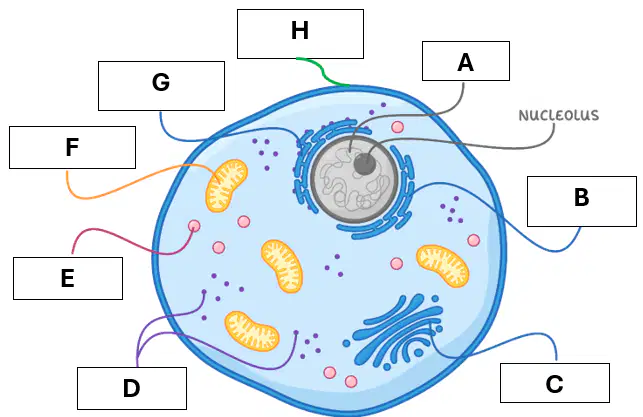
Label the animal cell
Nucleus
A
Smooth Endoplasmic Reticulum
B
Golgi Apparatus
C
Ribosomes
D
Lysosome
E
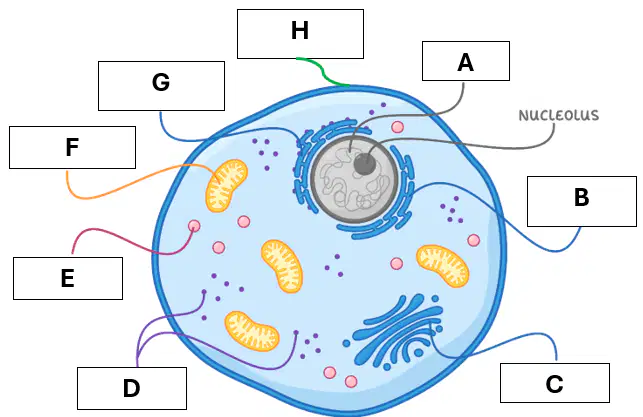
Label the animal cell
Mitochondria
F
Rough Endoplasmic Reticulum
G
Cell membrane
H
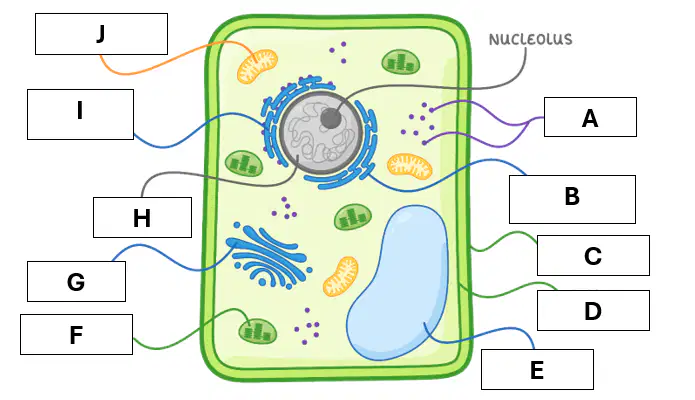
Label the plant cell
Ribosomes
A
Smooth Endoplasmic Reticulum
B
Cell wall
C
Cell membrane
D
Vacuole
E
Label the plant cell
Chloroplast
F
Golgi body
G
Nucleus
H
Rough Endoplasmic Reticulum
I
Mitochondrion
J
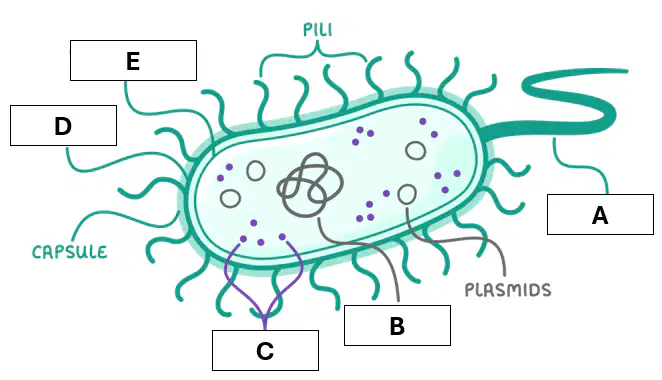
Label the prokaryotic cell
Flagella
A
DNA
B
Ribosomes
C
Cell wall
D
Cell membrane
E
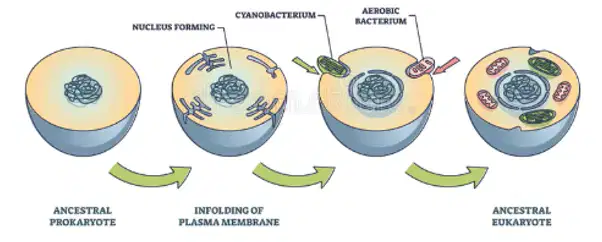
Which of the following is a theory that explains how organelles like mitochondria and chloroplasts in eukaryotic cells originated from free-living prokaryotes?
Endosymbiosis
Osmosis
Hydrolysis
Endocytosis
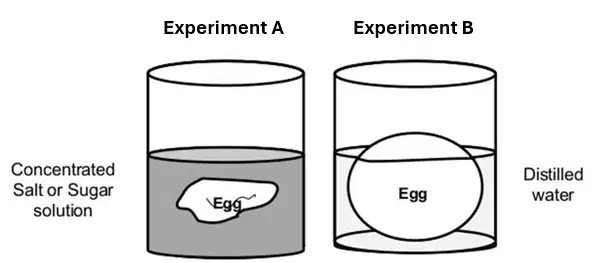
The experiment pictured describes the process of osmosis. In experiment A the egg was placed in a (a) solution. Water molecules moved (b) the egg, moving with the concentration from (c) . This caused the egg to lose water and (d) .
The experiment pictured describes the process of osmosis. In experiment B the egg was placed in a (a) solution. Water molecules moved (b) the egg, moving with the concentration from (c) . This caused the egg to lose water and (d) .
Cell transport is the process of moving substances into or out of a cell across its membrane. Organize these transport processes as either 'passive' or 'active' -
Osmosis
Facilitated diffusion
Simple diffusion
Does not required energy
Movement WITH a concentration gradient
Movement from high to low concentration
Requires ATP energy
Movement AGAINST a concentration gradient
Movement from a low to high concentration
Endocytosis (phagocytosis & pinocytosis)
Exocytosis
Requires protein pumps
Requires protein carriers for larger molecules
Drag and drop the labels to the correct position on the diagram.

