wayground logo

Free Printable Worksheets

NEW

Font size

S
M
L
XL
Worksheets

Homeostasis (7)

Total questions: 25

Worksheet time: 24mins

Name
Class
Date
1.
If the environment gets cold, we will often shiver in order to:
a)
keep body temperature the same as the external temperature
b)
decrease body temperature
c)
increase body temperature
d)
regulate blood pressure
2.
The maintenance of an organism’s internal environment is called:
a)
compensating
b)
homeostasis
c)
balancing
d)
routine
3.
Name the levels of organization in the human body in order from smallest to largest:
a)
Tissue, organ, organ system
b)
Organ system, tissue, organs, cells
c)
Cells, tissue, organs, organ system
d)
Cells , organs, tissue, organ system
4.
Which of the following is an appropriate response to cold weather?
a)
sweating
b)
shivering
c)
sleeping
d)
wearing shorts
5.
A stimulus type that occurs within the organisms body is 
a)
external
b)
inside
c)
within
d)
internal
6.
A stimulus type that occurs outside the organisms body is 
a)
external
b)
inside
c)
within
d)
internal
7.
The tendency of an organism to maintain a balanced state in order to stay healthy.
a)
Stimuli
b)
Response
c)
Tropism
d)
Homestasis
8.

Plants can respond to a stimulus, just like animals. What is the stimulus in this picture?

a)
Adaptation
b)
Response
c)

Light

d)
Growth
9.

During periods of vigorous physical activity, a person's breathing and heart rates increase. This enables the cells of the body to perform more efficiently because it helps the cells to

a)

receive blood and oxygen at a faster rate

b)

store excess glucose in muscles

c)

reduce the amount of ATP produced

d)

convert more oxygen to glucose

10.

In which cell structure is energy extracted from nutrients?

a)

chloroplast

b)

ribosome

c)

mitochondria

d)

vacuole

11.

The diagram below represents a cell structure involved in converting energy stored in organic molecules into a form used by animal cells. The arrows represent the movement of which substances?

a)

carbon dioxide and sugar

b)

oxygen and ATP

c)

Water and carbon dioxide

d)

oxygen and sugar

12.

Fish absorb oxygen through the gills, earthworms absorb oxygen through the skin, amebas take in oxygen through the cell membranes, and cows inhale oxygen through the nasal passages into their lungs. This statement demonstrates that living things

a)

rely on similar or the same processes, but accomplish them in different ways

b)

rely on different processes and accomplish them in different ways

c)

rely on different processes, but perform them in the same or related way

d)

have no relationship to one another, and are all independent individuals

13.

Which gas we take in when we inhale?

a)

Oxygen

b)

Carbon dioxide

c)

Nitrogen

d)

Hydrogen

14.

The waste product produced in respiration is

a)

carbon dioxide

b)

there is no waste

c)

oxygen

15.

Your lungs are part of which system?

a)

Respiratory System

b)

Circulatory System

c)

Digestive System

d)

Muscular System

16.

Your heart always pumps at the same rate.

a)

True

b)

False

17.

Which of the following is true about your heart?

a)

Your heart may stop beating from time to time.

b)

You have to think in order to keep your heart beating.

c)

Your heart pumps blood through your body.

d)

All of the above

18.

What is the building block of a protein?

a)
Amino acid
b)
Nucleotide
c)
Monosaccharide
d)
Fatty acid
19.

Which is the job of a carbohydate?

a)

Quick energy

b)

Build body tissues

c)

Instructions for traits

d)

Insulation

20.
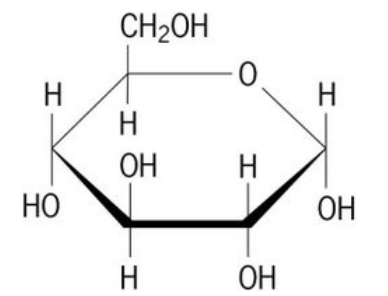
Which biomolecule is this a picture of?
a)
Protein
b)
Nucleic Acid
c)
Lipid
d)
Carbohydrate
21.

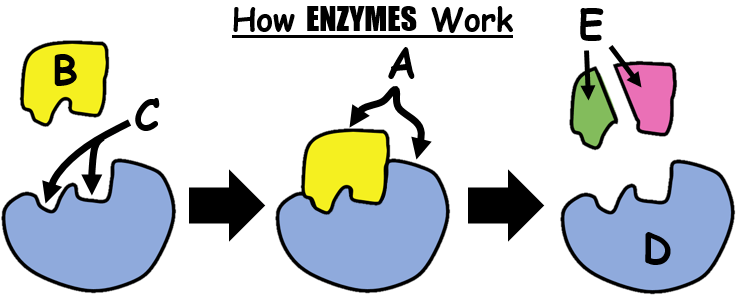
Identify what is labeled with the letter D

a)

active site

b)

enzyme

c)

substrate

d)

products

22.
What makes an enzyme specific?
a)
Size
b)
Shape
c)
Name
d)
Location it is found in
23.
Enzymes need certain environmental conditions in order to function properly.  What happens when enzymes are heated to a high temperature?
a)
they die
b)
they denature
c)
they change their amino acid sequence
d)
they work better
24.
What is the primary role of enzymes inside of living cells? 
a)
store genetic information
b)
store energy
c)
they help fight infections
d)
speed up chemical reactions 
25.
Which of the following conclusions can be drawn from this graph?
a)
The optimum pH of the enzyme is 6.6.
b)
This enzyme works best in highly acidic environments
c)
The enzyme’s activity increases as pH increases 7.0 to 9.0
d)
The enzyme’s activity is greater around pH of 8.0 .