
 Worksheets
Music Lit Unit 3: Music and Science
Total questions: 35
Worksheet time: 49mins

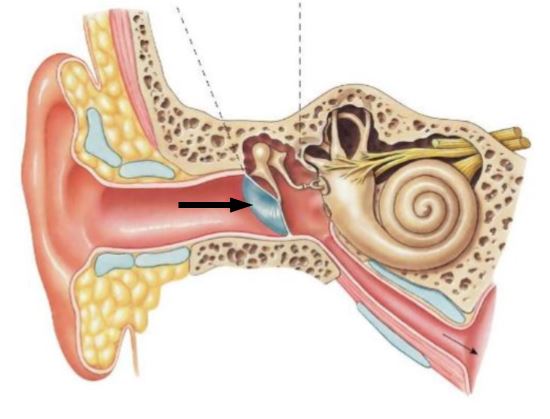
What is this?
Ear Drum
Ear Canal
Pinna
Cochlea
Hearing Nerve
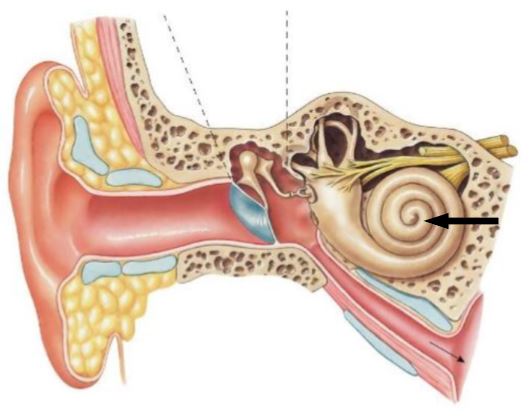
What is this?
Ear Drum
Ear Canal
Pinna
Hammer
Cochlea
What is this?
Pinna
Hearing Nerve
Cochlea
Ear Drum
Anvil

What is this?
Anvil
Hammer
Stirrup
Ear Canal
Ear drum
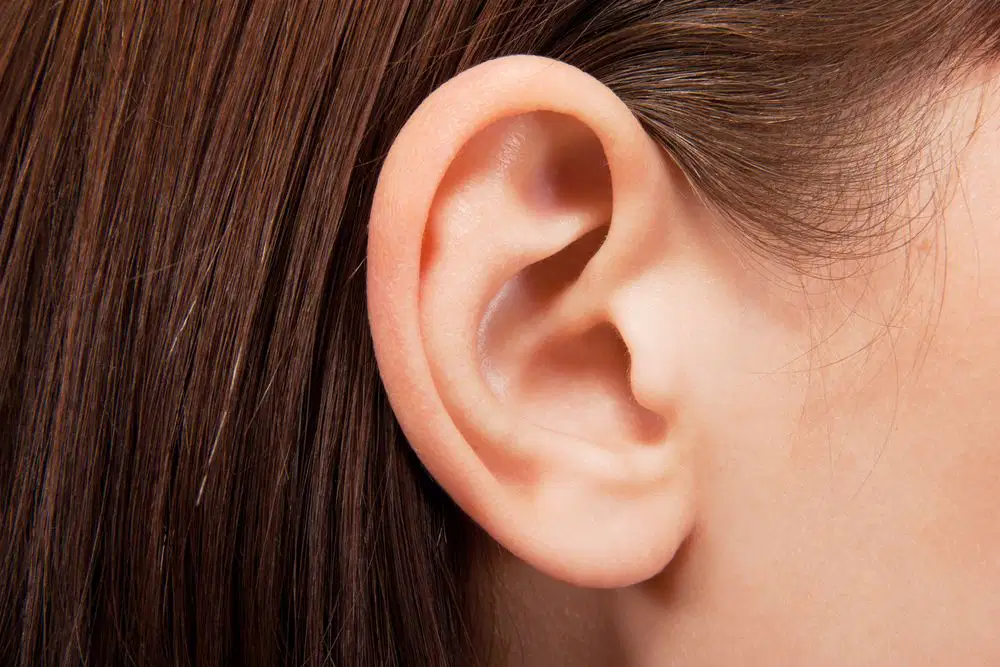
The cochlea is found in which section of the ear?
outer
inner
middle
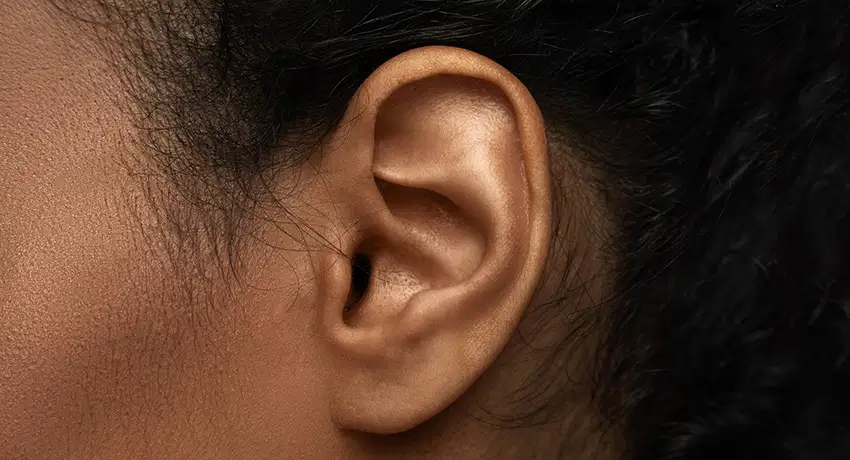
Which part of the ear are the ossicles found?
outer ear
middle ear
inner ear
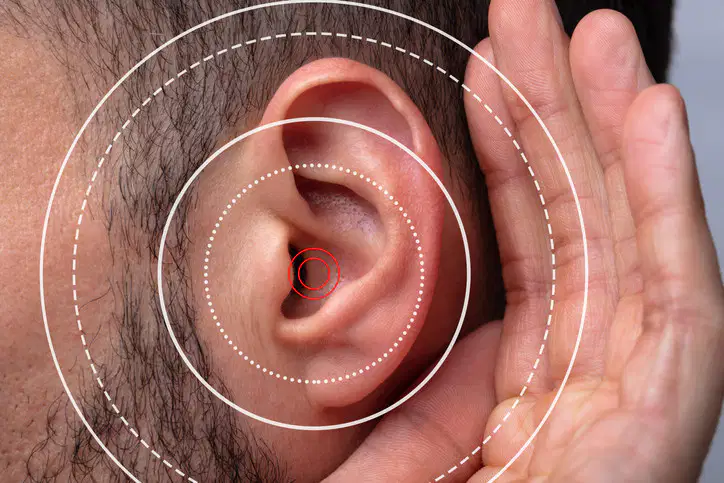
The function of pinna is ...
to collects sound
to keep the body balance
pathway for the sound to reach the ear drum
to deliver the sound to the brain
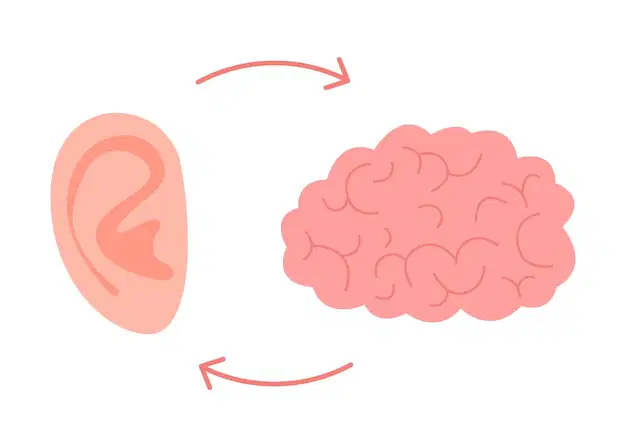
A part of ear that can deliver the sound to the brain is ...
auditory nerve
prefrontal cortex
cochlea
corpus callosum

Amplitude
Frequency
Speed of Sound
Medium

What unit do we use to measure the loudness of sound?
hertz
shangalanga ding dongs
brain waves

The cochlea has ______ that help send signals to the auditory nerve
tiny bones
tiny hairs
wax

What is the bridge between the two hemispheres of the brain?
Hippocampus
Cerebellum
Corpus callosum
Prefrontal Cortex

Two sound waves of different frequencies interfere and produce a resulting waveform shown with four points (W, X, Y, and Z) marked on the new wave.
At which point will the sound be the loudest ?
W
X
Y
Z
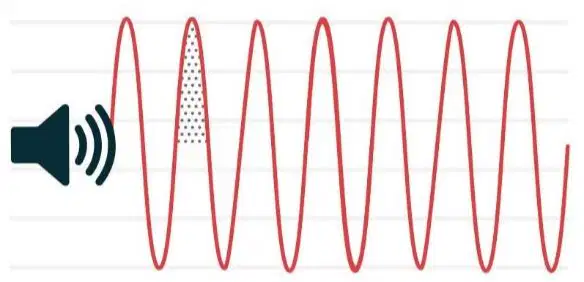
High frequency sounds have ___________ pitch.
high
low
This sound has high pitch, which means it has a higher frequency. This means when you hear the sound...
More waves hit your ears per second
Bigger waves hit your ears
Less waves hit your ears per second
Longer waves hit your ears

A rarefaction is generated when particles move
Together
Under
Apart

In which of these types of media will sound travel fastest?
Solid
Liquid
Gas
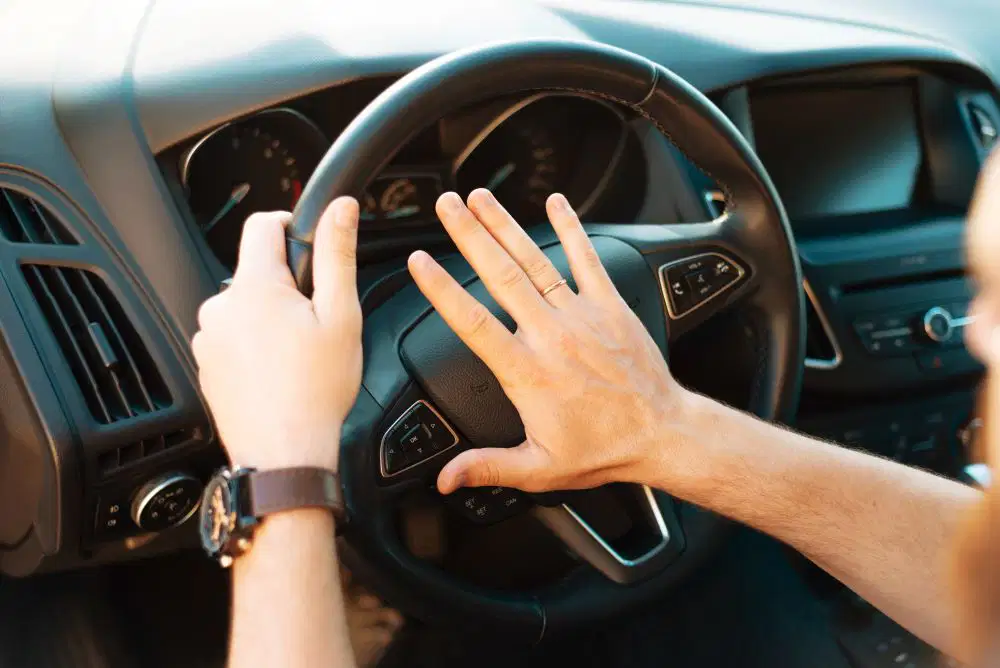
You get to drive for the first time by yourself. While driving you see a friend riding a bike. You honk your horn while approaching your friend. Compared to the frequency of the sound you here, the person riding their bike hears a sound with _____.
a higher frequency
more variation in tone
greater amplitude
a lower frequency

You get to drive for the first time by yourself. While driving you see a friend riding a bike. You honk your horn as you ride AWAY from your friend. Compared to the frequency of the sound you here, the person riding their bike hears a sound with _____.
a higher frequency
more variation in tone
greater amplitude
a lower frequency

Which instrument creates sounds with the highest pitch?
cello
viola
violin

Longitudinal waves have:
crests and troughs
crests and compressions
compressions and rarefactions
troughs and rarefactions

The diagram shows a cartoon of a sound wave produced while a student is speaking.
What happens to the sound wave when the student speaks louder?
The amplitude increases
the wavelength will double
the speed will increase
the frequency will increase
The speed of sound depends on these two things:
The type of medium and the temperature of the medium
Speed of the medium and temperature of the medium
Temperature of the medium and sound of the medium
None of the above

The distance from the beginning of one compression to the beginning of the next compression is called a -----
Rarefaction
Frequency
Wavelength
Compression

Responsible for the voluntary control of your skeletal muscles, the muscles we can move and control.
Auditory cortex
Occipital lobes
Cerebrum
Motor cortex
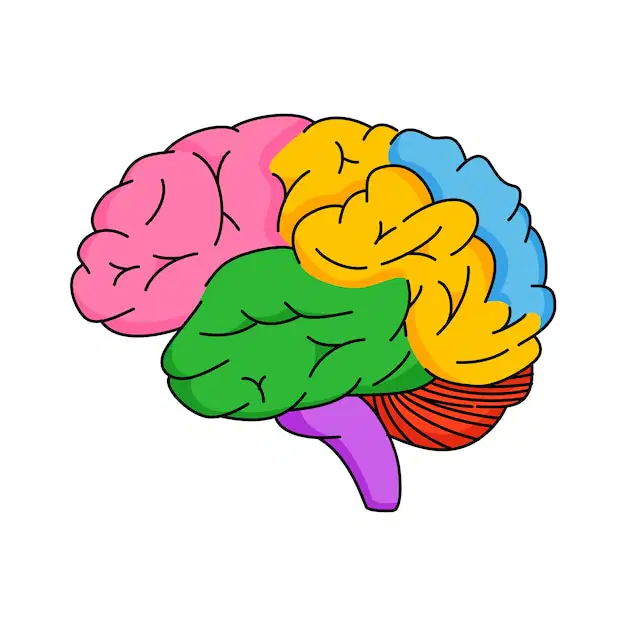
Responsible for balance, movement, and coordination. Helps process the rhythm in music and can enhance motor skills.
Cerebellum
Visual Cortex
Olfactory bulbs/ tracts
Optic nerves and chiasm

Decision making, social behavior and personality. Can be influenced by music through mood
Prefrontal cortex
Limbic system
Auditory cortex
Visual cortex
Which nervous system disease is characterized by memory loss, confusion, and the gradual loss of control over mental and physical abilities?
Multiple Sclerosis
Alzheimer's Disease
Huntington's Disease
Parkinson's Disease
Which nervous system disease is associated with uncontrolled shaking, slowed movements, and problems with speaking?
Multiple Sclerosis
Parkinson's Disease
Alzheimer's Disease
Huntington's Disease
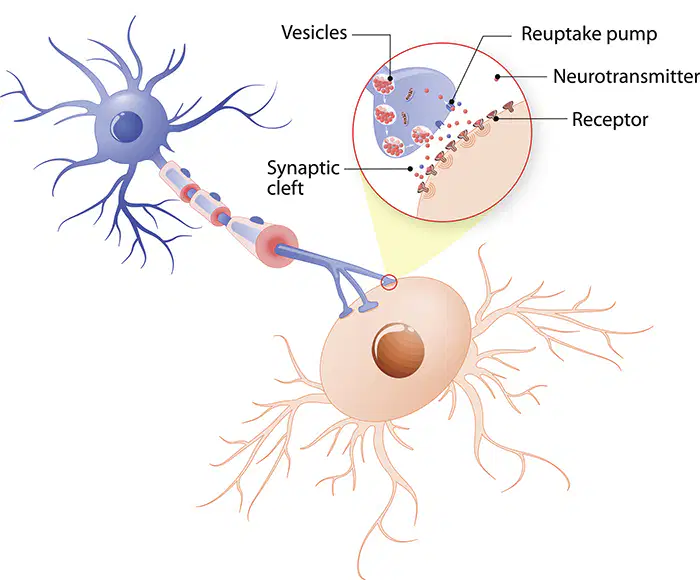
What effect does music have on the brain's neurotransmitters?
It has no effect
It can increase dopamine and serotonin levels
It slows them down, in turn relaxing you
It decreases brain activity

What is a key characteristic of music therapy that makes it effective for individuals with autism?
Its emphasis on competitive performance
Its focus on making loud noises
Its ability to use nonverbal communication
Its reliance on complex musical concepts

What behavior change might be observed in animals when they are exposed to classical music?
Increased aggression
More playful behavior
Increased sleepiness or relaxation
Increase in feeding/hunger
What characteristics make jingles work?
Simple tune/easy to sing
Repetitive
Slow rhythms
Emotional Connections
Why are Soundtracks important in movies?
Music is very powerful for evoking emotions and it can be used to tie unrelated scenes together.
There is no importance in music at the films.
It makes people feels happier when they are watching a movie.
It adds up to the experience of whatever you’re doing.

