Worksheets
Understanding Mechanical Waves Quiz
Total questions: 18
Worksheet time: 36mins
What is a mechanical wave?
A wave that can travel through a vacuum
A wave that requires a medium to travel through
A wave that does not require a medium
A wave that travels at the speed of light
Which of the following is a type of mechanical wave?
Electromagnetic wave
Sound wave
Light wave
Radio wave
What is a transverse wave?
A wave where particles of the medium move parallel to the direction of wave propagation
A wave where particles of the medium move perpendicular to the direction of wave propagation
A wave that does not require a medium
A wave that travels in a circular motion
In a transverse wave, what are the high points called?
Troughs
Crests
Compressions
Rarefactions
In a transverse wave, what are the low points called?
Troughs
Crests
Compressions
Rarefactions
What is a longitudinal wave?
A wave where particles of the medium move perpendicular to the direction of wave propagation
A wave where particles of the medium move parallel to the direction of wave propagation
A wave that does not require a medium
A wave that travels in a circular motion
In a longitudinal wave, what is the region where particles are closest together called?
Trough
Crest
Compression
Rarefaction
In a longitudinal wave, what is the region where particles are furthest apart called?
Trough
Crest
Compression
Rarefaction
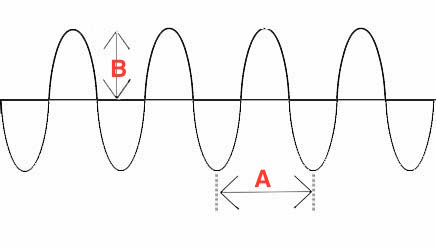
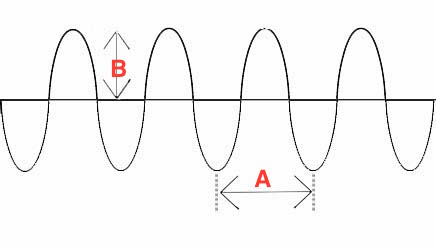
What is the wavelength of a wave?
The distance between two consecutive crests or troughs
The height of the wave
The number of waves that pass a point in one second
The speed of the wave
What is the frequency of a wave?
The distance between two consecutive crests or troughs
The height of the wave
The number of waves that pass a point in one second
The speed of the wave
What is the amplitude of a wave?
The distance between two consecutive crests or troughs
The height of the wave from the rest position
The number of waves that pass a point in one second
The speed of the wave
Which of the following is true about the speed of a wave?
It is determined by the frequency and amplitude
It is determined by the medium through which it travels
It is always constant
It is determined by the wavelength and amplitude
Which of the following is a property of transverse waves?
They can travel through a vacuum
They have compressions and rarefactions
They have crests and troughs
They require no medium
Which of the following is a property of longitudinal waves?
They can travel through a vacuum
They have compressions and rarefactions
They have crests and troughs
They require no medium
What happens to the wavelength of a wave if the frequency increases, assuming the speed of the wave remains constant?
The wavelength increases
The wavelength decreases
The wavelength remains the same
The wavelength doubles

Which diagram shows a transverse wave?
Diagram A
Diagram B
Both
Neither