
 Worksheets
Exploring the Moon and Beyond
Total questions: 47
Worksheet time: 1hrs 11mins
What is the name of the phase of the moon when it is completely illuminated as seen from Earth?
New Moon
Full Moon
First Quarter
Last Quarter
How long does it take for the Earth to complete one full rotation on its axis?
12 hours
24 hours
48 hours
72 hours
Which scientist is credited with creating the telescope?
Isaac Newton
Albert Einstein
Galileo Galilei
Johannes Kepler
What is the primary function of a telescope?
To measure temperature
To observe distant objects
To calculate speed
To weigh objects
Explain the difference between a solar and a lunar eclipse.
A solar eclipse occurs when the Earth is between the Sun and the Moon, while a lunar eclipse occurs when the Moon is between the Sun and the Earth.
A solar eclipse occurs when the Moon is between the Sun and the Earth, while a lunar eclipse occurs when the Earth is between the Sun and the Moon.
Both occur when the Sun is between the Earth and the Moon.
Both occur when the Moon is between the Earth and the Sun.
How many days are there approximately between a new moon and a full moon?
7 days
14 days
21 days
28 days
Describe the geocentric model of the universe.
The Sun is at the center, and all planets revolve around it.
The Earth is at the center, and all celestial bodies revolve around it.
The Moon is at the center, and all planets revolve around it.
The stars are at the center, and all planets revolve around them.
Why do we experience different seasons on Earth?
Because of the Earth's distance from the Sun.
Because of the Earth's tilt on its axis.
Because of the Earth's rotation speed.
Because of the Moon's phases.
Predict what would happen if the Earth stopped rotating on its axis.
There would be no change in day and night.
One side of the Earth would always face the Sun, while the other side would be in constant darkness.
The Earth would start rotating in the opposite direction.
The Moon would stop orbiting the Earth.
Plan a simple experiment to demonstrate the phases of the moon using a light source and a ball.
Use a flashlight and a ball to show how the moon orbits the Earth.
Use a flashlight and a ball to show how the Earth's shadow causes moon phases.
Use a flashlight and a ball to show how the moon's position relative to the Earth and Sun causes different phases.
Use a flashlight and a ball to show how the moon's rotation causes different phases.

Name this moon:
Waxing Crescent
Waning Gibbous
Waning Crescent
Waning Gibbous

What phase of the moon is shown?
waning gibbous
1st quarter
waxing crescent
Waxing gibbous


What is the phase of the Moon at position #5?
New Moon
Third Quarter Moon
First Quarter Moon
Full Moon


Look at the picture of the moon.
What will the moon look like in approximately 14 days?
New Moon
1st Quarter Moon
3rd Quarter Moon
Full Moon

Use the calendar to predict the moon phase on March 9th.
New Moon
Full Moon
Third Quarter
First Quarter

Day & night are caused by the ______________ of earth on its axis
revolution
orbit
rotation
tilt of the axis
How long does it take for Earth to complete one full rotation?
24 hours
365 days
30 days
60 seconds

It happens when the Earth moves between the Sun and the moon, blocking part of the Sun's light from reaching the moon.
solar eclipse
lunar eclipse
neap tides
spring tides
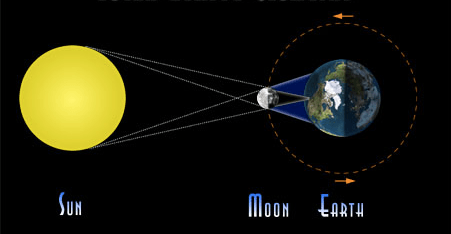


A is when only part of the Sun or the Moon is covered by a shadow, almost as if it looks like a cookie with a bite taken out of it.

If a celestial body like a planet or a moon is covered completely from receiving the Sun’s light, and the body is perfectly in line with the Sun, a occurs.
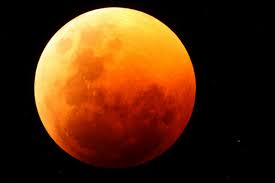

During a lunar eclipse, what is the term for the lighter, outer part of the Earth's shadow?
Umbra
Penumbra
Antumbra
Corona


F
G
H
J

Season
object's complete turn around its own axis.
an invisible line around which an object spins.
period of the year distinguished by special climatic conditions.
Why does the area around the equator stay the same temperature year-round and consequently no seasons?
It tilts towards the sun in summer, so has longer hours of daylight.
It receives the same amount of direct sunlight year-round
Its days are more than 18 hours long year-round
The equator rotates slower than the poles

The diagram below represents a simple geocentric model. Which object is represented by the letter X?
Earth
Sun
Moon
Polaris
Which model has the Earth at the center of space?
Geocentric model
Heliocentric model
Scientific model
Geological model
What does "geo-" mean?
Earth
sun
Center
Moon
Geocentric is.....
Revolving around humans
Having or representing the earth as a center
Having or representing the moon as a center
A new board game
What is the term for the path that the Earth follows around the Sun?
Orbit
Axis
Rotation
Revolution

Which phase of the moon is this?
Waxing Gibbous
Waning Gibbous
First Quarter
Full Moon
Look at the picture of the moon.
What will the moon look like in approximately 14 days?
New Moon
1st Quarter Moon
3rd Quarter Moon
Full Moon

Waxing means...
getting larger
getting smaller



