
 Worksheets
tiểu học
Total questions: 16
Worksheet time: 8mins
Children may think in pictures and images and show special abilities in drawing. They may learn through visuals and organize ideas sprially through graphic organizers.
Spatial-visual (picture smart)
Bodily-kinesthetic (body smart
Linguistic (word smart)
Logical-mathematical (number smart)
Children may learn through auditory rhythms and melodies and enjoy singing, chanting, tapping rhythms, and listening activities.
Musical (music smart)
Bodily-kinesthetic (body smart
Linguistic (word smart)
Interpersonal (people smart)
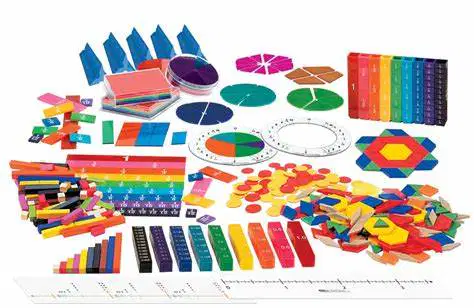
Children may learn through gestures and manipulatives and enjoy activities that involve movement, dancing. running, jumping, and touching.
Spatial-visual (picture smart)
Bodily-kinesthetic (body smart)
Linguistic (word smart)
Logical-mathematical (number smart)
Children tend to think in words and enjoy reading, writing, discussions, and dialogs. They also have the ability to figure out grammatical patterns.
Musical (music smart)
Intrapersonal (self smart)
Linguistic (word smart)
Logical-mathematical (number smart)
Children do not just show a propensity toward math but also tend to be more analytical. They learn through reasoning and enjoy puzzles and experiments.
Musical (music smart)
Intrapersonal (self smart)
Linguistic (word smart)
Logical-mathematical (number smart)
Children like interacting with people an show ability to relate to others. They enjoy discussing and socializing with their peers and cooperative activities.
Musical (music smart)
Intrapersonal (self smart)
Interpersonal (people smart)
Logical-mathematical (number smart)
Children have a tendency to be self-reflective and like to work alone. They may be more in touch with their emotions, feelings, and abilities.
Musical (music smart)
Intrapersonal (self smart)
Interpersonal (people smart)
Logical-mathematical (number smart)
Children have an affinity toward nature, including the environment, plants, and animals. They may enjoy activities that take place outdoors in nature.
Musical (music smart)
Intrapersonal (self smart)
Interpersonal (people smart)
Naturalistic (nature smart)
• Students listen to a pair of words and circle if the words are the same or different.
• Students match a word they hear with its picture.
• Students listen to a series of sentences and distinguish the subjects from the verbs.
• Students listen to a short dialog and fill in the blanks of a transcript.
Bottom-up listening
top-down listening
Before students listen to an announcement, they are shown the context of an airport and predict what they might hear.
• Students listen to some utterances and describe the emotional reaction they hear: happy, sad, etc.
Students listen to a conversation between a doctor and a patient and choose a picture showing the correct location of the dialog with the correct people having the conversation.
Bottom-up listening
top-down listening

Try to prepare short segments or comprehensible listening input when giving instructions, doing demonstrations, or explaining language.
1. Prepare teacher talk carefully.
2. Use listening activities that reflect real-life listening.
3. Use listening activities that are developmentally appropriate.
4. Use a variety of techniques to make listening input comprehensible.
5. Check comprehension using a variety of response types.

Activities should involve authentic language and real-world contexts as much as possible to make the learning more meaningful, motivating, and useful for students.YLs use English to mirror and contextualize language instruction.
1. Prepare teacher talk carefully.
2. Use listening activities that reflect real-life listening.
3. Use listening activities that are developmentally appropriate.
4. Use a variety of techniques to make listening input comprehensible.
5. Check comprehension using a variety of response types.
All activities should take into consideration learners age, background knowledge, and interests.provide trustworthy information about the media to help families make good decisions about the media children are exposed to. They suggest good cartoons, TV shows, movies, books, and so on for children by age, and it could be a good place to see what kinds of media are attractive as well as appropriate in terms of content and delivery by age group.
1. Prepare teacher talk carefully.
2. Use listening activities that reflect real-life listening.
3. Use listening activities that are developmentally appropriate.
4. Use a variety of techniques to make listening input comprehensible.
5. Check comprehension using a variety of response types.
Teachers should prepare students with vocabulary needed to understand the listening activity. Preparing context clues like pictures and realia are helpful,
1. Prepare teacher talk carefully.
2. Use listening activities that reflect real-life listening.
3. Use listening activities that are developmentally appropriate.
4. Use a variety of techniques to make listening input comprehensible.
5. Check comprehension using a variety of response types.
how can you know if students truly understand without something concrete or observable? Teachers can use a variety of response types that should be both verbal and nonverbal. For young learners who have a beginning level of proficiency, it can be very stressful to show comprehension by having to produce language and respond verbally using new language. There are many ways that a learner can respond. Taxonomy for conceptualizing the ways teachers can check comprehension of a listening activity.
1. Prepare teacher talk carefully.
2. Use listening activities that reflect real-life listening.
3. Use listening activities that are developmentally appropriate.
4. Use a variety of techniques to make listening input comprehensible.
5. Check comprehension using a variety of response types.
Every listening activity should give YLs a purpose for listening and, better yet, a task to complete.
All too often teachers will say "Listen to this," and then sing a song or play a tape without giving learners a task or a reason to listen.should say
"Listen and . .. " filling in the blank with an appropriate task. For example, a teacher could ask students to listen and then point to the correct picture, with three pictures of different contexts to choose from.
6. Keep listening active--always give learners a listening task.
7. Equip your students with intelligent guesswork strategies.

