
Font size
 Worksheets
untitled
Total questions: 49
Worksheet time: 28mins

Which angle does the picture represent?
Positive camber
Negative camber

Which angle does the picture represent?
Positive camber
Negative camber

Which angle does the picture represent?
Toe out
Toe in

Which angle does the picture represent?
Toe out
Toe in

Which angle does the picture represent?
Negative caster
Positive caster

Which angle does the picture represent?
Negative caster
Positive caster
How many minutes equals one degree?
100
50
60
1
Excessive negative camber will cause the tires to
Wear rapidly on the inner edges
Wear rapidly on the outer edges
Cause a feathered edge
Will give the vehicle better straight ahead stability
Excessive positive toe causes excessive
toe out
toe in
Which of these is a direct tire wear angle? (select all that apply)
Toe
Caster
Camber
The four reasons for an alignment are
maintenance, performance, standard, modified
standard, modified, corrective, collision
maintenance, corrective, modified, collision
maintenance, modified, standard, frame pulling
Camber roll is caused by which suspension angle?
Total toe
Front caster angle
Front camber angle
All of the above
How would positive toe affect vehicle handling?
The vehicle will feel as if it were "darting"
There would be no customer concern/change in driving feeling
The vehicle will feel as if it were "wandering"
Technician A says SAI is not adjustable. Technician B says IA is adjustable. Who is correct?
Technician A
Technician B
Both technicians
Neither technician
When describing turning angle/maximum steering angle,
The outer front wheel must turn at a sharper angle than the inner wheel.
Both front wheels turn at equal angles.
The inner front wheel must turn at a sharper angle than the outer wheel.
The degree the wheels turn vary depending on speed.
When discussing Macpherson strut type suspension systems, Technician A says that if your SAI is higher than specification, then you should check for damage towards the strut tower. Technician B says that if your IA angle is lower than specification you should check for damage at the steering knuckle. Who is correct?
Technician B
Technician B
Both technicians
Neither technician
Negative front toe will cause:
the tire's outer shoulders to wear.
rapid wear to the center section of the tire.
the tire's inner shoulders wear.
will not cause any irregular wear to the tire.
Technician A says a vehicle will drift or pull to the side with the most positive caster setting. Technician B says that caster is an indirect tire wear angle. Who is correct?
Technician A
Technician B
Both technicians
Neither technician

Name component ?
Spring
Shock
Strut
Bearing Plate

What part is this???
Inner Tie Rod
Connector Link
Steering End
Outer Tie Rod

What is this parts name??
Suspension Connector
Sway Bar
Inner Tie Rod
Sway Bar End Link

What is it?
Strut Rod
Inner Tie Rod
Steering Connector
Stabilizer Link

What are acceptable names for this component
Sway Bar Connectors
Stabilizer End Links
Strut Rod End Links
Sway Bar End Links
Which statement is true about springs?
Torsion bars are often adjustable to control ride height
Leaf springs use a center bolt
Spring can sag resulting in lower ride height
All of the above
When performing an alignment, a scan tool is likely to be needed to perform which operation?
Measure rear toe (total)
Calibrate steering angle sensor
Center the steering wheel
All of the above
All of these symptoms may be corrected by an alignment EXCEPT ________.
wheel tramp
pulling to one side
drifting to one side
wander
When performing an alignment, which angle is the most important for tire wear?
Caster
Camber
Toe
SAI
Which alignment angle is LEAST likely to cause tire wear?
toe
camber
caster
none of these cause wear
The top of a tire is tilted out when viewed from the front. This is considered to be ________.
positive camber
negative toe
negative camber
positive caster

What angle is being shown?
Positive toe
Positive caster
Positive camber
Negative camber
What is the maximum amount generally allowed for camber side-to-side difference
1 degree
None of these are correct
0 degrees
1/2 degree
What is camber?
The angular displacement of the steering axis from the vertical axis of the wheel viewed from the side
The angle between the centerline of the steering axis and the vertical line from the tire contact surface
The measure of the tire's centerline relative to the road surface
The direction the tires are pointed relative to the vehicle center line
What is steering axis inclination?
The angular displacement of the steering axis from the vertical axis of the wheel viewed from the side
The direction the tires are pointed relative to the vehicle center line
The angle between the centerline of the steering axis and the vertical line from the tire contact surface
The measure of the tire's centerline relative to the road surface
What is the purpose of negative camber in racing cars?
To improve steering response
To reduce oversteer
To improve cornering
To reduce steering effort and minimize tire wear
What is caster in wheel alignment?
The measure of the tire's centerline relative to the road surface
The angular displacement of the steering axis from the vertical axis of the wheel viewed from the side
The angle between the centerline of the steering axis and the vertical line from the tire contact surface
The direction the tires are pointed relative to the vehicle center line
(a) caster helps to keep a car's wheels traveling in a straight line.
Camber is adjusted by moving the (a) arm in or out without moving the ball joint forward or rearward.

What is the purpose of automotive suspension?
To make the ride as bumpy and uncomfortable as possible
To increase fuel efficiency
To make the vehicle more difficult to control
To provide a smooth and comfortable ride, and ensure proper handling and stability of the vehicle.

What are the common signs of a worn-out suspension system?
Soft brake pedal and clear windshield
Loud engine noise and high fuel efficiency
Smooth ride and easy handling
Excessive bouncing, uneven tire wear, drifting or pulling during turns, and a rough or bumpy ride

How often should I rotate my tires?
Once a month
Once a year
At least twice a year or every 6000 miles
Whenever I feel like it

What are the different types of power steering systems?
Mechanical power steering and pneumatic power steering
Hydraulic power steering and electric power steering
Manual power steering and automatic power steering
Analog power steering and digital power steering

How does wheel alignment affect a vehicle's steering and tire wear?
Bad wheel alignment causes the tires to wear more evenly and improves steering
Improper wheel alignment can cause steering issues and uneven tire wear.
Wheel alignment only affects the vehicle's suspension, not the steering or tire wear
Bad wheel alignment has no impact on steering or tire wear

What type of spring is this?
Leaf spring
Layered spring
Spring bar
bar spring

What is the recommended tread depth for replacing a tire?
6/32
4/32
5/23
1/2
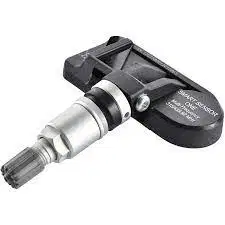
After checking that all four tires are the same size and condition, the TPMS may require______________.
Startup
Sleep Mode
Flip Mode
Initialization

If a vehicle has an ____________valve stem it is equipped with a direct tire pressure monitoring system.
Aluminum
Plastic
wood
rubber

What are these called?
Ball joints
tie rods
Torsion bars
Control arm

The tires on a car become _______as you drive.
Heavier
Colder
Warmer
bigger

What are these parts called?
Sway bars
primary arms
Ball joints
Control arms with ball joints and bushings

