
NEW
Font size
 Worksheets
SSCC4793 Photocatalytic Water Splitting for Hydrogen Production
Total questions: 10
Worksheet time: 5mins

Among the following, which has the highest energy density per unit mass?
Coal
Petroleum
Hydrogen
Helium

Water splitting by electrolysis does not produce any greenhouse gases.
True
False
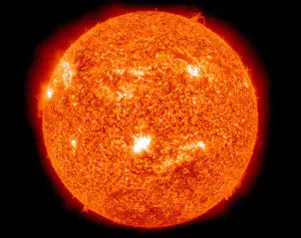
In order to fully utilize solar energy for water splitting, a photocatalyst that needs UV light irradiation is most desired.
True
False
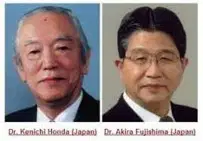
What did Fujishima and Honda do in 1972?
Designed of a novel photocatalytic system using semiconductor photocatalysts.
Reported photocatalytic water splitting using titania photocatalyst.
Reported photocatalytic water splitting using a titania electrode.
What is a semiconductor?
A material with highly insulating properties and low conductive properties
A material which its properties are highly conductive
A material with highly insulating properties
A material which its electrical properties are between highly conductive materials and insulators
The material with the biggest forbidden gap is called ___________________.
insulator
conductor
semiconductor

For the energy band diagrams shown, which one represents a semiconductor?
a
b
c
From which material would it be most difficult to remove an electron?
Element (X) with a forbidden gap of 8 eV wide, element (Y) with a forbidden gap of 3eV wide or element (Z) with no forbidden gap?
Element (X)
Element (Y)
Element (Z)
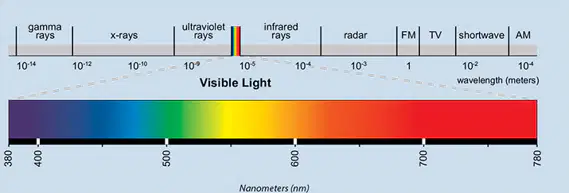
What is the corresponding wavelength for a material with band gap energy of 3.0 eV?
1000 nm
387 nm
427 nm
413 nm

Based on the picture, cadmium selenide (CdSe), with a band gap energy of 1.7 eV, can act as the photocatalyst for water splitting.
True
False

