
 Worksheets
Radioactivity
Total questions: 120
Worksheet time: 2hrs 2mins

What is the mass number of this isotope?
131
53
184
78
How many protons does this isotope have?
131
53
184
78
What is the name of this isotope?
Iodine-131
Iodine-53
Iodine-184
Iodine-78
An alpha particle is made up of
2 protons and 4 neutrons
1 proton and 1 neutron
2 protons and 2 neutrons
4 protons and 2 neutrons
Which type of nuclear radiation can be stopped by a sheet of paper?
Alpha
Beta
Gamma
Which type of nuclear radiation can be stopped 60 cm of aluminum or 7 cm of lead?
Alpha
Beta
Gamma
When a substance undergoes beta decay
The atomic number increases by 1
The atomic number decreases by 2
The atomic number does not change
A radioactive shoe is wrapped in 3mm of aluminum foil but radiation is still detected. What must be true?
The shoe emits alpha radiation
The shoe emits beta radiation
The shoe emits gamma radiation

Which type of nuclear decay did Radon-198 go through?
alpha decay
beta decay
gamma decay

What will the values of x and y be?
x=194, y =83
x=194, y =84
x=194, y =85
I don't know. I should probably study this stuff more before the test.
A sample of Radium-228 decays from 100g to 12.5g. How many half lives did it experience?
1
2
3
4
How much of a 250g sample would be left after 5 half lives?
125g
62.5g
31.25g
7.81g
If the half life of Uranium-240 was 10 years, how long would it take for it to decay from 310g to 80g?
10 years
240 years
20 years
30 years

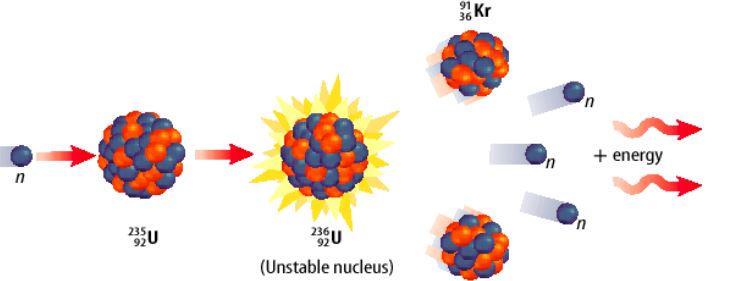
This image shows
nuclear fission
nuclear fusion

This image shows
Nuclear fission
Nuclear fusion

This equation shows
Nuclear fission
Nuclear fusion

This equation shows
Nuclear fission
Nuclear fusion
When nuclei decay, massive amounts of __________ is released.
energy
electrons
protons
neutrons
What type of decay is shown here
23892U ---> 23490Th + 42He.
alpha
beta
gamma
Identify the type of nuclear decay shown here
21483Bi → 0-1e + 21484Po
alpha
beta
gamma
Finish this equation
20983Bi--> _______ + 20581Tl
42He
0-1e
y
85209At = ___ + 24He
Identify the missing substance in each of the following nuclear reaction.
_____→13756 Ba + 0−1 e
13755Ba
13757La
13856Ba
13755Cs
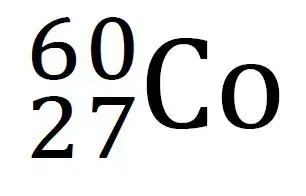
2760Co = ___ + -10e


An isotope of an element has the same number of _________, but a different number of _________.
Protons, electrons
Protons, neutrons
Electrons, neutrons
Neutrons, protons
A radioactive nuclide has a ____ stable nucleus than a non-radioactive nucleus of the same element.
more
less
identical
small


Which type of radiation releases an electron?
Alpha radiation
Beta radiation
Gamma radiation
Theta radiation

What particle is released when an unstable isotope undergoes alpha radiation?
a helium nucleus
an electron
a photon of light
a neutron

A radioisotope is any atom that contains an unstable _____.
energy level
nucleus
orbital
electron
_____ is when the composition of a radioisotope changes.
ions
isomers
nuclear decay
Geiger counters
What are three types of nuclear radiation?
alpha
beta
gamma
delta
What are three effects of nuclear radiation?
ionizes atoms
molecules change
stabilizes the nucleus
cellular function breaks down
How can nuclear radiation be detected?
Geiger counters
home radiation detectors
masks with filters
film badges
The process in which an unstable atomic nucleus emits charged particles and energy.
radioisotope
energy level
radioactivity
energy charging
The following are common types of nuclear radiation:
x-rays
gamma rays
delta rays
beta particles
Which groups of particles make up an alpha particle?
two electrons
two protons
two neutrons
no electrons, protons, or neutrons
Which events take place during beta decay?
a protein decomposes into a neutron and an electron
a neutron decomposes into a proton and an electron
an electron is emitted from the nucleus
A(n) _____ is a penetrating ray of energy emitted by an unstable nucleus.
alpha particle
gamma ray
beta particle
delta particle
Why does nuclear radiation sometimes damage cells?
it dries cells out
it strengthens chemical bonds
it ionizes atoms
True or False: One potential danger of radon gas is that prolonged exposure to it can lead to lung cancer.
true
false
Geiger counters and film badges are used to detect _____.
carbon monoxide
excessive smoke
nuclear radiation
polution in the air
The nucleus of an atom consists of which particles?
neutrons
protons and neutrons
neutrons and electrons
protons and electrons
The atom has an overall charge of zero. If electrons are removed from the atom what will the overall charge now be?
Positive
Negative
Neutral
There is not enough information
What does the atomic number of an atom represent?
the number of protons in the atom
the number of electrons in the atom
the number of protons and neutrons in the atom
the total number of subatomic particles in the atom
Which of the following is an isotope of carbon?


Ionising radiation is emitted from unstable nuclei. What does the term ionisation mean?
Ionisation is the loss or gain of electrons.
Ionisation is an atom of the same element with more neutrons.
Ionisation is the gaining of protons.
Ionisation is the gaining of both protons and neutrons.
There are three main types of ionising radiation. What are they?
alpha, bravo, delta
alpha, beta and gamma
alpha, beta and phi
protons, alpha and gamma
Alpha radiation consists of which particles?
two protons and two electrons
two protons and two neutrons
an electron
a proton
Which of the following are properties of alpha radiation?
short range in air
slow moving particle
has a +2 relative charge
all of the above
Which of the following is not a property of beta radiation?
has a −1 relative charge
fast moving particle
can penetrate a thick lead sheet
lightweight particle

A Radium-222 atom undergoes alpha decay. What would be the daughter nuclei of this decay?


Which of the following materials can block gamma radiation?
paper
2 m of air
thin aluminium sheet
very thick lead sheet

A Cobalt-60 undergoes beta decay. What would the daughter nuclei of this decay be?
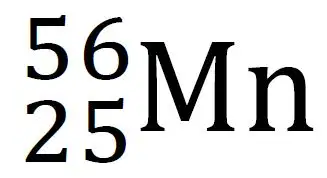

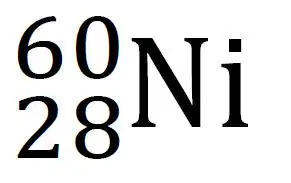

Uranium undergoes radioactive decay.
What type of decay has it undergone?
Gamma
Beta
Alpha
No decay has occurred

thorium atom has undergone decay.
Which missing numbers do x and y represent?
x is 90, y is +1
x is 90, y is −1
x is 91, y is +1
x is 91, y is −1
Which particle has a negative charge
Alpha
Electron
Proton
Neutron
What is an isotope
An atom with the same number of neutrons different number of protons
An atom that has lost or gained an electron
An atom with the same number of protons, different number of neutrons
An atom with the same number of electrons and different neutrons
A scientist counts radioactivity as 120 counts per minute. The background count is 10 counts per minute. Which value should be recorded
12 counts per minute
110 counts per minute
130 counts per minute
1200 counts per minute
What is half life
Time taken for a radioactive atom to decay be 1/4
Time taken for a radioactive atom to decay by 1/3
Time taken for a radioactive atom to decay by 1/2
Time taken for a radioactive atom to decay by 1/5
Which is an alpha particle
Fast moving electron
4 2 He nuclei
fast moving positron
EM wave
The centre of an atom is called
the electron
the proton
the nucleus
the neutron
What stops beta radiation
Paper
Air
Glass
Aluminium 3mm or thicker
What type of decay is shown here
23892U ---> 23490Th + 42He.
alpha
beta
gamma
After 4 half-lives, 1g of a sample of Krypton-85 is left. What was the original mass of the sample?
16g
32g
0.0625g
4g
Identify the type of nuclear decay shown here
21483Bi → 0-1e + 21484Po
alpha
beta
gamma
__________________ is the process in which two or more smaller nuclei combine to create a larger, more stable nuclei.
Nuclear Decay
Nuclear Fission
Nuclear Fusion
None of the above
What is the major drawback to fission power?
Radioactive Waste
CO2 Emissions
SO2 Emissions
All of the Above
___________ starts the fission of a uranium atom.
Energy
Protons
One Neutron
All of the above
What is the role of the control rods in a nuclear reactor?
Absorb Gamma Radiation
Release Alpha Particles
Fuse Unstable Nuclei
Absorb Neutrons
What is the role of the moderator in an nuclear reactor?
Increase kinetic energy of neutrons
Watch out for nasty nasty comments posted by the neutrons
Slow neutrons to thermal neutrons so they can be absorbed by uranium
absorb neutrons so they do not go to create a chain reaction

A radioactive source emits radiation that can pass through a sheet of paper but not through thick aluminium. What does this show about the radiation?
It is alpha-particles.
It is beta-particles.
It is gamma-rays.
It is a mixture of alpha-particles and gamma-rays

Which line in the table describes the nature of an alpha-particle and a gamma-ray?
A
B
C
D

A radioactive nucleus R decays with the emission of a β-particle as shown:
Which equation is correct?
x = p
y = q
p = x – 1
q = y – 1

How many nucleons are in a nucleus of ?
19
20
39
58

The equation shows the decay of the nuclide X:
What are the values of P and Q ?
A
B
C
D
Which type of radiation has the greatest ionising effect?
α-particles
β-particles
γ-rays
all have the same ionising effect

An unstable nucleus has 145 neutrons and 92 protons. It emits a β-particle.
How many neutrons and protons does the nucleus have after emitting the β-particle?
A
B
C
D
Which particles are found in the nucleus of an atom?
neutrons and protons only
neutrons only
protons and electrons only
protons, electrons and neutrons

A Geiger counter detects radiation from radioactive sources.
A radioactive source is inside a thick aluminium container as shown:
Which type of radiation from this source is being detected?
α-particles
β-particles
γ-rays
radio waves

Which line in the table describes the nature of an α-particle and of a γ-ray?
A
B
C
D
A radioactive isotope has a half-life of 2 minutes. What can be deduced from this statement?
After 2 minutes, half of the isotope remains.
After 1 minute, half of the isotope remains.
After 4 minutes, half of the isotope remains.
After 4 minutes, none of the isotope remains.
A detector is used to measure the count-rate near a radioactive source. The reading is 4000
counts per minute. After 30 minutes the count-rate has fallen to 500 counts per minute.
What is the half-life of the radioactive source? You may ignore the effects of background
radiation.
3 minutes
5 minutes
6 minutes
10 minutes
A freshly made sample of radioactive material gives a count rate of 8000 counts per minute. After
20 days, it gives a count rate of 500 counts per minute.
What is the half-life of the material?
4.0 days
5.0 days
20 days
80 days
Between 1909 and 1911, Geiger and Marsden carried out experiments in which alpha particles
were fired at metal foil. Most of the alpha particles passed through the foil with small deflections,
but some were deflected through a large angle.
These results suggest that
atoms contain clouds of electrons through which some alpha particles cannot pass.
atoms contain neutrons that alpha particles bounce off.
atoms have positive and negative charges spread throughout their volume.
atoms have positive charges concentrated in a small volume.

A narrow beam of alpha-particles is fired at a thin piece of gold foil.
Which is the final direction of the largest number of alpha-particles?
A
B
C
D
The half-life of a radioisotope is 2400 years. The activity of a sample is 720 counts /s.
How long will it take for the activity to fall to 90 counts /s?
300 years
2400 years
7200 years
19 200 years
What occurs in the decay of a radioactive nucleus?
The nucleus absorbs another nucleus.
The nucleus absorbs at least one form of radiation.
The nucleus always splits into two equal fragments.
The nucleus emits at least one form of radiation.

A student investigates a radioactive source that emits only alpha-particles. Without any source
nearby, the detector shows a low reading. The source and thick cardboard are placed near the detector, as shown:
What is the reading on the detector now, and why?
A
B
C
D

In nuclear ……1……, hydrogen nuclei ……2…… to form helium nuclei, releasing energy.
Which words correctly complete gaps 1 and 2?
A
B
C
D

Ra decays with a half-life of 1600 s.
Rn decays with a half-life of 52 s.
Po decays with a half-life of 9.1 s.
Pb decays with a half-life of 10.6 h.
The changing count rate for one of these radioactive nuclides is shown in the graph.
From the half-life shown by the graph, which was the decaying radioactive nuclide?
Ra
Rn
Po
Pb

