
 Worksheets
Growth of the South (CH 12)
Total questions: 26
Worksheet time: 14mins
growing cotton was the top economic activity
South
North
manufacturing goods was the top economic activity
South
North
most factories were located here
North
South
most plantations were located here
North
South
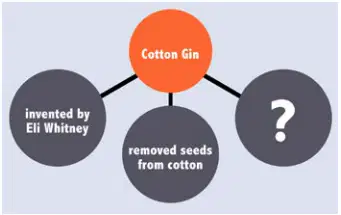
Which phrase best completes the graphic organizer?
increased productivity of cotton farming
decreased the need for slaves
encouraged farmers to move west
made growing cotton less profitable
Why were cotton-producing states located in the South?
The South had many yeoman farmers.
The South had a warm climate
The South fought for states’ rights.
The South had a lot of textile factories.

Which phrase best completes the diagram?
end of plantation lifestyle
decrease in cotton production
industrialization of the South
increase in use of slave labor
Why did Memphis become a center for the cotton industry and the slave trade? (Choose 2)
West Tennessee was the richest cotton-producing region in the state.
Yeoman farmers in Middle Tennessee produced a lot of cotton
Landowners in East Tennessee produced cotton without having to use a cotton gin
Memphis was located on the Mississippi River
Memphis had a large textile manufacturing industry
Why did White planters dominate and control Southern society?
They owned the most agricultural property and enslaved people.
They controlled the large manufacturing industries in the South.
They worked their own land which was valued in a rural society.
They worked other people’s land and were more numerous than other groups.
In 1808, the United States outlawed the importation of slaves from other countries.
How did this change in law affect Southern plantation owners?
It decreased the use of slave labor
It increased the value of the landowners’ enslaved population.
It reduced the profitability of the plantation system.
It encouraged the development of less laborintensive crops.
Why did political divisions over slavery increase in the early 1800s? (Choose 3)
Southerners resented plantation owners who moved west for better conditions for slavery.
Southerners supported elected representatives who fought for states’ rights.
Northerners supported elected representatives who fought to prevent the spread of slavery in the West.
Industrialization increased in the North and slavery decreased.
Abolitionists fought to increase slavery in the North.
What was the purpose of slave codes?
to prevent the expansion of slavery to western states
to provide slaves a chance at freedom
to maintain a system of slavery
to establish different types of slavery
Slaves often faced __________ health problems because their diet and access to medical treatment were generally __________ .
few, many
many, poor
an average number of, good
sufficient, few
The death rate of enslaved children in America was __________
low
high
average
How did enslaved people try to adapt to their bondage?
by fighting for laws such as slave codes to protect them
by creating music, folklore, and strong bonds within family and community
by working for abolition of slavery through the courts
by supporting states’ rights rather than federal law

What was the MOST likely purpose of this law?
to discourage slaveholders from settling in Nashville or bringing slaves there
to prevent slave rebellions in Nashville by discouraging connections among them
to discourage free African Americans from living or working in Nashville
to prevent runaways by tracking the whereabouts of enslaved people in Nashville
Why did Nat Turner lead a rebellion?
to resist being sent to the West
to fight for slave codes
to resist bondage
to fight against enslaved people who worked in the house
What was one result of Nat Turner’s rebellion?
The South abolished slave codes.
The South prevented expansion of slavery to the West
The South passed stricter slavery laws
The South stopped supporting states’ rights
antebellum refers to _______________ the Civil War
after
before
during
no relation
Choose the correct definition of textile.
a cloth or woven fabric
a factory
an agricultural product
a rural environment
a person skilled at a specialized trade or craft
merchant
artisan
laborer
burgess
Choose the correct definition of rebellion.
a tax on land used for farming
a weakness in the form the government
an act of violent or open resistance to an established government or ruler
a loss or property due to debt
Choose the correct definition of bondage.
the state of being in an industrialized region
the state of resisting enslavement
the state of one person being owned by another person, as a piece of property
the state of being in a rural region
to do well and achieve success
lobby
defend
settle
prosper
Choose the correct definition of cotton gin.
a machine that picks cotton from the fields
a machine that spins cotton into thread
a machine that separates cotton seeds from cotton fiber
a machine that makes cotton into cloth
Choose the correct definition of industrial
of or relating to agricultural production
of or relating to the purchasing of goods
of or relating to settlement in an urban area
of or relating to the manufacturing of goods

