
Font size
 Worksheets
Weather and Climate Test
Total questions: 223
Worksheet time: 2hrs 25mins
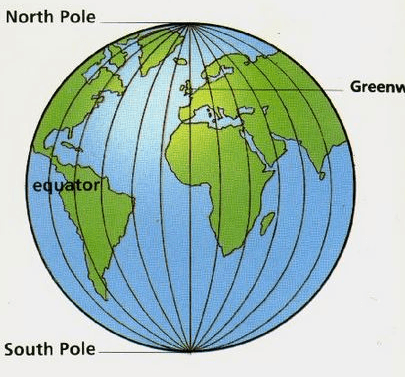
What are the parallel lines that run north and south on the globe and use the equator as a reference?
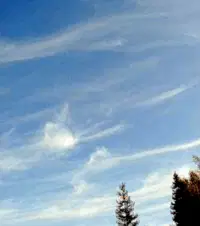
This is a high cloud that usually means fair weather except in the tropics where it could mean a storm is coming.
These clouds are a cumulus cloud that form into an anvil shape that points to where the rain, lightning, hail, or tornadoes are moving.
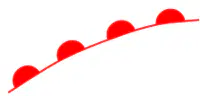

Which of the following describes a maritime polar air mass?
What is the primary mechanism by which heat is transferred in the atmosphere through the movement of air?
What is the primary gas responsible for the greenhouse effect?
Carbon dioxide
Oxygen
Nitrogen
Argon
Which atmospheric layer is known for containing the auroras?
Troposphere
Stratosphere
Mesosphere
Thermosphere
What type of cloud is typically associated with thunderstorms?
Cirrus
Cumulonimbus
Stratus
Altostratus
What is the primary cause of ocean currents?
Wind patterns
Earth's rotation
Tides
Salinity differences
Which layer of the atmosphere is closest to Earth's surface?
Troposphere
Stratosphere
Mesosphere
Thermosphere
What is the term for the boundary between two different air masses?
Front
Convergence zone
Jet stream
Thermocline
What is the Spring Equinox?
The Spring Equinox is when the Earth is closest to the sun
The Spring Equinox is when the sun is farthest from the Earth
The moment when the sun crosses the celestial equator
The Spring Equinox is when the sun is directly overhead at the equator
Explain the concept of Summer Solstice.
The longest day of the year
A day with no sunlight
The shortest day of the year
A day with equal day and night
Describe the significance of the Autumnal Equinox.
It has no significance and is just a regular day.
It marks the beginning of fall in the Northern Hemisphere and spring in the Southern Hemisphere.
It marks the beginning of winter in the Northern Hemisphere and summer in the Southern Hemisphere.
It is a religious holiday celebrated by certain cultures.
What happens during the Winter Solstice?
The Northern Hemisphere is tilted furthest from the sun, resulting in the shortest day and longest night of the year.
There is no change in the length of the day or night.
The Southern Hemisphere is tilted furthest from the sun, resulting in the longest day and shortest night of the year.
The Earth is closest to the sun, resulting in warmer temperatures.
How are the seasons labeled in the Northern Hemisphere?
spring, summer, fall (autumn), and winter
hot, cold, warm, and cool
morning, afternoon, evening, and night
rainy, snowy, windy, and sunny
Explain the relationship between Earth's tilt and the changing seasons.
The Earth's tilt causes different parts of the Earth to receive varying amounts of sunlight throughout the year, leading to the changing seasons.
The Earth's tilt has no effect on the changing seasons
The changing seasons are caused by the Earth's distance from the sun
The tilt of the Earth causes the same amount of sunlight to reach all parts of the Earth
What is the angle of Earth's axial tilt?
45 degrees
10 degrees
30 degrees
23.5 degrees
How does the tilt of the Earth cause different seasons in different hemispheres?
The tilt of the Earth causes the same amount of sunlight to reach both hemispheres at all times of the year.
The tilt of the Earth has no effect on the seasons in different hemispheres.
The tilt of the Earth causes different amounts of sunlight to reach different parts of the Earth at different times of the year.
The tilt of the Earth causes the temperature to be the same in both hemispheres throughout the year.
What are the primary factors that cause the Earth's seasons?
The rotation of the Earth and the position of the North Star
Axial tilt and orbit around the Sun
The amount of rainfall and the direction of the wind
The Earth's distance from the Sun and the Moon's gravitational pull
Explain the concept of equinox and its relation to the Earth's tilt and rotation.
The equinox is related to the Earth's tilt and rotation by causing extreme temperatures due to the axis being perpendicular to the Sun.
The equinox is caused by the Earth's rotation slowing down, resulting in equal day and night.
The equinox occurs when the Earth's axis is tilted towards the Sun, causing longer days and shorter nights.
The equinox is related to the Earth's tilt and rotation by causing equal day and night due to the axis not being tilted towards or away from the Sun.

Which label corresponds with winter?
A
B
C
D

Which label corresponds with summer?
A
B
C
D

Which label corresponds with fall?
D
E
F
G

Why is the Equator warmest?
Because it is closest to the sun.
Because it receives the most direct sunlight
Because no clouds form here.
Because it is far from the sun

The hemisphere where you live:
equator
southern
northern
eastern

Which statement is correct regarding the amount of daylight hours in different seasons?
More hour of light during spring, less in fall
More hours of light during summer, less in winter
None of the seasons have equal daylight/darkness hours
All seasons have an equal amount of daylight
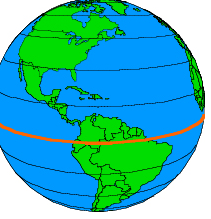
Which definition correctly defines an equinox?
Occurs twice a year, during fall and spring, where there is an equal amount of daylight and night time hours.
Occurs twice a year, during summer and winter, where there is an equal amount of daylight and night time hours.
Occurs twice a year, with the most hours of sunlight in the summer and the least hours of sunlight in the winter.
Occurs twice a year, with the most hours of sunlight in the fall and the least hours of sunlight in the spring.
Which definition correctly defines a solstice?
Occurs twice a year, during fall and spring, where there is an equal amount of daylight and night time hours.
Occurs twice a year, during summer and winter, where there is an equal amount of daylight and night time hours.
Occurs twice a year, with the most hours of sunlight in the summer and the least hours of sunlight in the winter.
Occurs twice a year, with the most hours of sunlight in the fall and the least hours of sunlight in the spring.
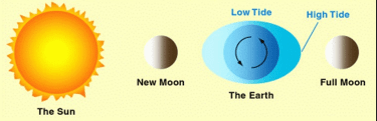
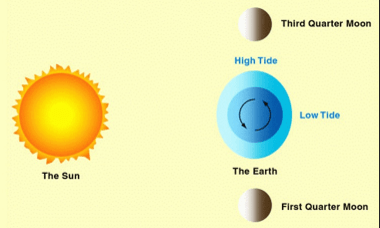


What type of tide would this arrangement of earth-moon-sun create?
full moon tide
new moon tide
neap tide
spring tide


tilt of the earth's axis

When it is fall in the Northern Hemisphere, it is _____ in the Southern Hemisphere.
spring
summer
fall
winter

What season is the Southern Hemisphere experiencing?
Summer
Winter
Spring
Fall


View the diagram.
The moon moves from its "new" phase as the light grows into a strange, bulging shape many days later.
This phase must be
waning gibbous
waning crescent
waxing gibbous
waxing crescent
View the diagram.
The moon moves from its "full" phase as the light shrinks into a thin sliver many days later.
This phase must be
waning gibbous
waning crescent
waxing gibbous
waxing crescent

What is the correct order of objects to create a full moon?


To create a solar eclipse, the moon must be able to block the sun and cast a shadow onto Earth.
Which one of these images could a solar eclipse happen in?


To create a lunar eclipse, the Earth must be able to block the sun and cast a shadow onto moon.
Which one of these images could a lunar eclipse happen in?

In which image might a moon in gibbous phase be created?


The tides change position based on
the orbit of Earth
the rotation of the Earth below them
the change in strength of gravity from the moon
the change in strength of gravity from the sun
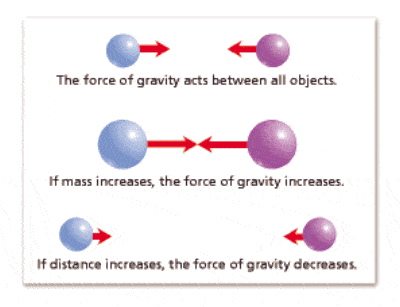
Why do the oceans feel more gravity from the moon than the sun?
the moon is more massive
the moon is much further away
the sun is more massive
the moon is much closer
The moon only shows one side of it to Earth, due to the way it moves through space.
The moon revolves around the Earth ______ for every _____ time it rotates.
once, two
twice, one
once, one
halfway, one
The shadow of the moon is always on the far side form the sun, but the phase we see depends on
how fast it rotates
how much of the lit part faces Earth
how fast it orbits
how much light the sun radiates that day
Which image shows an objects rotating?


Which image shows an objects revolving?

Click on the image.
Based on the diagram, which month is the Southern half (hemisphere) of Earth experiencing summer?
March
June
September
December
Click on the image.
Based on the diagram, which month is the Northern half (hemisphere) of Earth experiencing summer?
March
June
September
December
Which of these causes Earth's seasons?
The speed Earth orbits the sun
The tilt of the Earth as it orbits the sun
The gravitational pull of the moon
The distance of the Earth from the sun during its orbit


Wha type of tide would this arrangement of earth-moon-sun create?
full moon tide
new moon tide
neap tide
spring tide

What is the primary cause of ocean tides on Earth?
Solar radiation
Gravitational pull of the Moon
Earth's rotation
Wind patterns
What is the term for the highest point of a tide?
Spring tide
Neap tide
High tide
Low tide
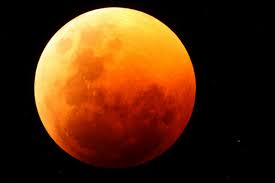
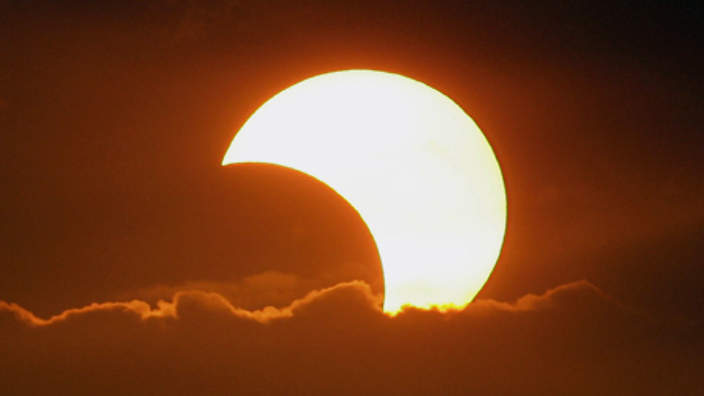
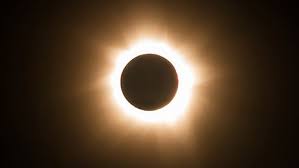
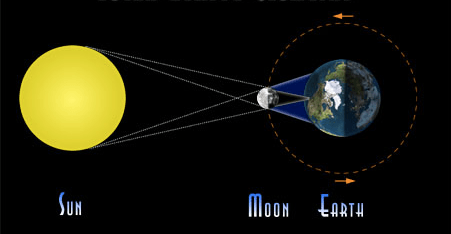
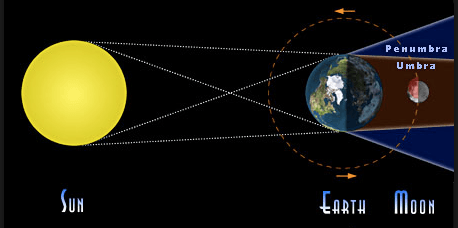
Moon, Sun, Earth

When does a lunar eclipse occur
Sunrise
Night time
Sunset
Day time
When does a solar eclipse occur
Daytime
Night time
Morning
Midnight
A __________ is the lighter, outer part of a shadow cone.
penumbra
umbra


What is the difference between climate and weather?
climate happens in that moment, weather happens over time
weather happens in that moment, climate happens over time
No difference, they mean the same thing.
During an El Nino event, wids in the western Pacific Ocean strengthen and push __________________ eastward
warm water
warm air
cold water
cold air
Because water ___________, ocean currents have a great effect on climate.
cannot hold heat
hold large amounts of heat
moves more slowly than air
stays colder than air
The pattern of _______________ determines Earth's precipitation pattern
volcanic eruptions
solar activity
global atmospheric circulation
all of the above
Seasonal changes in daylight hours and climatic conditions are caused by
lunar phases
ocean currents
the 23.5 degrees tilt of Earth's axis
the annual change of distance from sun to Earth
mOst of the warming that has been observed over the 20th century can be attributed to
droughts
glacial melting
human activity
plant growth
Latitude strongly influences climate becasue ________ solar energy falls on areas that are closer to the equator than to the poles.
the same amount of
sometimes less
more
less
Climate in a regions is
Determined only by seasonal daylight hours
Never affected by ocean currents
the atmospheric conditions on a given day
the long-term, prevailing atmospheric conditions
La Nina is the __________ phase of the El Nino - Southern Oscillation cycle.
warm
neutral
mixing
cold
Which affects wind more?
Longitude
Latitude
Earth's tilt
Solar Activity
Demopolis is located at
32 degrees North
32 degrees South
The greenhouse effect makes Earth
colder
warmer
none of the above
When warm air mixes with cold air near a mountain side, one side of the mountain gets large amounts of rain and the other side is dry. This is called a (a) .
30 - 60 degrees North latitude gets this type of prevailing wind.
Easterlie
Westerlie
Polar Easterlie
Which direction does the wind blow in Alabama
SE-NW
SW-NE
E-W
W-E
What type of solar rays hit near the poles
Vertical
Oblique
(a) water rises and (b) water sinks.

The climate in the tropical zone is...
Extremely cold
Short summers
Long winters
Hot and humid

Which type of climate can we find in deserts?
Arid and dry
Extremely cold
Cooler and wetter
Hot and humid

In the Mediterranean climate we have...
Hot dry summers
Exytemely cold
Arid and dry
Short summers
Which of these pictures show us the polar zone?


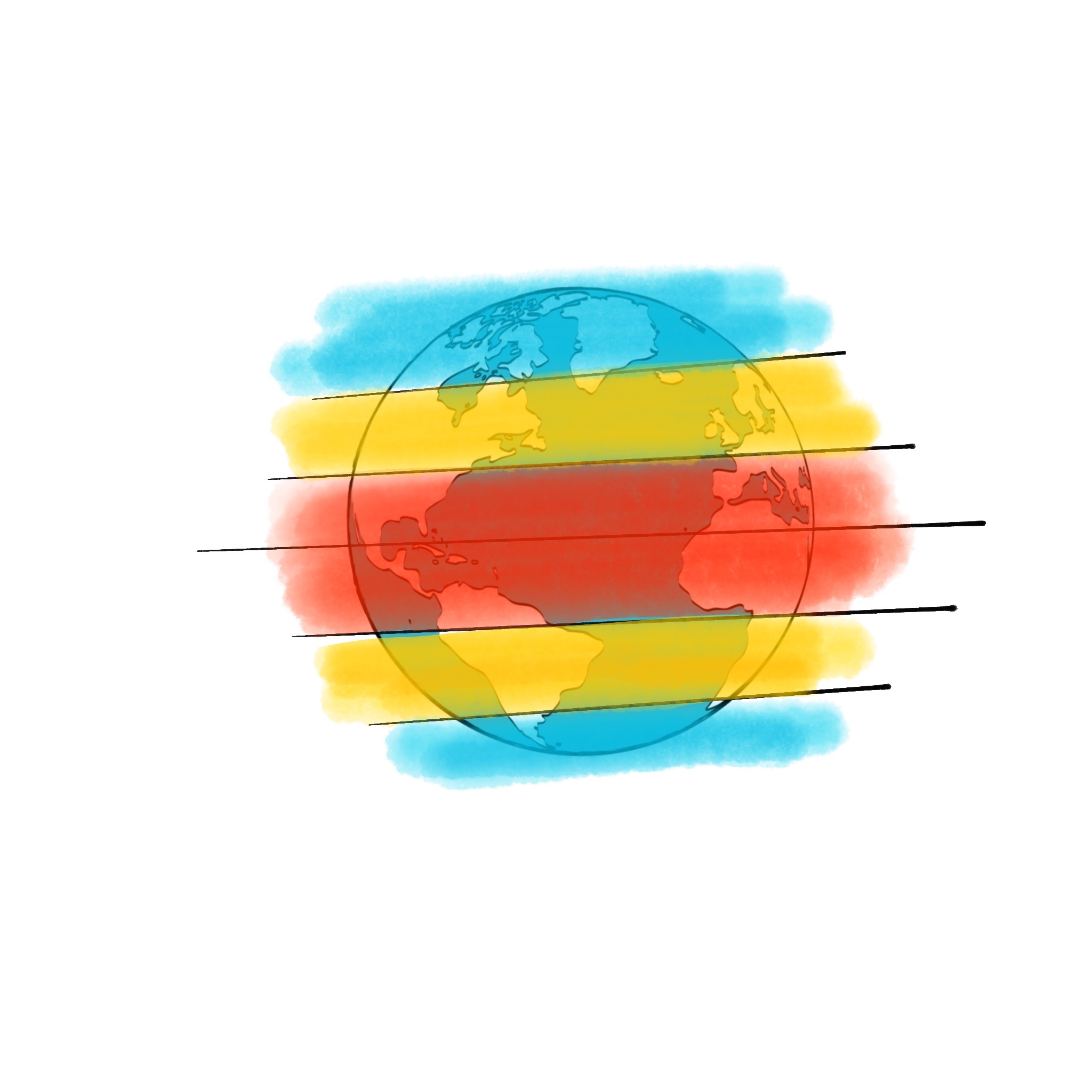
Look at the picture, which climate zone is in red?
Temperate zone
Polar zone
Tropical zone

The YELLOW climate is...
Temperate zone
Polar zone
Tropical zone

Antarctica is cold all year. Its climate is...
Temperatures in the TEMPERATE ZONES are...
cold all year
always warm
hot in summer and cold in winter
Which climate is cold and dry all year?
Polar
Mountainous
Which climate is hot and wet all year?
Temperate
Tropical
Arid

