
 Worksheets
Env Science Biodiversity Practice Quiz
Total questions: 35
Worksheet time: 35mins
Invasive species alter the ecosystem by _____ in number quickly. This leads to _____ food for the native species.
increasing, less
increasing, more
decreasing, less
decreasing, more
The primary cause of the introduction of invasive species introduction is ---
too much food.
human action.
weather events.
asteroids.
Invasive species --- [choose 3]
take over the habitat of other organisms.
increases the populations of native organisms.
decrease biodiversity.
increase biodiversity.
cause the populations of native organisms to decrease.

Kudzu has overgrown many parts of South Carolina and native ground plants have disappeared from the area. This is an example of ---
Parasitism between kudzu and the native plants.
A predator prey relationship between ground plants and kudzu.
Competition occurring between the native and invasive species.
Commesalism occurring between the kudzu and native plants.
Biodiversity, aka biological diversity, usually refers to
the number of people on Earth
the variety of species on Earth
the number of animal species in a specific area
the number of plant species in a specific area
The lionfish is a venomous fish found primarily in the Red Sea and the Indian Ocean. In the 1990s, lionfish were accidentally released into the Atlantic Ocean, where they found abundant resources and favorable environmental conditions. Which of the following scenarios is most likely to result in the lionfish having a major impact on the communities into which they were introduced?
With no natural predators, the lionfish population will become very large.
Some native species of invertebrates will develop a resistance to lionfish venom.
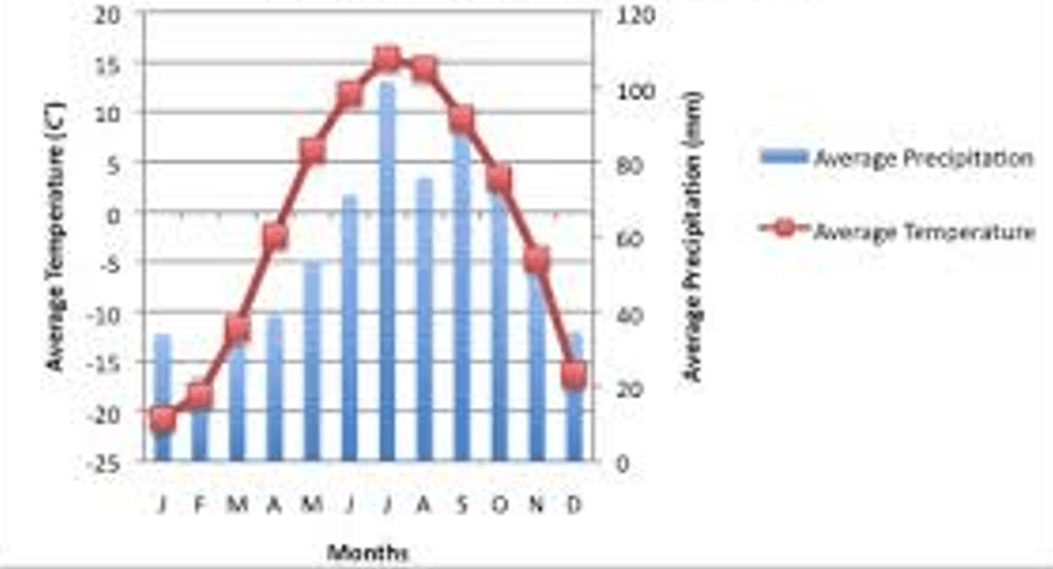
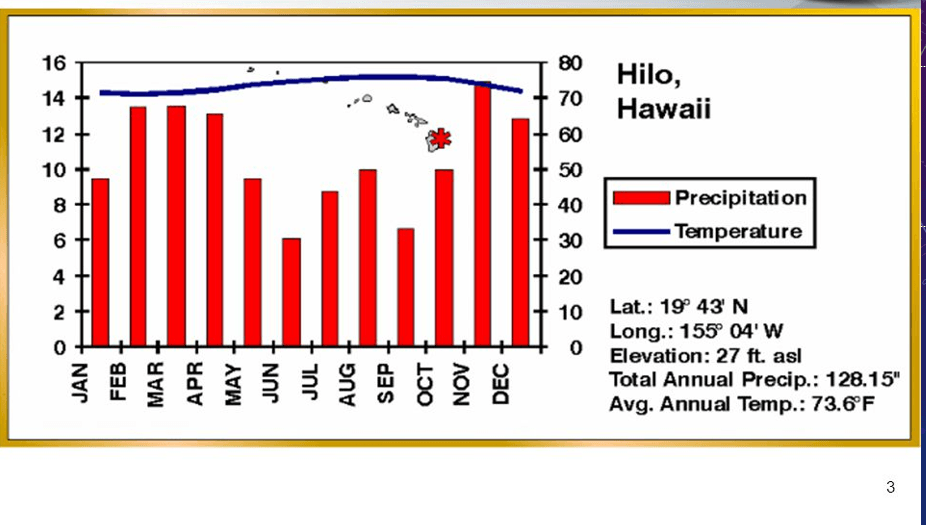

The climatograph above corresponds to which of the following biomes
temperate grassland
temperate deciduous forest
tiaga
temperate rainforest


Which biome covers most of the land mass near Earth's equator?
Desert
Grassland
Tropical rainforest
Temperate forest

Plants with spines and waxy leaves are well suited for life in which environment?
Desert
Temperate forest
Grassland
Tropical Rainfroest
A large region characterized by a specific type of climate and certain type of plants.
boreal forest (taiga)
climate
biome
canopy
A life form that is very sensitive to environmental changes in its ecosystem. They can give us early-warning messages that a habitat is suffering.
Indicator Species
Flagship Species
Predators
Ecosystem Engineers
According to the film where did the Burmese Pythons come from and what part of Florida have they invaded?
Everglades
Asia
Australia
Atlantic Ocean
Boreal Forest
What is a Keysone species?
A species that helps with keeping an ecosystem together
A species that is about to die off
A species that is not needed in an environment
Can a Grizzly Bear be considered a keystone species?
Yes
No
A keystone species has
big impact on ecosystem, big population
small impact on ecosystem, small population
big impact on ecosystem, small population
Which is not an example of a keystone species
Sharks
Grizzly Bears
Sea Otters
Lizards
Pioneer species like moss and lichen are most likely to show up after
primary succession
secondary succession
What is the difference between primary and secondary succcession?
Primary succession already has soil
Lichen and moss come in for secondary succession
Secondary succession already has soil
Climax community is achieved quickly in primary succession
A species that can colonize new areas rapidly and grow well in full sunshine
ecological succession
pioneer species
island biogeography
climax community
The succession of plant life that occurs in areas that have been disturbed but have not lost their soil
primary succession
secondary succession
climax community
island biogeography
Ecological succession occurring on surfaces that are initially lacking soil.
primary succession
secondary succession
climax community
island biogeography

Why is "A" less biodiverse than "B"?
Image "A" is more biodiverse.
Image "A" has many corn plants and this makes it have high "rich" biodiversity.
Image "A" has a lot more plants than image "B"
Even though "A" has a lot of corn plants they are all the same species and makes this a low "poor" biodiverse area.
A bee is critical to the functioning of the ecosystem in which it lives. It affects the survival and abundance of many other species in its community. It is a(n) _______ species.
endangered
threatened
extinct


A scientist collected biodiversity at four different study sites and calculated the Simpson's Index for each. Select the site with the highest biodiversity.
Site A
Site B
Site C
Site D
genetic, species and ecological

