
 Worksheets
2nd Six Weeks Exam
Total questions: 50
Worksheet time: 30mins
What is created at a Convergent Continental Continental Plate Boundary?
Volcano
Rift Valley
Mountains
Deep Ocean Trench
What forms at a transform plate boundary?
Volcanic Island Arc
Mountains
Fault Line
Trench


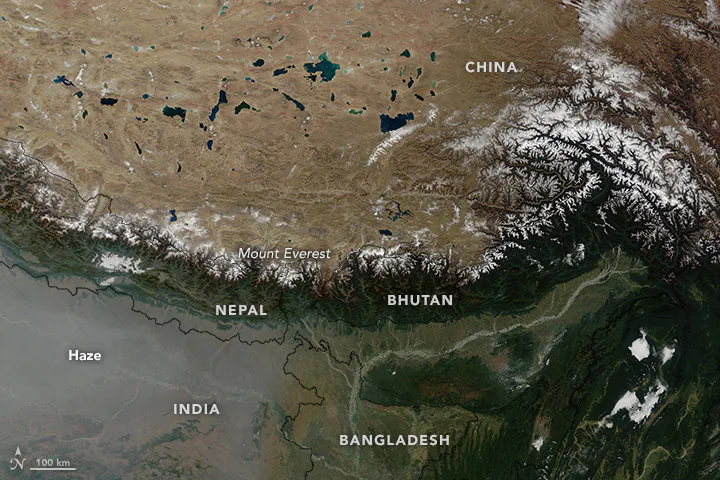
The Himalayan mountains formed at which type of boundary?
Convergent boundary
Divergent boundary
Transform boundary

The San Andreas Fault formed at which type of boundary?
Convergent boundary
Divergent boundary
Transform boundary

Who is the scientist who proposed Continental Drift Theory?

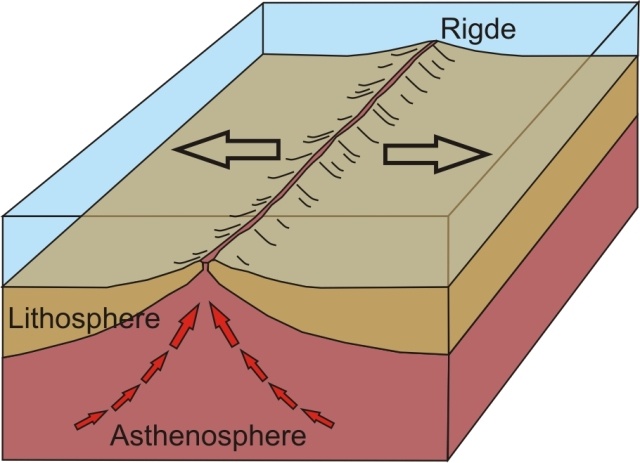
The diagram shows a rift valley formed by the movement of tectonic plates
Which movement of tectonic plates caused the rift valley to form?
Two tectonic plates separated from each other.
Two tectonic plates collided with each other.
One tectonic plate slid under another.
One tectonic plate slid past another.


Rocky or rigid outer part of Earth consisting of the brittle crust and the top part of the upper mantle
Lithosphere
Oceanic Crust
Continental Crust
Asthenosphere

What is the correct order (starting from the surface) of Earth's layers?
crust, outer core, inner core, mantle
mantle, outer core, inner core, crust
crust, mantle, outer core, inner core
outer core, inner core, crust, mantle
What happens to temperature as we move from the crust to the inner core?
Decreases
Increases
What happens to pressure as we move from the crust to the inner core?
Pressure Decreases
Pressure Increases
What percentage of all earthquakes occur around the Ring of Fire?
25%
50%
75%
90%
Most geologists rejected Wegener's idea of Continental Drift because _________.
He used too many pieces of evidence to support the idea.
He wanted to know what Earth looked like millions of years ago, which is impossible.
He couldn't identify what would cause continents to move around.
They were afraid of the new idea.
How many Continents are there?
5
7
12
6
How many Oceans are there?
4
5
6
7

This continent is the LARGEST in size and it has the world's biggest population. Identify this Continent.
Europe
Africa
Asia

There are 44 countries on this continent. Identify this Continent.
North America
Europe
Asia

The longest mountain range and the tallest waterfalls are located on this continent. Identify this Continent.
North America
Africa
South America

This Ocean is the LARGEST Ocean in the world. It covers 1/3 of the Earth's surface. Identify this Ocean.
Atlantic Ocean
Pacific Ocean
Southern Ocean

This Ocean is the 2nd largest Ocean in the world. Identify this Ocean.
Indian Ocean
Atlantic Ocean
Pacific Ocean

This Ocean is the 3rd largest Ocean in the world. It is also the WARMEST Ocean.
Atlantic Ocean
Southern Ocean
Indian Ocean
Rain, snow, sleet, and hail are all types of?
Precipitation
Runoff
Condensation
Water Vapor
What does evaporation produce?
Precipitation
Rain or Snow
Water Vapor
Condensation
______ is the process through which water falls from clouds in the form of rain, snow, and freezing rain.
Precipitation
Condensation
Sublimation
Evaporation
When water evaporates from a plant's leaves, this process is called _____.
Precipitation
Transpiration
Condensation
Evaporation
Which of the following is in the correct order?
Evaporation -> Transpiration -> Groundwater
Precipitation -> Condensation -> Evaporation
Evaporation -> Sublimation -> Precipitation
Condensation -> Precipitation -> Runoff
True or False - The water cycle always starts with the water evaporating from the ocean or lakes.
True
False
True or False - All of the water on Earth is recycled through biogeochemical cycles.
True
False
Water can change to gas through which process?
Evaporation
Sublimation
Transpiration
All answer choices are correct
True or False - The water cycle recycles water through both the living and non-living parts of an ecosystem.
True
False
Fifth and last layer of the atmosphere, where our atmosphere turns into outer space.
Thermosphere
Exosphere
Stratosphere
Mesosphere
Second layer of the atmosphere, where jets fly, and where the ozone layer is located.
Stratosphere
Thermosphere
Troposphere
Mesosphere
First layer of the atmosphere, where weather happens. The layer you live in.
Troposphere
Stratosphere
Thermosphere
Mesosphere
Most abundant gas in the atmosphere, makes up 78% of the mass.
Oxygen (O2)
Argon (Ar)
Nitrogen (N2)
Carbon dioxide (CO2)
Ozone (O3)

How many oxygen atoms does a molecule of ozone contain?
1
2
3
4
Which of the following represents an ozone gas molecule:
O6
O4
O9
O3

An Atom
cannot be broken into any smaller piece of matter
is a molecule
a chemical bond
all of the above

Atoms are composed of
Nothing, they are the smallest unit
molecules
protons neutrons and electrons
all of the above

A proton is a positively charged particle
true
false
all of the above
none of the above

An electron has a _______ charge
positive
neutral
negative
none of the above

What makes up the nucleus of the atom?
Protons and neutrons
Protons and electrons
neutrons and electrions
electrons

two or more atoms that bind together form
an element
a molecule
atoms
none of the above

