
 Worksheets
Alg 2: Axioms Notes
Total questions: 64
Worksheet time: 2hrs 34mins

Structure: Axioms Notes
Kindly read the introductory paragraph, copy the objectives into your notes, and type "Finished" when complete.
Voice Level: 0
(a)

Catechism 1
Kindly the catechism into your notes, and type "Finished" when complete.
Voice Level: 0
(a)

Axioms: The Closure Axiom
Kindly read the paragraph, copy insights into your notes if needed, and type "Finished" when complete.
Voice Level: 0
(a)

Properties
Kindly copy these properties into your notes and type "Finished" when complete.
Voice Level: 0
(a)

Catechism 2
Kindly copy into your notes and type "Finished" when complete.
Voice Level: 0
(a)

1.5.E1
Kindly identify the property shown
Commutative
Associative
Identity
Additive
Reflexive

1.5.E2
Kindly identify the property shown
Commutative
Associative
Identity
Additive
Reflexive

Catechism 3
Kindly copy into your notes and type "Finished" when complete
(a)

1.5.E3
Kindly identify the property shown
Commutative
Associative
Identity
Additive
Reflexive
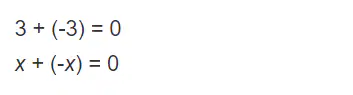
1.5.E4
Kindly identify the property shown
Commutative
Associative
Identity
Additive
Reflexive

Catechism 4
Kindly copy into your notes
(a)

Properties of Multiplication
Kindly copy these properties into your notes and type "Finished" when complete.
Voice Level: 0
(a)
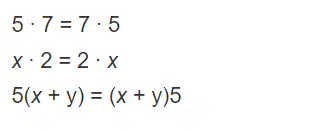
1.5.E5
Kindly identify the property shown
Commutative
Associative
Identity
Additive
Reflexive

1.5.E6
Kindly identify the property shown
Commutative
Associative
Identity
Additive
Reflexive

1.5.E7
Kindly identify the property shown
Commutative
Associative
Identity
Additive
Reflexive

1.5.E8
Kindly identify the property shown
Commutative
Associative
Identity
Multiplicative Inverse
Reflexive

1.5.E9
Kindly identify the property shown
Commutative
Associative
Identity
Multiplicative Inverse
Distributive
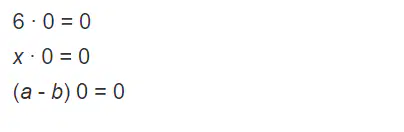
1.5.E10
Kindly identify the property shown
Commutative
Zero
Identity
Multiplicative Inverse
Distributive
(6+3) x 7 = 6 x 7 + 3 x 7
(3 + 9) + 5 = 3 + (9 + 5)
7 x (8 + 2)=7 x 8 + 7 x 2
Which equation shows the Addition Property of Zero?
(a + b) + 8 - a + (8 + b)
a x 0 = 0
a + 0 = a
a(b + c) = ab + ac)
(4 x 2) x 5 = 2 x (5 x 4)
4(y + z)
(a x b) x c = a x (b x c)
Which property of addition does 4 + 0 = 4 illustrate?
Identity Property
Distributive Property
Zero Property
Commutative Property
2(y + 9)
3(6 + 8) = 18 + 24
_________________________
3(x + 4)
2(x + 5) = 2x + 10
1+2+3 = 3+2+1 is an example of...
Associative Property
Commutative Property
Identity Property
Distributive Property
4 x (2+3) =(4x2) + (4x3) is an example of...
Associative Property
Commutative Property
Identity Property
Distributive Property
4 x (7 - 3) =(4x7) - (4x3) is an example of...
Associative Property
Commutative Property
Identity Property
Distributive Property
4 x 0 = 0 is an example of...
Associative Property
Commutative Property
Identity Property
Distributive Property
Zero Property
4 + 0 = 4 is an example of...
Associative Property
Commutative Property
Identity Property
Distributive Property
Zero Property
4 + 12 = 12 + 4 is an example of...
Associative Property
Commutative Property
Identity Property
Distributive Property
Zero Property
4 + (12 + 5) = (12 + 4) + 5 is an example of...
Associative Property
Commutative Property
Identity Property
Distributive Property
Zero Property
5 x 1 = 5 is an example of...
Associative Property
Commutative Property
Identity Property
Distributive Property
Zero Property
n x 1 = n is an example of...
Associative Property
Commutative Property
Identity Property
Distributive Property
Zero Property
n + (m + y) = (n +m) + y is an example of...
Associative Property
Commutative Property
Identity Property
Distributive Property
Zero Property
n + m = m + n is an example of...
Associative Property
Commutative Property
Identity Property
Distributive Property
Zero Property
(2 x 10) x100 = 2 x (10 x 100) is an example of...
Associative Property
Commutative Property
Identity Property
Distributive Property
Zero Property
is an example of...
5÷1 = 5Associative Property
Commutative Property
Identity Property
Distributive Property
Zero Property
is an example of...
5(9−2) = 5×9 − 5×2Associative Property
Commutative Property
Identity Property
Distributive Property
Zero Property

This is an example of
Confusion
a Weasley
How I feel when we are learning something new
Manners - He won't talk with his mouth full
A Trap
Select all examples of the Distributive Property
3(4+6) = 3(4) + 3(6)
3+(6 x 2) = (3+6) x (3+2)
4 x (5 x 3) = (4 x 5) x 3
3 x (9 - 2) = (3 x 9) - (3 x 2)
4 + 3 + 10 = 10 + 3 + 4
Select all examples of the Associative Property
3 x 45 = 3 x 5 x 9 = (3 x 5) x9
3+(6 x 2) = (3+6) x (3+2)
4 x (5 x 3) = (4 x 5) x 3
3 x (9 - 2) = (3 x 9) - (3 x 2)
4 + 3 + 10 = 10 + 3 + 4
Select all examples of the Commutative Property
3 x 45 = 3 x 5 x 9 = (3 x 5) x9
3+(6 x 2) = (3+6) x (3+2)
4 x (5 x 3) = (4 x 5) x 3
n x 10 x 4 = 4 x 10 x n
4 + 3 + 10 = 10 + 3 + 4
Which is NOT a math property (could be more than one could be none!)
Associative Property
Identity Property
Communitive Property
Distributive Property
Commutative Property
0 + m = m is an example of...
Associative Property
Commutative Property
Identity Property
Distributive Property
Zero Property
This is an example of...
n ⋅0 =0Associative Property
Commutative Property
Identity Property
Distributive Property
Zero Property

