
 Worksheets
Protein Synthesis
Total questions: 20
Worksheet time: 10mins
Name
Class
Date
1.

Which organelle is the location where protein is made?
a)
Ribosome
b)
Nucleus
c)
Cytoplasm
d)
Nucleotide
2.
During transcription, this type of ribonucleic acid is responsible for copying the DNA and brining it out of the nucleus.
a)
tRNA
b)
mRNA
c)
rRNA
d)
dRNA
3.
What is the term for a three-nucleotide sequence that codes for an amino acid?
a)
base
b)
codon
c)
amine
d)
serine
4.
Genetic info flows in one direction. Which best represents this flow?
a)
DNA-protein-RNA
b)
Protein-RNA-DNA
c)
RNA-protein-DNA
d)
DNA-RNA-protein
5.

What brings the amino acids to the ribosome to assemble a protein?
a)
mRNA
b)
tRNA
c)
rRNA
d)
DNA
6.
The information about an organism’s heredity is stored in its DNA. DNA is located in the cell’s _____________________.
a)
mitochondria
b)
lysosomes
c)
nucleus
7.
· Copying and carrying the genetic code is the responsibility of which molecule?
a)
RNA
b)
Glucose
c)
Oxygen
8.
The base Uracil is only found in which molecule?
a)
DNA
b)
RNA
c)
Carbohydrates
9.
DNA never leaves the nucleus
a)
True
b)
False
10.
Proteins are made of which molecule?
a)
Amino Acids
b)
Lipids
c)
Carbohydrates
11.
DNA is a double helix.
a)
True
b)
False
12.
RNA is a double helix
a)
True
b)
False
13.
Muscles are made of proteins.
a)
True
b)
False
14.
An organism's DNA is a code to make proteins.
a)
True
b)
False
15.
During transcription, this type of ribonucleic acid is responsible for copying the DNA and brining it out of the nucleus.
a)
tRNA
b)
mRNA
c)
rRNA
d)
dRNA
16.
When these bond together, they form a protein
a)
Amino Acids
b)
Peptide Bonds
c)
Ribose
d)
Nucleotides
17.
What is the mRNA strand that would result from the DNA template strand CCTA?
a)
GGAT
b)
CCAT
c)
GGAU
d)
CCAU
18.
Which of these nitrogenous bases is NOT in RNA?
a)
Uracil
b)
Thymine
c)
Cytosine
d)
Guanine
19.
DNA holds the code for
a)
lipids
b)
carbohydrates
c)
protein
d)
sugar
20.
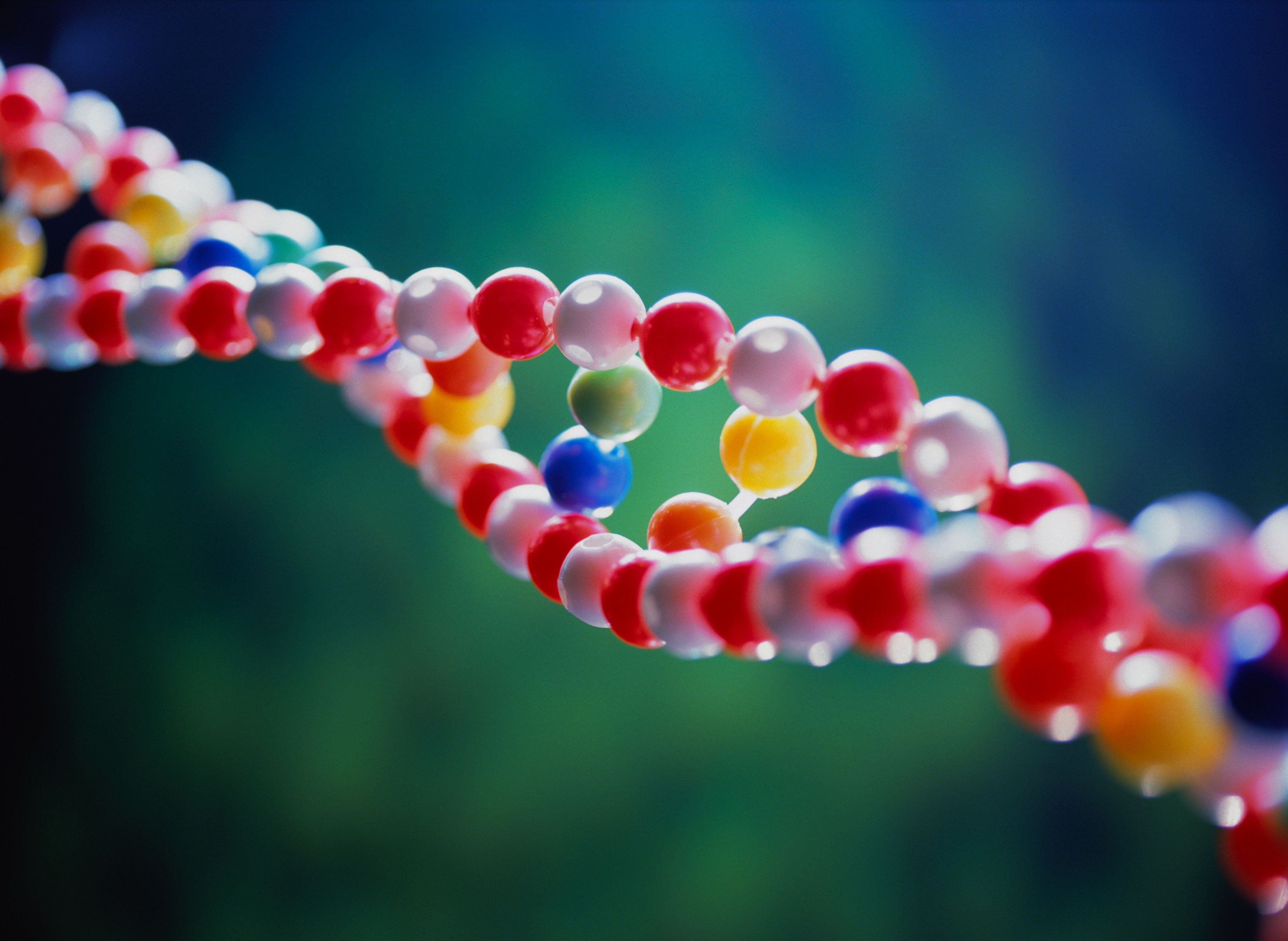
Why is DNA important?
a)
it is very small and very complicated
b)
it isn't important
c)
it serves as the blueprint for traits of all living things
d)
because we eat it every day for energy
100 %

