
 Worksheets
Electrical measuring devices Lesson #2
Total questions: 18
Worksheet time: 36mins
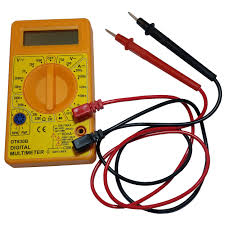
Identify this tool
Digital multimeter
Digital therometer
Digital pedometer
Digital weight scale
What type of multimeter has a needle gauge?
analog multimeter
digital multimeter
electrical multimeter
mechanical dual multimeter

What do you call that symbol?
resistance
current
microfarad
ohm
What is a multimeter?
a tool used to estimate distance current travels
a tool used to find a correct locaton
a tool used to measure electricity
a tool used to measure electronics
What physical quantity does ammeter measures?
Voltage
Current
Resistance
Power
A digital multimeter is used to measure _____. (Select all that apply)
voltage
current
blood pressure
resistance
A dynamometer wattmeter can be used for
DC
AC
DC and AC
Any of the above
In a Circuit, Ammeter should be always connected in ____ arrangement
Series
Parallel
Either in Series or in Parallel
Can be connected in booth
The deflection in moving coil galvanometer is
Inversely proportional to the area of the coil
Directly proportional to the torsional constant
inversely proportional to the current flowing
Directly proportional to the number of turns of the coil
What is the principle of Moving Coil Galvanometer.
Current carrying coil in an electric field experiences a force
Current carrying coil in magnetic field experiences no force
Current carrying conductor in magnetic field experiences a force
Current carrying conductor in an electric field produces no force
What do I need to use if I need to measure the electrical pressure or voltage of a circuit?


What do I need to use to measure the current flowing in a conductor?


What is the purpose of troubleshooting with a multimeter?
To measure temperature and humidity
To test the durability of the multimeter
To determine the age of electrical devices
To measure electrical quantities
How do you measure voltage with a multimeter?
Connect the probes of the multimeter to the circuit or component being measured and read the displayed voltage value.
Connect the probes of the multimeter to the circuit or component being measured and read the displayed resistance value.
Connect the probes of the multimeter to the circuit or component being measured and read the displayed frequency value.
Connect the probes of the multimeter to the circuit or component being measured and read the displayed current value.
Explain the difference between analog and digital multimeters.
Digital multimeters are more accurate
Digital multimeters use a a needle pointer
Analog multimeters are easier to use
Analog is not prone to human error
What safety precautions should be taken when using a multimeter?
The safety precautions that should be taken when using a multimeter include wearing safety goggles, ensuring proper calibration, avoiding contact with live circuits, and following manufacturer's instructions.
Wearing safety goggles is not necessary when using a multimeter.
Using a multimeter does not require any safety precautions.
It is safe to touch live circuits when using a multimeter.
What are some common issues that can be diagnosed using a multimeter?
Mechanical wear and tear, structural damage
Software bugs, network connectivity
Temperature, humidity, and pressure
Continuity, voltage levels, short circuit

