
 Worksheets
Grade 12 Christmas Theory Exam 2024
Total questions: 30
Worksheet time: 20mins
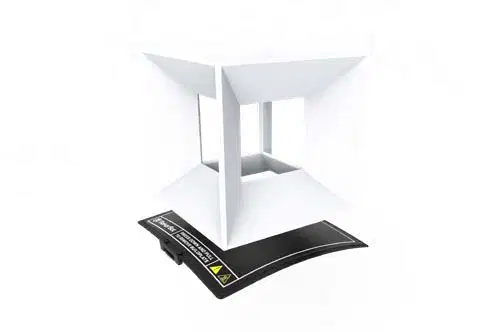
Identify the 3D Part in the photo.
Touch screen
Extruder
Gantry
Heated Removable Build Plate
Build Volume
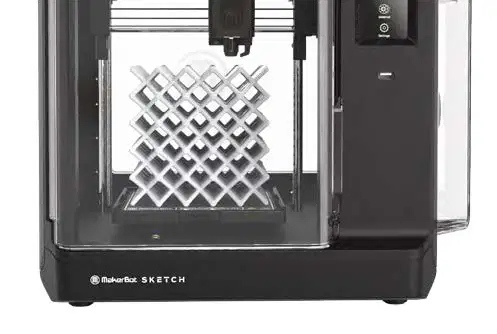
Identify the 3D area where the product is in the photo.
Touch screen
Extruder
Gantry
Heated Removable Build Plate
Build Volume
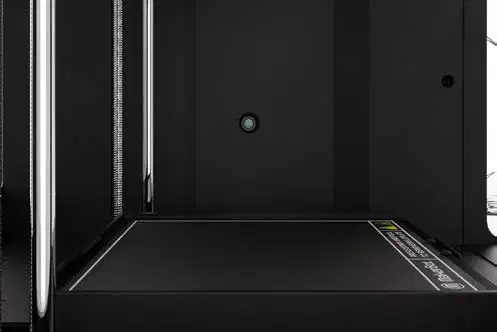
Identify the 3D part in the photo.
Touch screen
Extruder
Gantry
Camera
Build Volume
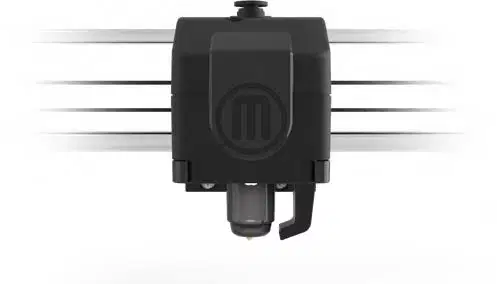
Identify the 3D part in the photo.
Touch screen
Extruder
Gantry
Camera
Build Volume
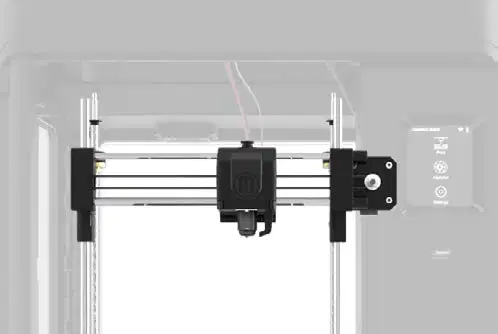
Identify the 3D part in the photo.
Touch screen
Extruder
Gantry
Camera
Build Volume
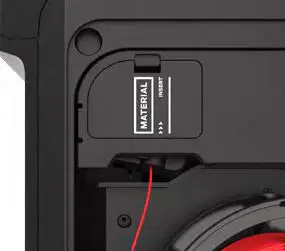
Identify the 3D part in the photo.
Material Guide Tube
Extruder
Gantry
Spool Enclosure & Material Hub
Build Volume
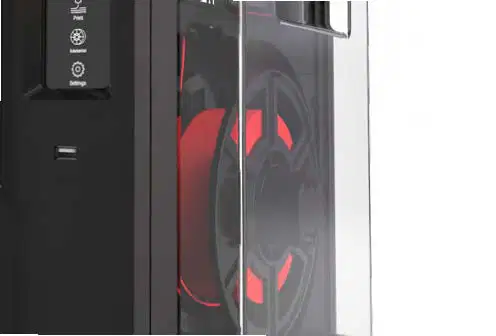
Identify the 3D part in the photo.
Material Guide Tube
Extruder
Gantry
Spool Enclosure & Material Hub
Build Volume
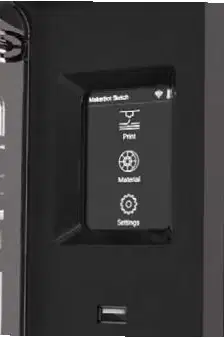
Identify the 3D part in the photo.
Material Guide Tube
Touchscreen
Gantry
Spool Enclosure & Material Hub
Build Volume
The (a) is used to store print material during the printing process and is installed clockwise.
The (a) allows you to start prints, change settings and view status information.
The maximum area where the object is created is 150mm x 150mm x 150mm. It is called the (a)
The (a) takes the material spool to the extruder.
The device that allows the carriage and extruder assemblies to move in the X and Z axis. (a)
The flat plate that is removable and bendable to remove objects. It moves in the Y axis. (a)
The (a) draws the material from the spool, melts it, and pushes it through a nozzle onto the Build Plate.
Use (a) to monitor prints remotely.
In the design thinking phase, empathizing with the user and define the problem at hand is called _______.
Sketch
Make
ASK
None of the above
When you print and test prototypes to better refine the solution in the design thinking phase it is called _______.
Sketch
Make
ASK
None of the above
The process of ideate and brainstorming solutions that resolve the user’s pain points in the design thinking phase it is called _______.
Sketch
Make
ASK
None of the above
Two sketching methods used in the Sketch phase are:
Isometric
Orthographic
Oblique
3 Point Perspective
There 3 types of 3D modelling programs. The ____________ is the easiest and most widely available type of modeling program used for creating models with real-world dimensions and to make functional parts.
Digital Modelling
Polygon Modelling
Solid Modelling
There 3 types of 3D modelling programs. The ____________ simulates the process of sculpting clay to create highly detailed and textured models.
Digital Modelling
Polygon Modelling
Solid Modelling
There 3 types of 3D modelling programs. The ____________ gives direct control of the mesh, faces, vertices, or edges of a model to create highly detailed and intricate 3D models.
Digital Modelling
Polygon Modelling
Solid Modelling
(a) helps a 3D
object hold its shape and increases the objects
durability, measured in density.
The (a) make up the shape of the 3D print when stacked.
The outside walls that make up the perimeter of
printed parts. It is called (a) .
The first component that is printed to help models adhere to the build surface and provides a level surface for the first layer of the 3D model.. It is called (a)
Removable scaffolding-like structures that print with your 3D model for any areas that
have severe overhangs. Its called (a)
(a) that typically exceed 68
degrees from the Z-axis will require supports.
The underside of a print that is supported at both ends but not in the middle.
(a)

