
 Worksheets
Chapter 5
Total questions: 27
Worksheet time: 14mins
What is the whole (W) and half (H) step pattern for a major scale?
W W H W W W H
W W H W W H
H H W H W H
W H W W H W W
Diatonic scales:
are chromatic scales.
are built of half steps only.
are built of whole steps only.
include the major scale.
The beginning tone of the scale is the:
diatonic.
tonic.
subtonic.
dominant.
Transposing a melody means:
making it chromatic.
changing its meter.
writing it in a different key.
all of the above.

Given that the key is C major, give the correct scale degree for each note. Irving Berlin, “Always,” mm. 33-36
^1 ^2 ^4 ^5 | ^6 | ^1 ^6
^1 ^2 ^3 ^5 | ^6 | ^1 ^6
^5 ^6 ^1 ^2 | ^3 | ^5 ^3
^5 ^6 ^1 ^2 | ^3 | ^4 ^3

Look at the second full measure of the excerpt below. Given that the key is G major, give the correct scale degree for each note of that measure. Don McLean, “American Pie,” mm. 1-3
^4 ^2 ^4 ^4 ^2 ^1 ^7 ^6
^4 ^2 ^4 ^3 ^2 ^1 ^7
^7 ^5 ^7 ^7 ^6 ^5 ^4 ^3
^7 ^5 ^7 ^7 ^5 ^4 ^3 ^2
The tonic is:
^5.
the “tone” on which the scale is built.
a solfège name.
only found in major keys.
^7 is the:
tonic.
dominant.
submediant.
leading tone.
^4 is the:
subdominant.
dominant.
tonic.
submediant.
^5 is the:
tonic.
dominant.
subdominant.
submediant.
The solfège syllable for ^4 is:
do.
mi.
fa.
la.
The solfège syllable for ^2 is:
ti.
re.
mi.
sol.
The solfège syllable for the tonic is:
sol.
mi.
ti.
do.
The solfège syllable for the mediant is:
do.
re.
mi.
sol.
The submediant of B major is:
G
G♯
D
D♯
Which of the following is a correctly written major scale?
C D E F G A B C
C D E F# G A B C
C D Eb F G A Bb C
C Db Eb F Gb Ab Bb C
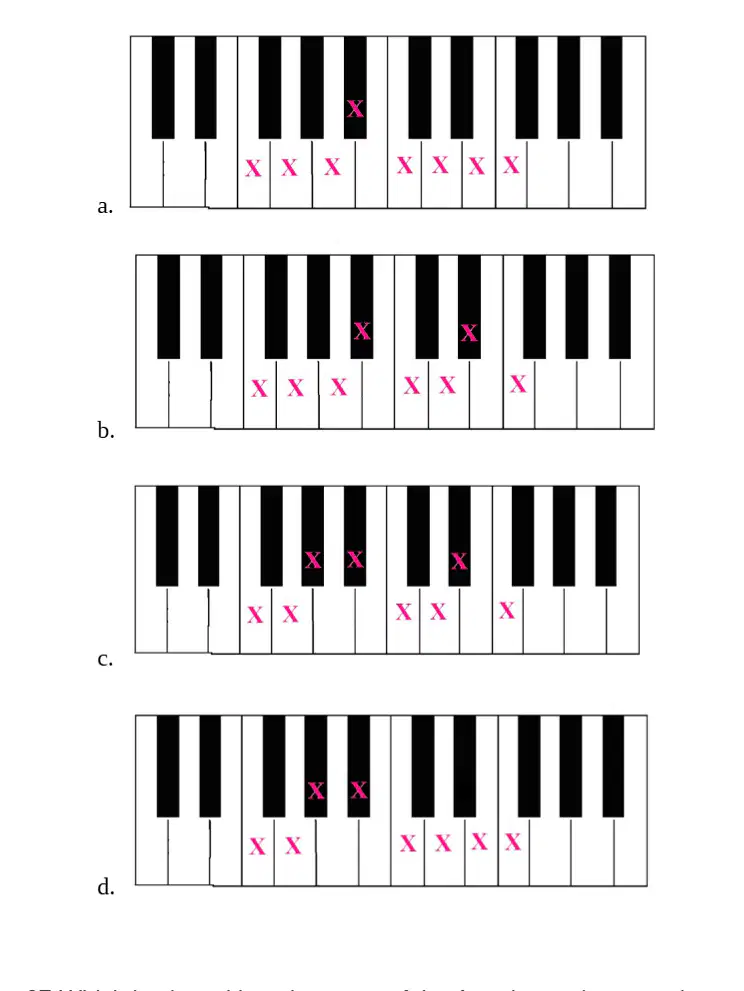
Which keyboard has the notes of the F major scale correctly marked with Xs?
a
b
c
d
The key signature:
is enough by itself to determine the key.
is written after the clef and meter on the staff.
consists of either flats or sharps.
all of the above.
Which is the correct order for writing these items on the staff?
clef, key, meter
clef, meter, key
meter, clef, key
meter, key, clef
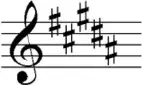
Which major key signature is this?
B major
E major
A major
D major
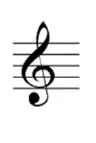
Which major key signature is this?
F major
G major
B major
C major
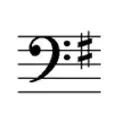
Which major key signature is this?
F major
G major
B major
C major
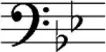
Which major key signature is this?
F major
Eb major
Bb major
C major
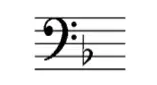
Which major key signature is this?
G major
F major
B♭ major
E♭ major
The circle of fifths:
shows the relationship between keys.
is a useful tool for remembering key signatures.
has sharps on the right and flats on the left.
all of the above.
The order of sharps is:
C G D A B E F
F E B A D G C
F C G D A E B
B E A D G C F
The order of flats is:
F C G D A E B
B E A D G C F
G C F B E A D
E B A D G C F

