
 Worksheets
Q1 G5
Total questions: 185
Worksheet time: 2hrs 23mins
Some properties are size, shape, and color.
True
False
The amount of space something takes up
density
volume
mass
matter
Matter is anything that has ___ and ___.
Weight and Volume
Mass and Weight
Mass and Volume
____ is the amount of matter in an object.
Mass
Volume
Density
We can observe the _____ properties of matter using our five senses.
Chemical
Physical
We measure mass using ___.
A graduated cylinder or ruler
A scale or balance
A calculator
We measure volume using ___.
A graduated cylinder
A scale or balance
A calculator
The units for mass are:
g/mL
g or kg
cm³ or mL
When you ___________________ something, you use your senses to gather information about it.
describe
observe
When you _________________ something, you tell about its properties.
describe
observe
A property is a characteristic of a material, such as its color and size<
true
false
No two materials have the same exact properties
true
false
When you _________________ a property you, you compare it to a standard unit, or value, for that property.
observe
describe
measure
Color, hardness, magnetism, texture, and shape are all examples of what?
solids
mixtures
gases
physical properties
the standard unit to measure length is
1 meter
gram
litter
we use a meter stick to measure length?
true
false
the units we measure volume by their are …..
gram
litter
millilitre
meter

Mass, volume, solubility, color, texture, magnetism, conductivity, solubility are
Physical state
Insulators
Physical Properties
Inferences


Salt is
not soluble in water.
less dense in water.
soluble in water.
magnetic.

An iron nail is
magnetic.
more dense in water.
not soluble in water.
All of the above

What would you measure with this tool?
volume
density
mass
weight
Measurable physical properties
Temperature, Mass, Texture, Volume
Temperature, Mass, Volume, Length
Mass, Texture, Color, Length


If a substance is magnetic it is most likely a
made up of iron
non-metal
How can we identify if a material is a good conductor of heat and electricity?
If heat and electricity cannot pass through easily.
If heat and electricity can pass through easily.
If a material is made up of wood.
If a material is made up of plastic.
Which of these materials DO NOT allow electricity to pass through?
gold
rubber
bronze
copper wire
Why is electrical wiring usually covered with a layer of plastic?
To make it look pretty.
To help electricity flow along the wire.
To make it safe.
To make it strong.
Why are cooking pots made of metals such as iron and aluminum?
Heat moves quickly through metals.
Metals are cheap.
Metals are easy to find.
Metals don’t melt.
Which term defines a material that heat does not move through easily?
conduction
conductor
heat
insulator
Mr. Stevens set up the demonstration lab for his classes. When both wires touched the coin, the light bulb lit up. What did this tell the students about the coin?
It is a good insulator.
It is a good conductor.
It has low melting point.
It would be attracted to a magnet.
Which of the following materials is an electrical insulator?
Aluminum
Rubber
Gold
Copper
a block of steel is harder than a block of wood
true
false
...................... is anything that takes up space.
Matter
Texture
Temperture
if you have two pieces of steel and wood have the same size ,color and shape ,you will identify them by comparing their
volume
length
mass
shape
copper has physical property which is ......................
does not conduct heat
conduct electricity
magnetic materials
soluble
What is Solubility?
If something dissolves in water
If something sinks in water
If something floats in water
None of the above
Salt has Solubility because it dissolves in water.
True
False
Which answer does NOT have solubility?
sugar
salt
oil
Is pepper soluble?
Yes, it dissolves in water
No, it sinks in water
No, it floats in water
Yes, it doesn't dissolve in water
When something dissolves in water then it has Solubility.
True
False
Salt and Sugar are both NOT soluble in water.
True
False
Matter is everything that _____________ and ______________.
can be seen
has mass
takes up space
is on the ground
The smallest particle that makes up matter.
Atoms
Elements
Molecules
Compounds
Substance that is made from one kind of atom only.
ATOM
ELEMENTS
COMPOUND
ELECTRON
A substance that is made from more than different kind of atoms
ELEMENTS
COMPOUND
ATOM
MATTER


Elements are made of
Many types of atoms
the Periodic Table
One type of atom
Molecules
Molecules are
2 atoms joined together
2 elements joined together
2 or more atoms mixed together
2 or more atoms (same or different) joined together

What is water (H2O)?
element
compound
mixture

What is the picture displayed?
atom
element
molecule
compound


True or False: You can see atoms with your eye.
True
False
True or False: When you grind salt, the salt breaks into smaller pieces.
True
False
A water molecule is made of _________.
hydrogen and oxygen
only hydrogen
only oxygen
carbon

Which of the models below represent an atom?
B
D

Which of the models below represent a molecule?
B
D
the smallest part of compound is ................
oxygen
molecule
hydrogen
carbon
What is water (H2O)?
element
compound
mixture
The idea that every thing is made up of tiny particles is called
atomic theory
compound
sand particles
molecules

Oxygen would be considered which of the following?
Element
Compound
Matter is everything that _____________ and ______________.
can be seen
has mass
takes up space
is on the ground
The smallest particle that makes up matter.
Atoms
Elements
Molecules
Compounds
Substance that is made from one kind of atom only.
ATOM
ELEMENTS
COMPOUND
ELECTRON
A substance that is made from more than different kind of atoms
ELEMENTS
COMPOUND
ATOM
MATTER
Elements are made of
Many types of atoms
the Periodic Table
One type of atom
Molecules
Molecules are
2 atoms joined together
2 elements joined together
2 or more atoms mixed together
2 or more atoms (same or different) joined together
What is water (H2O)?
element
compound
mixture
What is the picture displayed?
atom
element
molecule
compound
True or False: You can see atoms with your eye.
True
False
True or False: When you grind salt, the salt breaks into smaller pieces.
True
False
A water molecule is made of _________.
hydrogen and oxygen
only hydrogen
only oxygen
carbon
Which of the models below represent an atom?
B
D
Which of the models below represent a molecule?
B
D
the smallest part of compound is ................
oxygen
molecule
hydrogen
carbon
What is water (H2O)?
element
compound
mixture
The idea that every thing is made up of tiny particles is called
atomic theory
compound
sand particles
molecules
Oxygen would be considered which of the following?
Element
Compound
1. What do you get when you join any atoms together?
Molecules
a bigger atom
pure substance
element
2.Molecules move most quickly in a ......
Solid
liquid
gas
none of the above
3.How much space particles take up is called?
Density
Volume
Mass
Weight
4. What is a Solid?
Matter that has a fixed shape and volume
Matter that has no fixed shape or size
Matter that has no fixed shape and size
Matter that has a fixed volume and no fixed shape

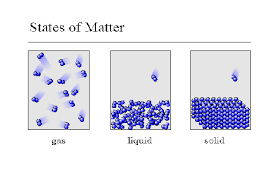
5.The diagram shows arrangement of particles in a....?
gas
liquid
solid
plasma
6. Water vapor is an example of which state of matter?
Solid
liquid
gas
all of the above
7.When water droplets on the outside of a cold glass of water.
evaporation
freezing
melting
condensation
8.__________ are highly compressible.
Gas
solid
liquid
all of the above
9. In which state of matter do molecules have very less intermolecular space?
gas
solid
liquid
both gas and liquid
10. The smallest particle of matter which can take part in a chemical reaction is called
Atom
Molecules
Particle
substances
When an object changes from a gas to a liquid it is called:
Condensation
Freezing
Melting
When something changes from a liquid to a gas it has:
Melted
Evaporated
Frozen
When a substance changes from a liquid to a solid it has:
Melted
Frozen
Condensed
Matter that can freely change shape and size:
Solid
Liquid
Gas
Matter that keeps it's size but takes the shape of it's container.
Solid
Liquid
Gas
Matter that keeps it's shape and size.
Solid
Liquid
Gas
When a substance changes from a solid to a liquid.
Freezing
Condensing
Melting
Anything that takes up space it called:
Atoms
Clouds
Matter
when water changes from a liquid to a gas - caused by heat
evaporation
condensation
freezing
melting

Which state of matter is represented by the particles in this image?
Solid
Liquid
Gas

Which state of matter is represented by the particles in this image?
Solid
Liquid
Gas
A change where new matter is formed and can't be reversed.
Physical Change
Atom
Chemical Change
Molecule
The basic building block of matter.
Molecule
Atom
Catalyst
Chemical Change
The three states of matter.
Gas
Liquid
Solid
All of the above
Two or more atoms joined together.
Atom
Catalyst
Molecule
Physical Change
Anything that has mass and takes up space.
Mass
Matter
Catalyst
Atom
A change where matter stays the same.
Molecule
States of Matter
Atom
Physical Change
The point where it is 212 degrees, water boils or becomes a gas.
Boiling Point
Hot Point
Cold Point
Freezing Point
Tearing paper is an example of...
Chemical Change
Physical Change
The point where it is 32 degrees, water freezes or becomes a solid.
Hot Point
Cold Point
Freezing Point
Boiling Point
Wood burning is an example of...
Physical Change
Chemical Change
Cooking pancakes is an example of...
Chemical Change
Physical Change
Molding play-dough is an example of...
Chemical Change
Physical Change
Which is NOT a clue that a chemical change has occurred?
Forming Bubbles
New Gas is Formed
Changes States of Matter
New Matter is Formed
An ice cube melting into water is an example of....
Chemical Change
Physical Change
A change in states of matter is a chemical change.
True
False
Changing color is a clue that a chemical change has occurred.
True
False
Cutting an apple is an example of...
Chemical Change
Physical Change
A car rusting is an example of...
Chemical Change
Physical Change
A chemical change can form a new matter.
True
False
A physical change can form a new matter.
True
False
Which of the following is a sign that a physical change has occurred?
Bubbles forming
The object being broken into smaller pieces
Heat being produced
Light being produced

What form of energy is being CREATED here? There is more than one answer!
Electrical
Thermal
Radiant (Light)
Mechanical
A combination of two or more substances that can be separated is a
potion
mixture
solute
compound
Which is the best definition of a mixture?
Two same substances combined
Two or more substances you can separate
Two or more substances combined
A solution is made when one substance _________ in another.
settles at the bottom
moves
dissolves
is suspended
A combination of substances that dissolve into one another--they are evenly mixed so that individual parts cannot be seen or separated.
solutions
mixtures
observations

Salt Water
Solution
Suspension
Colloid

Evaporation can be used to separate solutions.
True
False
Which of the following mixtures can a magnet separate most easily?
sand and water
different size rocks
skittles taste the rainbow!
Iron nails and aluminum screws
A filter can be used to separate _________________.
Salt and Water
sand and water
sugar and water
different size rocks
Solutions can be separated by hand, with a magnet, or a filter
True
False

This is an example of _________________.
mixture
solution

This is an example of a __________.
mixture
solution
A special mixture of two or more things that can't be easily separated, it must be evaporated.
mixture
physical change
substance
solution
A change to a substance without making something new.
solution
mixture
physical properties
physical change
To spread out evenly in a liquid.
solution
dissolve
mixture
physical properties
Fruit salad is an example of a
Mixture
Solution
Iron filings and sand is an example of a
Mixture
Solution
Paint is an example of a
Mixture
Solution
When combined, all substances maintain, or keep, their physical properties
Mixture
Solution
When combined, one or more substance changes their physical properties
Mixture
Solution
The substance getting dissolved
Water
Stiring
Mixture
Solute
The substance that does the dissolving
dissolving
Solutions
Solvent
Substance
This is a type of mixture where one substance dissolves into another
Solution
Mixtures
Exit
Ventana
the ability to solve problems
Which mixture can be separated using a filter?
sand and iron fillings
saltwater
sand and water
none of these
Which of the following mixture can be separated using a magnet?
sand and salt
sand and iron fillings
sugar and water
Saltwater
All of the following are examples of containers filled with mixture EXCEPT...
a jar filled with trail mix
a glass filled with water
a bowl of cereal with milk
a cup of fruit salad
Why is cake not a mixture?
It consists of only one ingredient
All of the elements are the same
You cannot separate its ingredients

