
Font size
 Worksheets
Rock Cycle and Plate Tectonics
Total questions: 39
Worksheet time: 59mins

What is letter C?
Igneous rock
Sedimentary rock
Metamorphic rock
Minerals

What is the letter A?
Cooling
Melting
Heat and pressure
Weathering and erosion
What type of rock is formed from extreme heat and pressure?
Igneous
Sedimentary
Organic
Metamorphic
A metamorphic rock transforms into an igneous rock through which two processes?
Melting and cooling
Extreme heat and pressure
Compaction and cementation
Weathering and erosion
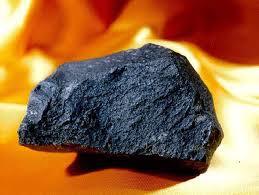
This rock was found near the mouth of a volcano. What type of rock is this?
Sedimentary
Igneous
Metamorphic

This rock was molten magma that cooled slowly underground. What type of rock is this?
Sedimentary
Igneous
Metamorphic
There are many paths through which rocks move through the rock cycle.
true
false
As rock moves through the rock cycle, material is neither lost nor gained.
true
false
Sediment accumulates at the bottom of the ocean through the process of __________.
fusion
deposition
weathering
A rock formed from fragments of other rocks is a
Metamorphic rock
Sedimentary rock
Extrusive rock
Igneous rock
As the lava cools and crystallizes, what type of rock will form?
Sedimentary
Metamorphic
Extrusive igneous
Intrusive igneous

What are the 3 main types of rocks?
Igneous, Metamorphic, Sedimentary
Metamorphic, Igneous, Cementation
Brown, Red, Gray
Streak, Hardness, Fracture
This rock was formed when molten rock cooled and solidified. What type of rock is it?
Igneous rock
Metamorphic rock
Sedimentary rock

When sediments are pressed tightly together, this is called ____________.
Compaction
Cementation
Weathering
Erosion
True or False: Once a rock is sedimentary, it cannot become an igneous rock.
True
False
The name rock is given when it breaks down into smaller pieces.
texture
weathering
sediment
erosion
The three groups of rocks are classified by
How they are formed
Color
Grain size
Chemical composition
What is the process in which water, wind, and heat break down rock?
weathering
exfoliation
cementation
composition
Sedimentary rocks can contain fossils.
True
False
What causes the movement of tectonic plates?
convection of magma
the Earth's magnetic field
the Earth rotating
the gravitational attraction of the Earth
Scientists think that the movement of Earth's tectonic plates is caused by convection currents, which are found in the _________?
outer core
inner core
mantle
Convection currents occur in the mantle. The outer core heats the surrounding magma and makes it less dense. Because the magma is less dense than the material around it, it begins to rise towards the crust. Since the crust is not hot, the magma begins to cool as it approaches the crust. As it cools, it becomes denser and begins to sink back towards the outer core.
Use the information above to answer the following question: Which of the following TWO things happen to the magma that cause it to rise?
It cools down.
It heats up.
It becomes denser.
It becomes less dense.
The Earth's plates are....
Constantly moving and changing the face of the Earth
Never moved
Move rarely and very fast
Move when they feel like it

This occurs when two plates converge but one slides beneath the other due to density.
Elevation
Subduction
Trench
None of the above
Mountains are formed when....
two plates collide
two plates separate
two plates slide past each other
How do rock samples collected from the seafloor provide evidence of the movement of tectonic plates?
The oldest rocks are found near deep ocean trenches.
The oldest rocks are near the center of ocean ridges.
The youngest rocks are near deep ocean trenches.
The youngest rocks mix with the oldest rocks at ocean ridges.
What type of landform is most likely to form at a divergent tectonic plate boundary?
island arc
ocean trench
rift zone
folded mountains

The Mesosaurus was a freshwater reptile that existed on Earth about 250 million years ago. Fossils of the reptile can be found today in some rock layers in both Africa and South America, as shown on the map below at locations X and Y.
What reason best explains why the fossils of this animal are found on both continents today?
The ocean between the two continents was once frozen, and the Mesosaurus traveled across the ice.
The continents were once joined as a single landmass.
The Mesosaurus swam across the ocean due to migration.
During a rise in sea level and flooding, the fossil remains of the Mesosaurus were carried across the oceans between the two continents.
What landform is most likely to form at a divergent plate boundary?
The plates will form a mountain range
One plate will subduct under the other
The plates will create an ocean basin
A fault line will form and earthquakes will occur
Which layer is broken into pieces called plates?
Asthenosphere
Crust
Lithosphere
Mantle
Which layer is "soft" allowing the plates to float on it?
Asthenosphere
Atmosphere
Lithosphere
Mesosphere
Where do most geological events occur?
In the Pacific Ocean
On the largest continents
Along the plate boundaries
At the North and South Poles
What tectonic plate interaction caused the island of Iceland? (55 million years ago)
transform or sliding plate boundary
collision or convergent plate boundary
subduction
expansion or divergent plate boundary
What tectonic plate interaction caused the great Chilean earthquake in 1960?
sliding or transform plate boundary
collision or convergent
subduction
spreading or divergent plate boundary
Why did scientists not accept Wegener's hypothesis of Continental Drift?
he could not explain why the oceanic crust is thinner than the continental crust
he could not describe the climate of Pangea
he could not describe how seeds could move from Africa to South America
Wegener could not explain what processes could move a continent
How do mid-ocean ridges help prove continental drift and the theory of plate tectonics?
The oceanic crust is destroyed at mid-ocean ridges
New crust is formed at mid-ocean ridges
Tectonic plates collide at mid-ocean ridges
The crust at mid-ocean ridges is very old
Who analyzed sonar data, mapped the ocean floor, and discovered the Mid-Atlantic Ridge?
Inge Lehmann
Harry Hess
Alfred Wegener
Marie Tharpe

Dr. Nomura is a geologist studying rock formations from the Cretaceous period of Earth's history. His most recent study compares rocks from formations in two different locations. The study information is as follows:
-Rock A was formed from small pieces of rock.
-Rock B was formed from liquid rock in a different location.
-Rocks A and B were formed at approximately the same time in the Cretaceous period.
Dr. Nomura wants to write a report for other geologists. Are rocks A and B of the same type or different types?
different types because they were formed in different locations.
different types because they were formed in different ways.
of the same type because they were formed at the same time.
of the same type because both were formed from rock material.

