
 Worksheets
Understanding the Constitution
Total questions: 116
Worksheet time: 2hrs 36mins
Which branch of government is responsible for making the laws?
Executive
Legislative
Judicial
Federal
The principle of _______ ensures that government power is divided among three branches.
Federalism
Checks and Balances
Separation of Powers
Popular Sovereignty
What is the first step in the U.S. Constitution amendment process?
Ratification
Proposal
Voting
Approval
The legislative branch, also known as ______, has the power to make laws, declare war, and tax citizens.
Congress
The President
The Supreme Court
The Senate
Which of the following is NOT a requirement for naturalization in the United States?
A) Be at least 18 years old
B) Have lived in the U.S. for a minimum of 5 years
C) Own property in the U.S.
D) Swear allegiance to the U.S. Constitution.
The 1st Amendment includes several freedoms. Which of the following is NOT one of them? A) Freedom of religion B) Freedom of speech C) Freedom to own property D) Freedom of assembly.
Freedom of religion
Freedom of speech
Freedom to own property
Freedom of assembly
Which amendment provides the right to a fair, speedy, and public trial?
6th Amendment
7th Amendment
8th Amendment
9th Amendment
The Articles of Confederation required the approval of at least ___ of the 13 states for new laws.
7
8
9
10
What did the Northwest Ordinance establish?
A) A plan for the orderly addition of states to the United States
B) A new form of government
C) A rebellion against taxes
D) A treaty with Native Americans
The Virginia Plan suggested 3 branches of government and representation in Congress based on the _______ of each state.
wealth
population
land area
military strength
What was the Mayflower Compact?
A treaty with Native Americans
A document created by the people
A trade agreement
A military alliance
After the Constitution was written, it required _______ by 9 out of the 13 states for it to go into effect.
negotiation
ratification
rejection
amendment

Match the following
Interpret the laws
Judicial Branch
Make the laws
Legislative Branch
Enforce the laws
Executive Branch

The 3 Branches of Government are: the legislative branch, the (a) branch, and the (b) branch.
Match the following branches of government with who make it up.
Executive
President, Vice-President, Cabinet
Judicial
Supreme Court, court system
Legislative
House of Representatives, Senate

Which are part of the executive branch?
president
vice president
cabinet
judges
senate

Which branch of government has 2 chambers (bicameral)?
Legislative
Executive
Judicial


Which branch enforces the laws?
Executive
Judicial
Legislative
This branch of government interprets the laws
legislative
judicial
executive
Senate
Under our current Constitution, these are the names of the three branches:
executive, legislative, judicial
Senate, House of Representatives, Congress
exercise, leg-laxitives, judge
President, Senate, Congress
Determine which detail applies to each branch of government.
President enforces the laws that are made.
Congress has power to make laws, declare war, and tax citizens.
Supreme Court interprets and rules on laws.

The branch of government that enforces laws is called the (a) branch

The branch of government that interprets laws is called the (a) branch

The branch of government that creates laws is called the (a) branch
Which branch of government is separated into two parts?
Legislative
Executive
Judicial
How do we add amendments to the Constitution?
The process for amending the Constitution can be found in Article (a) of the Consitution.
Article V: How can the Constitution be (a) , or changed?
In (a) the amendment process is stated. Congress can (b) an amendment with 2/3rds of votes. Amendments must have (c) of votes to (d) them into law.

The Constitution describes two ways to propose an amendment. Which of the following gives an example of one way?
The president officially requests that Congress propose the amendment.
Three-fourths of state governors sign a petition in favor of proposing the amendment.
A majority of citizens vote in favor of proposing the amendment.
Two-thirds of both congressional houses vote in favor of proposing the amendment.

Which part of the US Constitution details the processes for amending the Constitution, or framework of the government?
Article 1
Article 2
Article 3
Article 4
Article 5
A change made to the Constitution is called a/an:
article
amendment
boycott
elector
What do you need to remember about the amendment process?
2/3, 3/4, legislative
1/3, 3/5, president
1/4, 1/2, governors

This diagram shows some of the steps in becoming a --
registered voter in the United States
member of the U.S. armed forces
candidate for elected office in the United States
naturalized U.S. citizens
A person who has gone through the legal process of becoming a citizen has been _________________.
incriminated
infringed
naturalized
civilized
Label the missing freedom guaranteed by the the 1st amendment
TRIAL BY JURY
FEDERALISM
EMINENT DOMAIN
PRESS
Identify the 5 freedoms listed in the 1st Amendment.
Own weapons
Speech
Relgion
Press
Petition
Assembly
Education
Trial by Jury

This excerpt is from a letter written by a Founding Father. Why did Jefferson believe this freedom was significant?
To prevent political parties from sharing information about opponents
To allow governmental review of information prior to publication.
To allow different points of view to be shared with the public.
To prevent criticism of elected officials who pass laws.
Freedom of religion, freedom of speech, and the freedom of the press
Rights
Responsibilities
Which freedoms are guaranteed under the 1st Amendment?
Select TWO correct answers.
Freedom of Speech
Freedom to Quarter Soldiers
Freedom to Property
Freedom of Petition
Freedom to a Jury Trial
Which of the following is NOT a right in the Bill of Rights?
freedom of speech
right to an attorney
right to bear arms
right to privacy
Which is not a freedom in the Bill of Rights?
Freedom to an education
Freedom of Religion
Freedom of Speech
Freedom to assemble
An example of (a) in the Constitution is how the President vetoing a bill passed by Congress because one branch is stopping another from becoming too powerful.
The (a) can declare executive actions unconstitutional.

F
G
H
J

Congress writes a law --> President vetoes the law --> Congress overrides veto with 2/3 vote
separation of powers
checks and balances
federalism
popular sovereignty

Checks and Balances: Who can override the President's veto with a 2/3 vote in both Houses?
Vice President
Congress
Supreme Court
Checks and Balances: Who has impeachment power?
Vice President
Congress
Supreme Court

Each branch prevents the other branches from becoming too powerful.
Separation of Powers
Federalism
Limited Government
Checks and Bal;ances
Checks and Balances: Who can declare laws AND executive actions unconstitutional?
Vice President
Congress
Supreme Court

Based on this passage, which constitutional principle does Madison describe?
(one branch stopping another branch)
Checks and Balances
Popular Sovereignty
Seperation of powers
Judicial Review
Official name for a system of government in which power is shared / distributed between a central government and individual states, is called (a)

Articles of Confederation
Ratification
Federalism
Checks and Balances

What is federalism?
The federal and state governments share power
The government's power comes from the permission of the people
The government is divided into 3 branches
Each branch of government has jobs to make sure other branches don't become too powerful

Power is distributed between the national and state governments.
Federalism
Separation of Powers
Republic
Popular Sovereignty
The belief that people can and should govern themselves. The government gets its power from the people.
Republicanism
Popular Sovereignty
Limited Government
Federalism
The people vote for someone to represent their views in their local, state, and federal governments. (Representative Government)
Checks and Balances
Popular Sovereignty
Limited Government
Federalism
Each branch of the federal (national) government has the ability to limit, or control, the powers of the other two branches.
Limited Government
Checks and Balances
Popular Sovereignty
Federalism
Everybody has to follow the same laws. Even members of the government.
Limited Government
Checks and Balances
Popular Sovereignty
Separation of Power.
The power of the federal (national) government is placed into 3 separate, but equal, branches
Limited Government
Checks and Balances
Popular Sovereignty
Separation of Power.
The sharing of power between the state and federal (national) governments.
Federalism
Checks and Balances
Popular Sovereignty
Individual Rights
Match the following
Creates laws
Legislative
Executes the law
Executive
Interprets the constitution
Judicial
Separation of Power.
The power of the federal (national) government is placed into 3 separate, but equal, branches
Federalism
The sharing of power between the state and federal (national) governments.

There are three branches of government, each with different powers. This idea is called:
Division of State
Divided Authority
Separate but Equal
Separation of Powers
The idea that there are certain things that the government is NOT ALLOWED to do:
Limited Government
Checks and Balances
Democracy
Federalism
The Federal Government shares power with the states, and allows them to make their own laws. This is called:
Communism
Democracy
Federalism
Rule of Law
Only Congress can pass laws. Only the President has the authority to command the military. These are important examples of:
Separation of Powers
Rule of Law
Democracy
Representative Government
Virginia has the authority to set it's own laws. This is because of:
Democracy
Limited Government
Checks and Balances
Federalism
The idea that leaders should do what the people want them to do:
Inalienable Rights
Representative Government
Consent of the Governed
Democracy
Federalism means that the Federal government shares power with:
The People
Congress
State Governments
Local Governments
Each branch of government has powers that can be used to keep the other two from becoming too powerful. This is called:
Democracy
Checks and Balances
Representative Government
Inalienable Rights
Separation of Powers applies to the three branches of government:
Legislative
Executive
Judicial
Authoritative
Moderative
Libertarian
Democrats
Republicans
Independents
Federal
State
Local


Which principle of the Constitution deals with the federal government being broken into 3 separate, but equal, branches?
Checks and Balances
Federalism
Republicanism
Separation of Powers

Which principle of the Constitution gives each branch of government the ability to check, or control, the other two?
Checks and Balances
Separation of Powers
Limited Government
Federalism


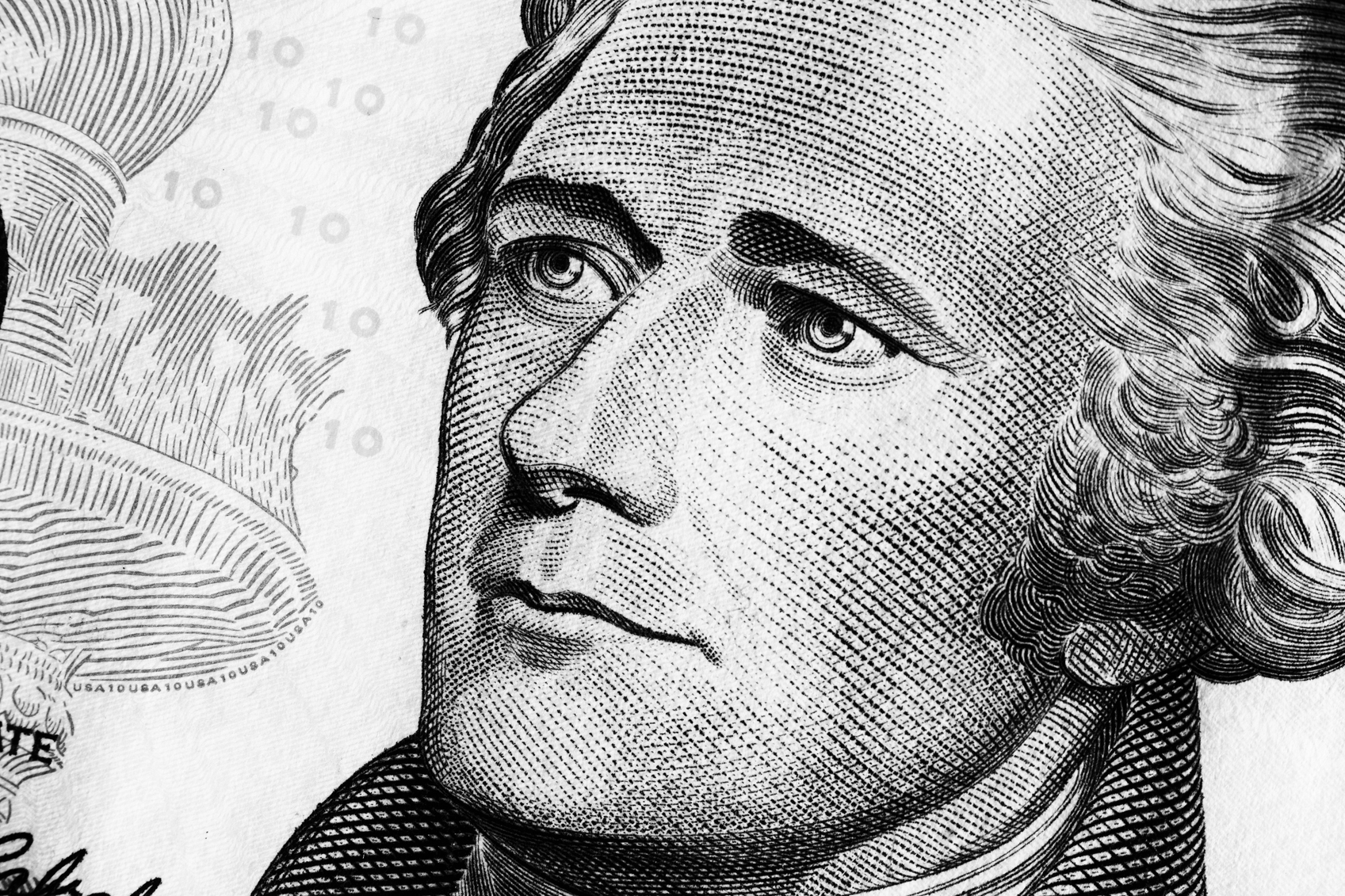
Who is known as the leader of the Federalists?
Alexander Hamilton
John Adams
Patrick Henry
Benjamin Franklin
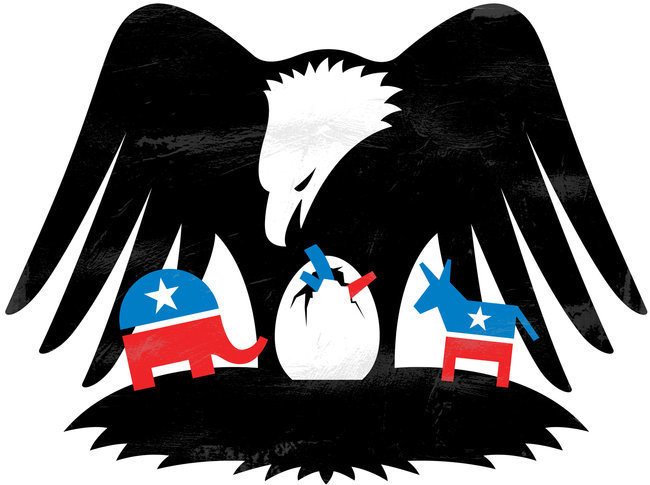
The Federalist and Anti-Federalists groups are known as _______________.
Governing Groups.
Political Parties.
Militia's.
Delegates.
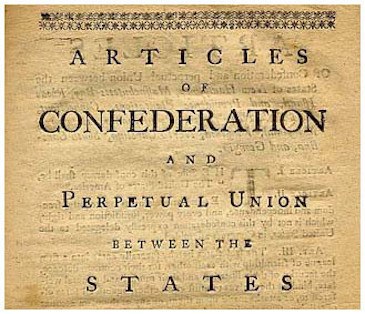
Federalists believed that the Articles of Confederation were a ________ and set up a ________ National Government.
Success, Strong.
Success, Weak.
Failure, Weak.
Failure, Strong.
The ___________ are for the ratification (approval) of the U.S Constitution.
Federalists
Anti-Federalists
Whiggs
Representatives
The ___________ are NOT for the ratification (approval) of the U.S Constitution.
Anti-Federalists.
Federalists.
Whiggs.
Supreme Court Justices.
Anti-Federalists were in favor of:
States Rights and the protection of individual rights.
A strong Central Government.
A Monarchy (King & Queen) to rule over the country.
a powerful National Government
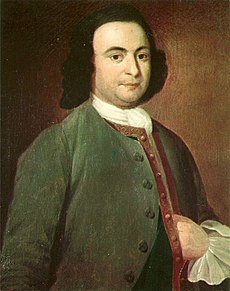
Who was the leader of the Anti-Federalists?
George Mason
George Washington
George Bush
Patrick Henry
How did the Federalists and Anti-Federalists "compromise" to ratify (approve) the U.S Constitution?
The added the Bill of Rights (First 10 Amendments)
They outlawed cruel and unusual punishment.
Ensured due process of the law.
The Federalists threatened the Anti-Federalists to war.
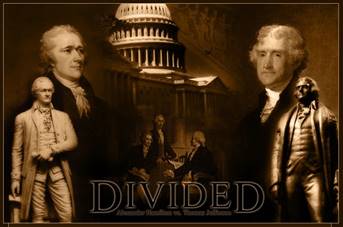
The Anti-Federalists wanted to:
ratify the new constitution and establish a powerful central government.
fix the Articles of Confederation.
Replace the Articles of Confederation.
get rid of strong State governments.
Which Party believed in a strict reading (interpretation) of the U.S. Constitution?
Independents
Democratic Republicans
Federalists
Whig Party
Thomas Jefferson, James Madison were the leaders of the ____________________ Party.
Federalist
Democratic-Republican
Support strongest among farmers, artisans, and frontier settlers in the South
Federalists
Democratic-Republicans
Support strongest among farmers, artisans, and frontier settlers in the South
Federalists
Democratic-Republicans
The Articles of Confederation were
Promoted interstate commerce
Were strong enough for the U.S.
Called for a king to rule the U.S.
Weak
Who wrote the Constitution?
Anti Federalist
Federalists
Whigs
Republicans
The Constitution contains no Bill of Rights to protect individual liberties like freedom of speech, trial by jury, and the right against searches and seizures.
Federalist
Antifederalist
The Constitution gives too much power to the central government, overpowering the states.
Federalist
Antifederalist
Wanted a stronger national government
Anti-federatlist
Federalist
Federalists believed that the Articles of Confederation were a ________ and set up a ________ National Government.
Success, Strong.
Success, Weak.
Failure, Weak.
Failure, Strong.
The ___________ are for the ratification (approval) of the U.S Constitution.
Federalists
Anti-Federalists
Whiggs
Representatives
Anti-Federalists were in favor of:
States Rights and the protection of individual rights.
A strong Central Government.
A Monarchy (King & Queen) to rule over the country.
a powerful National Government
What was the Anti-Federalists’ greatest concern about ratifying the U.S. Constitution?
The lack of a federal court system
The lack of legislative veto power
The lack of a strong military
The lack of a bill of rights
What was the name of the collection of essays written to support the ratification of the Constitution?
The Federalist Papers
Declaration of Independence
Common Sense
Mayflower Compact
did not support Bill of Rights to be added to constitution
anti-federalists
federalists

