
Font size
 Worksheets
Electron Configuration
Total questions: 15
Worksheet time: 16mins

What is the Aufbau Principle?
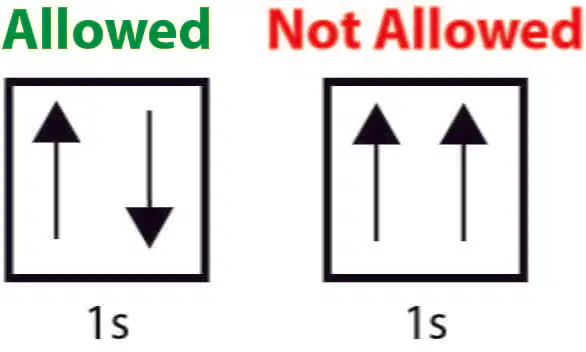
What is the Pauli Exclusion Principle?
A single orbital can only hold one electron
That a single orbital can hold a maximum of two electrons with opposite spins.
That a single orbital can hold a maxiumum of 9 electrons
Orbitals dont fit any electrons

What is Hund's Rule?
When filling a subshell with electrons, each orbital within that subshell must be occupied singly (with the same spin) before pairing begins.
Which one of these follows Hund's rule?
Which one correctly demonstrates Pauli Exclusion principle?
Draw the orbital diagram with the up-spin and down-spin electrons for an oxygen atom.

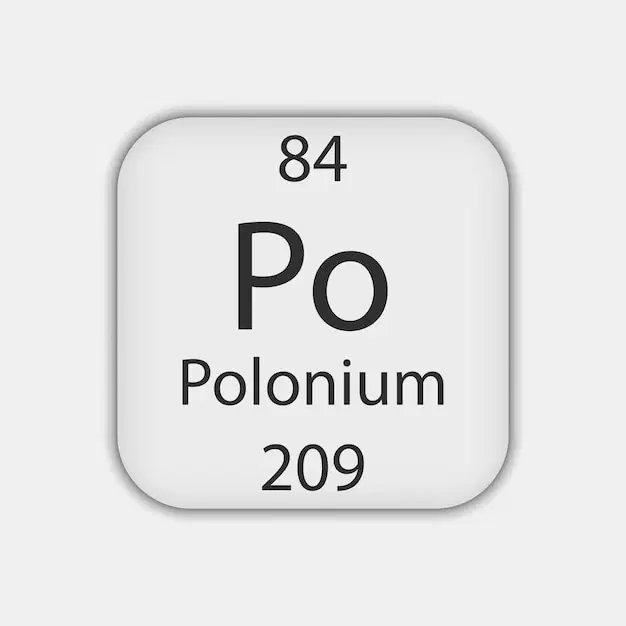
Select the noble gas configuration for the element Polonium.
(Noble gas notation uses the noble gases as a shortcut)
(For example: [Kr] is shortcut for 1s2 2s2 2p6 3s2 3p6 4s2 3d10 4p6)
[Xe] 6s² 4f¹⁴ 5d¹⁰ 6p⁴
[He] 6s² 4f¹⁴ 5d¹⁰ 6p²
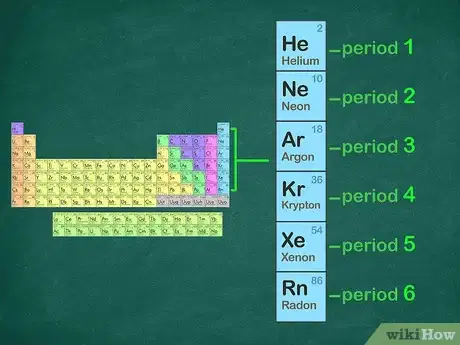
Match the noble gas configuration to what they stand for.
[He]
1s2
[Xe]
1s² 2s² 2p⁶
[Kr]
1s² 2s² 2p⁶ 3s² 3p⁶
[Ar]
1s² 2s² 2p⁶ 3s² 3p⁶ 4s2 3d10 4p6
[Ne]
1s²2s²2p⁶3s²3p⁶ 4s23d104p64d105s²5p6

Reorder the following elements from having the shortest electron configuration (1) to the longest electron configuration (5)
Hydrogen
Beryllium
Molybdenum
Tin
Lead
Which of the following elements has the electron configuration [Ar] 4s² 3d¹⁰ 4p⁶?
Krypton
Argon
Calcium
Zinc
What is the electron configuration for the element Iron (Fe) using noble gas notation?
[Ar] 4s² 3d⁶
[Kr] 5s² 4d¹⁰
[Ne] 3s² 3p⁶
[Xe] 6s² 4f¹⁴
According to the Pauli Exclusion Principle, which of the following is true?
Two electrons in the same orbital must have the same spin.
Two electrons in the same orbital must have opposite spins.
Electrons can occupy any orbital regardless of energy level.
Electrons do not follow any specific rules in orbitals.
Label the three parts of an electron configuration:
protons
section
family
period (row)
block (orbital)
electrons
group

The image shows the partial electron configuration of manganese (Mn). Below there are two empty boxes. Correctly drag the final two answers in the correct order to finish its electron configuration.
(a) (b)

