
Font size
 Worksheets
Energy and Motion Practice
Total questions: 25
Worksheet time: 20mins
Which of the following is an example of a push and a pull you might experience in everyday life?
Pushing a door open and pulling a drawer out
Pushing a button and pulling a lever
Pushing a cart and pulling a suitcase
Pushing a swing and pulling a rope
To describe a car’s motion, you should use its direction and _______.
Speed
Color
Size
Weight
_________________________ energy is the energy of motion.
Kinetic
Potential
Thermal
Chemical
Friction is a force that opposes _______________________. It is created when two objects rub against each other.
Motion
Gravity
Magnetism
Electricity
To describe a car’s motion, you should use its direction and _______________________.
Speed
Color
Size
Weight
Two boxes have the same mass. Hector pushed Box 1 by himself. Hector and 3 of his friends all pushed Box 2 together. Which box likely had a greater change in motion?
Box 1
Box 2
Both boxes had the same change in motion
It cannot be determined
__________ energy is the energy of motion.
Kinetic
Potential
Thermal
Chemical
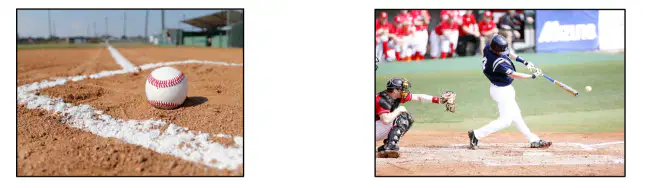
Which example shows a baseball with kinetic energy.
Two boxes have the same mass. Hector pushed Box 1 by himself. Hector and 3 of his friends all pushed Box 2 together. Which box likely had a greater change in motion? Why?
Box 1, because Hector pushed it alone.
Box 2, because more people pushed it.
Both boxes had the same change in motion.
Neither box had any change in motion.
Ji-hoon pushed a toy car and a real car with the same amount of force. Which car moved farther?
The toy car
The real car
Both moved the same distance
Neither moved

How will this object move?
It won't move.
It will move to the right.
It will move to the left.
It will move in both directions.

A force is an action exerted on a body in order to change the body's state of ______.
Balance
Being
Proximity
Motion

When object is changing position it is called ______.
Movement
Motion
Speed
Density

When objects remain in the same place, it is called...
gravity
friction
balanced force
unbalanced force

An unbalanced force is when objects move in one direction because the force is greater from that direction.
true
false
When an object changes _______, you know it has ________.
motion, position
reference points, motion
position, motion
reference points, positions

A force that opposes motion between two surfaces that are in contact.
Speed
Velocity
Friction
Force

The force that opposes the motion of two surfaces that are in contact and are sliding over each other.
Static Friction
Kinetic Friction
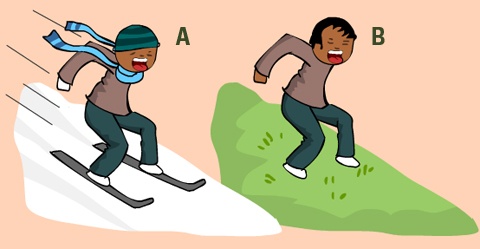
Why is it harder for the boy in Image B to get down the hill?
Motion
Friction
Work
Displacement

Which skier will have a greater potential energy?
Skier 1
Skier 2

Why did the potential energy of the box increase?
The box was moved to a higher position.
The box produced potential energy.
The box lost mass.
Stored energy.
Potential Energy
Kinetic Energy
___________________ is the type of energy that is stored in an object; energy that an object has because of its position relative to other objects. (Example: pulled back rubber band)
Kinetic Energy
Potential Energy
Solar Energy
Mechanical Energy
Select the bowling ball that has LESS kinetic energy

Kinetic energy is when....
energy is stored up in an object
energy is released and the object moves

