
 Worksheets
Review Cells Concept 1 & 2 review
Total questions: 132
Worksheet time: 4hrs 56mins
Which of the following is NOT a part of the cell theory
All cells are made of atoms
All living things are made of cells
All cells come from pre-existing cells
Cells are the basic structure and function of life
The ___________ is the basic structure of life
atom
molecule
cell
organism
All cells come from ___________ cells
All of the following apply to prokaryotic cells except:
They have the ability to reproduce
They have DNA
All of the following apply to eukaryotic cells except:
Which of the following kingdoms contains prokaryotes?
Eubacteria
What do eukaryotic cells have that prokaryotic cells do not?
Ribosomes
The ability to move
A nucleus and membrane-bound organelles
DNA
Organisms that are composed of many cells are called as _____________ organisms.

Students use a microscope to look for structures present in four different cells. The students placed an X for each structure that was viewed for each cell on the table shown. Which cell that was viewed is most likely a prokaryote?
Cell W
Cell X
Cell Y
Cell Z

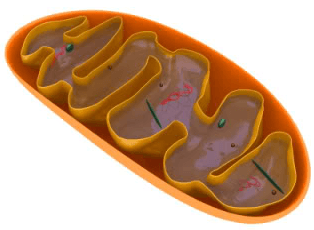

Name this cell
Prokaryotic
Eukaryotic
Animal
Plant

An animal cell has the following except a/an...
Nucleus
Lysosome
Cell Wall
Endoplasmic reticulum
Choose the statement below that is TRUE.
Plant and animal cells both have cell walls so the cell can maintain its shape.
Animal cells do not have chloroplasts because animals do not require the use of photosynthesis to produce their food.
Plant cells do not have a nucleus because plants are not living organisms like animals are.
Animal cells do not have cytoplasm because an animal cell's organelles are free to move around as they please.

Euglena are unicelled organisms that live in pond water. They move around using a flagella and can perform photosynthesis when needed. They contain many organelles . What type of cells are they?
Animal Cell
Prokaryotic Cell
Eukaryotic Cell
Plant Cell
Which do BOTH prokaryotes and eukaryotes contain?
nucleus
mitochondria
ribosomes
cell wall
Which of the following organisms are made up of prokaryotic cells?
Plants
Bacteria
Animal
Fungi

Plant Cell

Bacteria Cell

Animal Cell
* All cells have
* DNA, Cytoplasm, Ribosomes
* Smaller simple cells no nucleus
* Prokaryote

This organelle is a rigid outer layer that protects plant cells.
Cell Membrane
Cell Wall
Nucleus
Chloroplast

This organelle controls what goes in and out of plant and animal cells.
Cell Wall
Cell Membrane
Cytoplasm
Cytoplasm

The _____________ stores food, water, wastes, and other materials in both plant and animal cells.
Vacuole
Mitochondria
Ribosomes
Chromatin

This fluid in the cell is where the organelles are found. It contains water and chemicals the cell needs.
Blood
Cytoplasm
Plasma
Vacuole

These organelles convert the energy in food molecules to a form the cell can use.
Chloroplasts
Mitochondria
Lysosomes
Ribosomes

These tiny cell structures assemble protein molecules from amino acids.
Carbohydrates
Lipids
Nucleic Acids
Ribosomes


What structure does this organism use for locomotion (movement)
Match the organelle with its correct function.

Stores and Protects DNA

Builds Proteins

Generates energy for the cell

Controls what enters and leaves the cell

Packages up proteins to be shipped out of the cell
Which organelle contains enzymes that degrade pathogens and worn-out organelles?
Peroxisome
Lysosome
Golgi complex
Smooth ER
What is the function of the rough ER?
Synthesize lipids and hormones
Store calcium
Detoxify substances
Site of protein synthesis
Where does oxidative catabolism of glucose/aerobic respiration take place?
Nucleus
Mitochondria
Golgi apparatus
Smooth ER
What is the function of the Golgi apparatus?
Package and modify proteins
Store calcium
Store DNA
Produce hormones
What is the a function of the smooth ER?
Store sodium
Synthesize protein
Synthesize ATP
Synthesize lipids

Which organelle is found inside the nucleus and produces ribosomes
Nucleolus
Cell Membrane
Lysosome
Golgi Bodies
Which organelle receives proteins and materials from the ER and packages them and distributes them?
ribosomes
lysosome
nucleolus
Golgi body
network of proteins found within the cytoplasm
for support and structure in cell
Cytoskeleton
Mitochondria
Cilia
Ribosome
Amidst the physiological demands of exercise, the energy requirements of muscle cells skyrocket. These cells must swiftly adapt to this heightened energy demand to maintain peak performance. Among the organelles within muscle cells, some undergo significant changes to ensure a more abundant energy supply.
Which of the following organelles prominently amplifies its activity in muscle cells during exercise, thus becoming the powerhouse for energy production?
Mitochondria
Ribosomes
Nuclei
Golgi Complex
When frog eggs, sourced from a freshwater pond, find themselves immersed in a saltwater aquarium, the intricate interplay of osmotic forces comes into play. In this context, which physiological response is most likely to be observed within the frog eggs over time?
Loss of water from the eggs
Maintenance of equilibrium with no net water movement
Outward diffusion of salt ions from the eggs
. Rupturing of the eggs due to osmotic pressure differences
The cell membrane of a red blood cell permits the passage of water, oxygen, carbon dioxide, and glucose while preventing the entry of most other substances. What term best describes this type of membrane?
Selectively permeable
Osmotically restrictive
Semi-conductive
Impermeable
If these organelles are absent, the cell will be deprived of much-needed proteins. Which organelle is being described?
Centrioles
Cell Wall
Ribosomes
Golgi Complex
Like a factory without a warehouse, a cell without this organelle will have difficulty distributing materials. Which organelle is being described?
Golgi Complex
Ribosomes
Centrioles
Lysosomes
If the center of this large organelle fails, ribosomes cannot be produced. Which organelle is being described?
Nucleus
Cytoplasm
Mitochondria
Cell Wall
Without this substance, organelles in the cell are unable to move around in the cell and less able to receive materials such as oxygen. Which organelle is being described?
Chloroplast
Cell Wall
Cytoplasm
Endoplasmic Reticulum
Explain the consequences of a malfunctioning lysosome in a cell.
The consequences of a malfunctioning lysosome in a cell include the accumulation of undigested materials, leading to cell damage, toxicity, and potentially cell death.
Increased lysosomal function
Decreased cell division
Enhanced cell metabolism
What role does the Golgi apparatus play in the cell, and how does its malfunction impact the cell?
The Golgi apparatus stores genetic material in the cell, and its malfunction causes mutations in DNA.
The Golgi apparatus regulates cell division, and its malfunction results in uncontrolled cell growth.
The Golgi apparatus is responsible for energy production in the cell, and its malfunction leads to decreased ATP levels.
The Golgi apparatus plays a crucial role in protein and lipid processing, sorting, and packaging within the cell. Its malfunction can disrupt cellular functions by causing improper distribution of these molecules.
Describe the impact of a malfunctioning nucleus on the cell's genetic material.
Improved protein synthesis
Increased cell division rate
The impact of a malfunctioning nucleus on the cell's genetic material includes errors in DNA replication, transcription, and repair processes, leading to mutations and chromosomal abnormalities.
Enhanced DNA repair mechanisms
How does a malfunction in the cell membrane affect the cell's ability to maintain homeostasis?
Causes the cell membrane to become more rigid and impermeable, aiding in homeostasis.
Disrupts selective permeability and impairs regulation of internal conditions, affecting homeostasis.
Has no impact on selective permeability or regulation of internal conditions, maintaining homeostasis.
Enhances selective permeability and improves regulation of internal conditions, promoting homeostasis.
Discuss the consequences of a malfunctioning chloroplast in a plant cell.
Complete cell death, wilting of leaves, and increased chlorophyll production.
The consequences of a malfunctioning chloroplast in a plant cell include reduced photosynthesis, stunted growth, yellowing of leaves, and weakened overall health.
No impact on plant health, normal growth, and unaffected photosynthesis.
Increased photosynthesis, accelerated growth, greening of leaves, and enhanced overall health.
Explain the importance of the vacuole in a plant cell and the effects of its malfunction.
A malfunctioning vacuole in a plant cell leads to increased turgor pressure
The vacuole in a plant cell is responsible for photosynthesis
If the vacuole malfunctions, the plant cell will shrink in size
The vacuole in a plant cell is crucial for maintaining turgor pressure, storing nutrients, and regulating cell size. If it malfunctions, the plant cell may experience wilting, reduced growth, and issues with nutrient storage and waste management.
Describe the impact of a malfunctioning cytoskeleton on the cell's structure and function.
Enhanced cell shape
Improved cell division
Facilitated intracellular transport
The impact of a malfunctioning cytoskeleton on the cell's structure and function includes loss of cell shape, impaired cell division, disrupted intracellular transport, and compromised cell motility.
The heart contains different types of tissue. What level of organization is the heart?
The diffusion of water molecules through a selectively permeable membrane is:
Homeostasis
Osmosis
Active Transport
Equilibrium
The movement of molecules from a place where there is a greater/higher concentration to an area where there is lesser/lower concentration is:
Homeostasis
Diffusion
Endocytosis
Active Transport
A selectively permeable membrane
allows all substances to enter and leave
prevents all substances from entering or leaving
allows certain size substances to enter and leave
allows only waste materials to leave
A solution in which the concentration of solutes is the same inside and outside of a cell is a _____________________ solution.
hypertonic
hypotonic
isotonic
homeotonic
If a red blood cell is placed in a solution that has a concentration gradient higher than the red blood cell, this type of solution is called:
Isotonic
Hypotonic
Hypertonic
Homeotonic
If a red blood cell is placed in a hypotonic solution, it will eventually
shrink up
swell and burst
no change will occur
swell and not burst
As blood glucose levels increase, hormones are released to return glucose levels to normal. This is an example of
a nervous system disorder
the synthesis of antibodies
a stimulus and a response
an antigen and antibody reaction
Which statement describes a failure of homeostasis in humans?
When activity in an individual increases, the body temperature rises and the individual sweats.
As the concentration of carbon dioxide increases in the human body, the lungs begin to expel more carbon dioxide.
A viral infection leads to a decrease in the number of white blood cells being produced in the body.
After an individual gets a cut, certain chemical changes begin the healing process.
maintain stable internal environment
receptor
type 2 diabetes
homeostasis
insulin
receives the message and coordinates a response
control center
effector
glucagon
homeostasis
responds to the output from the control center
control center
receptor
thermoregulation
effector
reverses the direction of change
positive feedback
effector
hypothalamus
negative feedback
increases or speeds up original change
negative feedback
positive feedback
endotherm
ectotherm
regulation of body temperature in the face of changes in the temperature of the environment
blood glucose regulation
thermoregulation
homeostasis
control center


With what 3 letters does sugar typically end?
Enzymes are an example of
Lipids
Carbohydrate
Protein
Nucleic Acid
Each enzyme only has 1 substrate that will fit its active site. What is this called?
reusable
catalyst
fragile
specific
Enzyme
proteins that speed up chemical reactions
Changing substances by breaking and forming bonds (includes hydrolysis and dehydration reactions)
the capacity for doing work
the energy needed to start a chemical reaction

The solution surrounding the cell in Diagram B, would be defined as:
hypertonic
hypotonic
isotonic


If the dots represent sugar what direction will the water flow?
Into the cell
Out of the cell
Both equally (equilibrium)

What will happen to the cell in the given solution?
Swell up
Shrink
Stay the same

After examining this diagram showing the concentration of water inside and outside of the cell, identify the tonicity of the solution.
hypertonic
hypotonic
isotonic


Nemo and other ocean dwelling fish cannot survive in freshwater because......
freshwater is hypertonic to Nemo's cells and will result in water leaving them causing the cells to shrink
freshwater is hypotonic to Nemo's cells and will result in water leaving them causing the cells to shrink
freshwater is hypertonic to Nemo's cells and will result in water entering them causing the cells to swell and burst
freshwater is hypotonic to Nemo's cells and will result in water enter them causing the cells to swell and burst


Which molecule is in equilibrium? How can you tell?
Molecule A; equal amounts inside and outside
Molecule B; passive movement into the cell
Molecule C; equal amounts inside and outside
Molecule C; all molecules are inside the cell
What is the difference between active and passive transport?
Active is high to low; Passive is low to high
Active uses no cell energy; Passive uses cell energy
Passive is high to low and uses no energy; Active uses energy and is low to high
Passive uses no cell energy
Fill in the blank:
Osmosis is the movement of ________ across a cell membrane from high to low.
Carbon dioxide
Starch
Water
Oxygen

What are the 3 questions you should ask yourself when working tonicity problem? ( Select ALL that apply)
What will result from the movement of water?
Where is the solute higher at?
Where is the water higher at?
Does water move in or out or both at the same time?
What is a solution?

What answer choice is the type of solution that has an effect on the cells shown in the image?
a hypotonic solution
an isotonic solution
a hypertonic solution
Solution with a higher solute concentration…
Hypertonic
Hypotonic
Isotonic
Solution with a lower solute concentration…
Hypertonic
Hypotonic
Isotonic
Solution with a higher free water concentration…
Hypertonic
Hypotonic
Isotonic
If the intracellular concentration is 1.0 M and extracellular concentration is 0.4M. Which direction does water flow?
Both in and out (equilibrium)
Into the cell
Out of the cell
Extracellular solution is 0.5M and the cell is 1.0M – which direction will water flow?
Into cell towards hypertonic solution
Into cell towards hypotonic solution
Out of cell toward hypertonic solution
Out of cell toward hypotonic solution
What are the types of passive transport? Select all that apply.
Simple diffusion
Facilitated diffusion
Endocytosis
Osmosis
Protein pumps / carrier proteins
What is ATP and what kind of transport uses it?
Energy; passive transport
Protein; simple diffusion
Energy; active transport
Protein; endocytosis


If ATP is being used, then molecules are moving from _____ to _____.
High; low
Low; high
Active; passive
Passive; active

Match the following
Movement of molecules from High to Low. It moves without assistance through the membrane.
Diffusion
Movement of molecules across a plasma membrane by means of Protein Channel.
Facilitated Diffusion
Movement of Water from High to Low Concentration across a semi-permeable membrane.
Osmosis
Type of transport that does not require energy to move substances across cell membranes.
Passive Transport
What will happen to the RBC (0.9 NaCl concentration) if it was subjected to 0.4 NaCl solution?
Lysis
Crenation
Nothing will happen



