
Font size
 Worksheets
Grade 4 Science Term 1 2024-2025 Exam Review Part 4
Total questions: 25
Worksheet time: 15mins
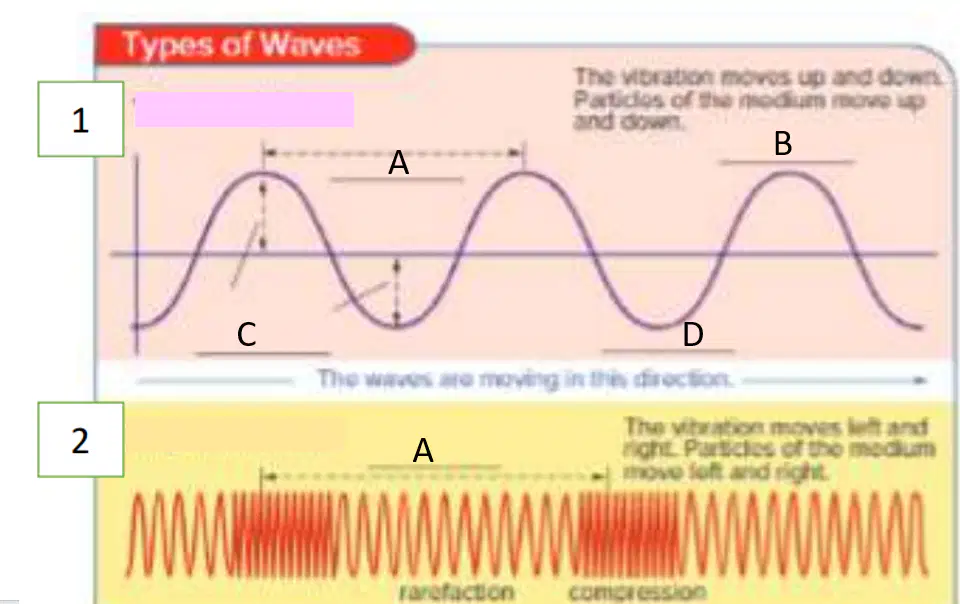
Which part of the diagram below shows the wavelength?
A
B
C
D
Which part of the diagram below shows the trough?
A
B
C
D
Which part of the diagram below shows the crest?
A
B
C
D
Which part of the diagram below shows the amplitude?
A
B
C
D
What is the name of wave 1 and how does it move? Choose 2 options.
transverse
longitudinal
back and forth
up and down
What is the name of wave 2 and how does it move? Choose 2 options.
transverse
longitudinal
back and forth
up and down
Which word describes the amount of energy released by an earthquake?
Amplitude
Magnitude
Wavelength
Seismograph
What instrument is used to measure and detect earthquakes?
Amplitude
Magnitude
Wavelength
Seismograph
Which scale uses numbers from 1 and measures magnitude/energy released in earthquakes?
Richter scale
Mercalli scale
Seismograph
Thermometer
Which scale uses roman numerals and measures what people felt in earthquakes?
Richter scale
Mercalli scale
Seismograph
Thermometer
How much more energy does an earthquake 7 have compared to 6 on the Richter scale?
1 time more energy
12 times more energy
32 times more energy
50 times more energy
What do you think happens to the amplitude of an earthquake when its magnitude increases?
amplitude increases
amplitude decreases
amplitude stays the same
amplitude moves closer together
How do we know when the earthquake was stronger?
curvy lines
steeper lines
straighter lines
lines far from each other

Which wave is felt first?
longitudinal wave
transverse wave
seismograph
epicenter
Which wave causes more damage?
longitudinal wave
transverse wave
seismograph
epicenter
Where is the earthquake strongest?
A
B
C
D
Which wave causes more damage?
longitudinal wave
transverse wave
seismograph
epicenter
Where is the amplitude greatest?
A
B
C
D
How can you determine the amplitude of a wave pattern?
Measure the length of each peak
Measure the length of the entire wave
Measure the height of each peak
Measure the width of each peak
If you use walking as a model for wavelength and amplitude, what would a short and high step represent?
The short wavelength, low amplitude
The short wavelength, high amplitude
The long wavelength, low amplitude
The long wavelength, high amplitude
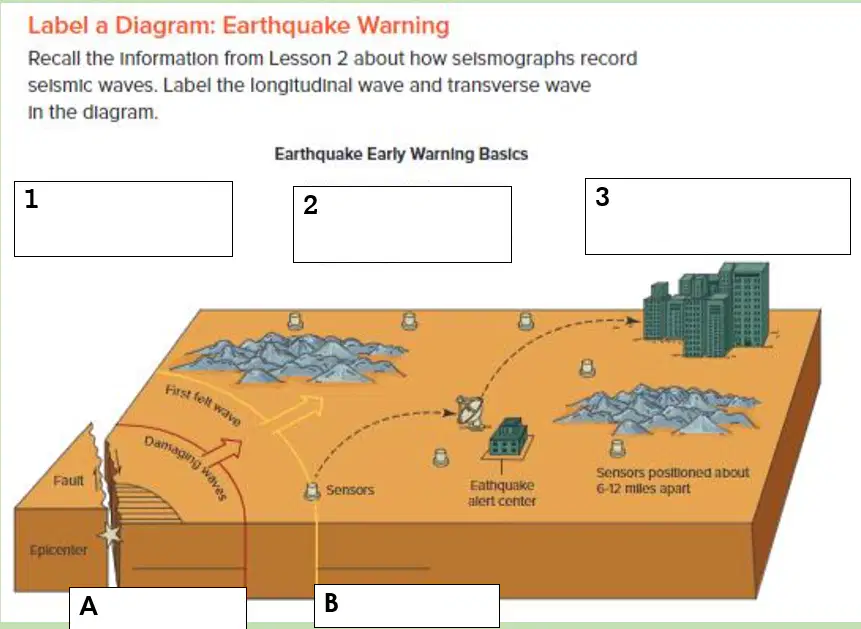
What is the name of wave B, the wave that is felt first?
(a)
What do scientists watch at point 1 to warn people about coming earthquakes?
(a)
What detects the first waves and send messages to Earthquake centers at point 2?
(a)
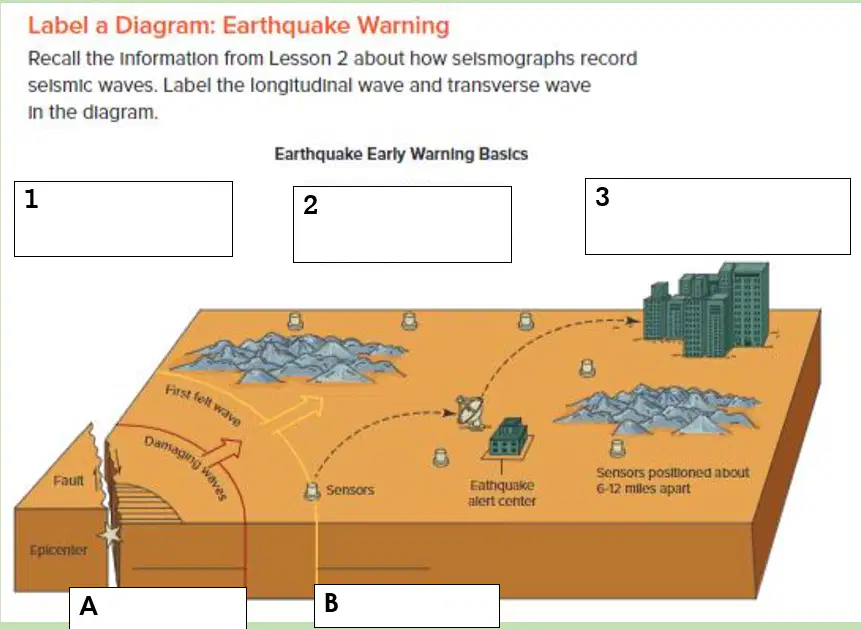
What happens at point 3 in the diagram?
Longitudinal waves felt first from epicenter at the fault.
Sensors detect longitudinal waves and alert sent out to earthquake center.
Message sent to your device that calculates size and time of earthquake coming before transverse waves come.
Scientists watch for a bulge in Earth's surface
What is the name of wave A, the wave that causes more damage?
(a)

