
 Worksheets
Honors Unit 4 Review
Total questions: 50
Worksheet time: 55mins
Which of the following is part of the Earth's system that includes all living organisms?
Atmosphere
Biosphere
Geosphere
Hydrosphere
Photosynthesis is a process that removes carbon from the ________.
Geosphere
Hydrosphere
Atmosphere
Biosphere
Which of the following processes is a part of the nitrogen cycle?
Photosynthesis
Nitrogen Fixation
Respiration
Transpiration
Nitrogen fixation converts atmospheric nitrogen into _______.
Oxygen
Ammonia
Carbon Dioxide
Methane
Which of the following is an abiotic factor?
Grass
Mouse
Temperature
Owl
In the food chain 'Grass -> Grasshopper -> Mouse -> Owl', what is the producer?
Grasshopper
Mouse
Grass
Owl
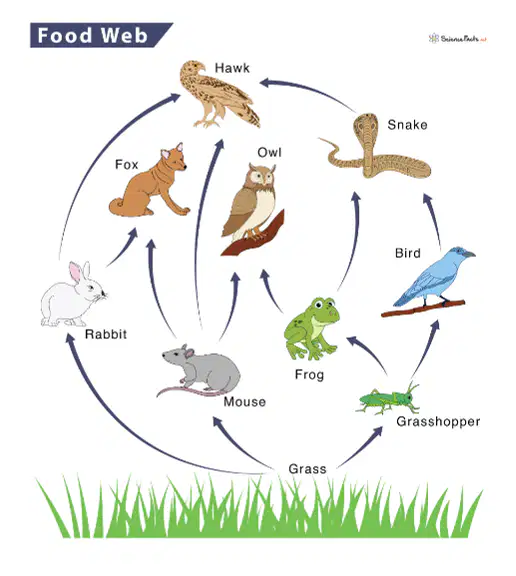
Which of the following is a primary producer in the food web?
Grass
Rabbit
Mouse
Snake
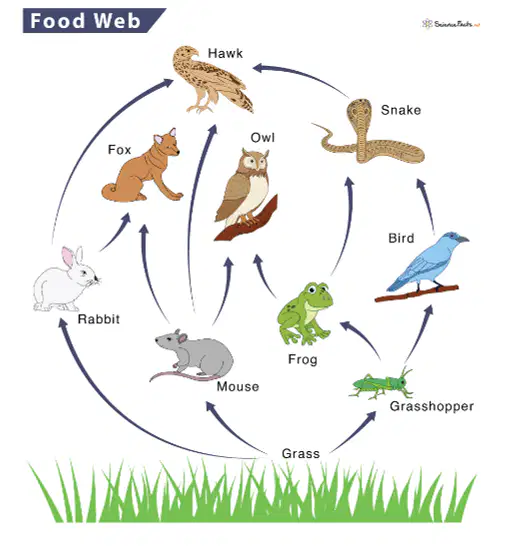
Fill in the blank: In the food web, the ______ is a tertiary consumer.
Grass
Rabbit
Hawk
Mouse
Which of the following correctly labels the bottom level of an energy pyramid?
Primary Consumer
Secondary Consumer
Producer
Tertiary Consumer
Fill in the blank: The 10% Rule in ecology states that only about 10% of _______ is transferred from one trophic level to the next.
biomass
energy
food
organisms
What is the typical range for ecological efficiency?
1-5%
5-20%
20-50%
50-75%
Sun
Trees
Animal Respiration
Plant Respiration
Burning Fossil Fuel/Emissions
Dead Organisms
Fossils and Fossil Fuels
The carbon cycle is a biogeochemical cycle that moves and cycles carbon through the different spheres of Earth. Fill in the blanks in the sentences below to describe how each process moves carbon.
**A volcanic eruption moves carbon (a) .
**Photosynthesis moves carbon (b) .
**Cellular respiration moves carbon (c) .
**Dissolution (the dissolving of gaseous carbon into a solvent) move carbon (d) .
Through the process of the nitrogen cycle, (a) that live in the soil, water, or plant roots can (b) nitrogen from the (c) so that (d) can use it.
Matter changes form as it cycles through the Earth system, but like energy, it (a) be destroyed
The gas that contributes the most to the Greenhouse Effect in the atmosphere is (a)
Match the following organisms with their need for nitrogen.
only plants
Organisms that perform photosynthesis
only animals
Organisms that rely on protein intake
only bacteria
Organisms that fix atmospheric nitrogen
all living organisms
Organisms that require nitrogen for survival
Label the Energy Pyramid

Consider a forest ecosystem. If a disease wipes out a significant portion of the tree population, how might this affect the energy flow in the ecosystem?
Energy flow will increase as more sunlight reaches the ground.
Energy flow will decrease due to less photosynthesis.
Energy flow will remain unchanged.
Energy flow will stop completely.
In an ecosystem, which trophic level consists of organisms that produce their own food?
Primary Consumers
Secondary Consumers
Producers
Decomposers
In a food chain, which trophic level directly consumes producers?
Tertiary Consumers
Secondary Consumers
Primary Consumers
Decomposers
Which trophic level is typically at the top of a food chain?
Primary Consumers
Secondary Consumers
Tertiary Consumers
Producers
Which is the secondary consumer?

In most ecosystems, there are more individuals in the top trophic levels and fewer in the bottom.
True
False
Which of the following is the primary source of energy for most ecosystems?
Plants
Animals
Sun
Decomposers
In the energy flow of an ecosystem, the energy from the sun is first captured by ______.
Primary Consumers
Secondary Consumers
Decomposers
Producers
Which of the following are examples of autotrophs that produce their own food?
Animals
Plants, algae, and some bacteria
Fungi
Insects
Producers are crucial for energy input into ________.
Atmosphere
Ecosystems
Oceans
Deserts

Which of the following is a primary consumer?
Grass
Grasshopper
Bird
Snake
Fill in the blank: A(n) _______ is an organism that consumes both plants and animals.
Herbivore
Omnivore
Carnivore
What is the definition of a food chain?
A network of producers and consumers
A linear sequence of organisms through which energy is transferred
A cycle of energy flow in an ecosystem
A group of organisms that share the same habitat.
Fill in the blank: In a food chain, energy transfer is inefficient; only about ___% moves to the next level.
5
10
20
50
What is a food web?
A single food chain
A complex network of interconnected food chains in an ecosystem
A group of animals living together
A type of plant.
What is an ecological pyramid?
A graphical representation of the relationship between different living organisms at different trophic levels
A type of food chain
A habitat for animals
A method of plant growth.
What does the Pyramid of Numbers show?
The amount of energy at each trophic level
The number of organisms at each trophic level
The amount of biomass at each trophic level
The number of species in an ecosystem.
In a Pyramid of Biomass, which of the following is an example of a producer?
Cheetah
Gazelle
Bush
Hawk
Which of the following human activities removes key species from food webs?
Deforestation
Overfishing
Pollution
Climate change
Deforestation reduces ______.
Primary producers
Energy transfer
Ecosystem dynamics
Key species

In the energy pyramid below, which organism has the least amount of energy available?
Producers
Herbivores
Carnivores
Top Predator
What role do decomposers play in an ecosystem?
They produce their own food through photosynthesis
They consume living plants and animals
They break down dead material and recycle nutrients back into the ecosystem
They regulate the population of other species
Which of the following best describes energy flow in an ecosystem?
Energy flows in a linear path from producers to consumers
Energy is recycled within an ecosystem, similar to matter
Energy flows in a circular path, returning to the sun
Energy flows in one direction, from the sun to producers and then to various levels of consumers
Label this food chain

In the pyramid below, if the rabbits had 6,000 kcal of energy available, how much will be available to the snakes?
60,000 kcal
6,000 kcal
600 kcal
60 kcal

The arrows in a food chain or web represents what?
They point to the organism that is being eaten.
It shows how sunlight flows within an ecosystem.
They show what direction the energy is flowing between organisms.
They represent how water is transferred within a habitat.


What will happen if the number of snakes goes down?
The owl will eat the grass
The number of frogs will go down
The hawk and owl will have less food
The number of mice and grasshoppers will go up.

If there is 1000 Kcal available in the producers in trophic level 1, how much energy is available in the herbivores in trophic level 2?
10Kcal
1Kcal
100Kcal
1000Kcal



