
 Worksheets
Europe & Russia
Total questions: 87
Worksheet time: 57mins

Which physical feature inside Russia separates the Europe and Asia?
The Ural Mountains
The Black Sea
The Volga River
Lake Baikal

The Kamchatka peninsula is known for its.......
many great beaches
freezing temperatures
importance to shipping
many volcanoes


The capital of Russia is....
St. Petersburg
Siberia
Vladivostok
Moscow
Where can most of Russia's natural gas, coal, and oil can be found?
Moscow
Kazan
Siberia
Sochi

Eastern Russia is divided from Western Russia by the _______.
Ural Mountains
Great Dividing Range
Caucasus Mountains
Volga River

What building is this? (Hint: Russian government building)
Hermitage
Kremlin
Red Square
St. Peter's Basilica

Who is the current president of Russia?
Joseph Stalin
Vladamir Lenin
Vladamir Putin
Boris Yeltsin


What country is highlighted? It is the largest country on earth and is part of Europe and Asia.
Ukraine
Bulgaria
Russia
Greece
What does the word Renaissance mean?
Resurrection
Rebirth
Rejuvenation
Reformation
In what country did the Renaissance start?
Italy
Greece
France
Germany
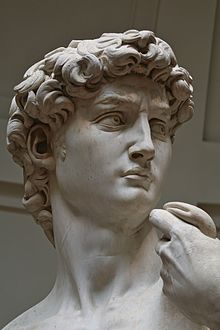
This work by Michelangelo is called what?
Michael
Noah
David
Vitruvius

Which two countries are located on the Iberian Peninsula?
Germany and Russia
Italy and France
Spain and Portugal


Identify the Peninsula:
Iberian
Italian
Balkan
Jutland

Identify the Peninsula:
Scandinavian
Balkan
Jutland
Italian

Identify the Peninsula:
Jutland
Iberian
Italian
Balkan

Identify the Peninsula:
Iberian
Italian
Balkan
Jutland
Under manorialism, who did most of the actual work on the landholdings of the lords?
king
knights
lords
peasants

What does this diagram reveal about the feudal system?
It was based on educational achievement
It was based on social advancement
It was based on social class structure
It was based on Protestant or Catholic faith

What is this?
Place de la Concorde
Grande Arche de la Défense
Arc de Triomphe
Quartier Latin


What ancient civilization built the Colosseum?
Rome
Greece
Egypt
China
The Louvre houses the world's greatest collection of...
Dinosaur bones
China
Art
Before printing books were...
hand written
rare
expensive
cheap
always in Latin
The origins of the European Parliament go back ......... the founding treaties of the 1950ies.
until
to
beyond
above
The European Parliament is directly elected by the EU citizens, for the purpose of guaranteeing the ............................. of the law.
authority
legitimacy
supervision
allegation
Any individual can .............................. a complaint with the Court if their rights have been violated.
give
take
lodge
carry

Low GDP $
Developed
Developing

What is the name of the currency used by the majority of European member countries?
European Union countries have which type of
government?
Democracy
Constitutional Monarchy
Dictatorship
Oligarchy
2. What does Brexit mean?
The situation of the United Kingdom leaving
the USA.
The situation of the United Kingdom staying in
the European Union.
The situation of the United Kingdom leaving
the European Union.
Most popular religion in Europe
Christianity
Islamic
Judaism
In less developed countries, they have a
low per capita income and a quality of life is generally good
low per capita income and a quality of life is generally poor
high per capita income and a quality of life is generally good
high per capita income and a quality of life is generally poor
The greater the country’s level of economic development, the —
higher the quality of life
higher the agricultural labor force
lower the cost of living
lower the urban population
What geographic features would help Italian merchants become successful traders?


A tax on goods brought into a country from another country is called a ...
Common market
Boycott
Tariff
Trade bloc
What 2 wars occurred mostly on European soil and lost many European lives?
Korean War and World War I
Desert Storm and Vietnam
Vietnam and Korean War
World War I and World War II
Iceland sits on the boundary between...
Eurasian and North American tectonic plates
Asian and North American tectonic plates
North American and Norway tectonic plates
which ones share similar cultures
Norway
Sweden
Denmark
Iceland
ALL OF THE ABOVE

money that is used within a specific area or country
exchange
currency
Euro
Eurozone
exchange rate

the countries inside the European Union that use the Euro as its main currency
exchange
currency
Euro
Eurozone
exchange rate

Which currency is widely accepted and used throughout Europe?
Franks
Pounds
Dollars
Euro

Transcontinental or intercontinental countries have a portion of their territory geographically divided between at least two continents.
Which of these is an intercontinental country?
Turkey
United Kingdom
Estonia
Bosnia and Herzegovina

The United Kingdom is made up of 4 countries. Which of these is NOT one of them.
Northern Ireland
Wales
England
Ireland
Scotland
The Trans-Siberian Railway helped improve:
Trade from the East to the West
Transportation times from East to West
Sharing of ideas and communication from East to West
All of the answers

During Putin's time as President, this boom has helped increase Russia's economy?
Oil
Hydroelectricity
Natural Gas
Coal

Permanently frozen soil in the Siberia region is also called
permafrost
the tundra
really cold
the rain forest
What is the name of the high-speed train service that connects England to France?
Eurostar
TGV
ICE
Shinkansen
Both Ireland and Germany can be said to have a ____ system of government.
The difference between a presidential democracy and a parliamentary democracy is
That the citizens vote directly for the president
The prime minister is the ceremonial head of state
The citizens vote directly for the prime minister
The president is chosen by the legislature
Which is TRUE about how the president in a presidential democracy is different from the prime minister in a parliamentary democracy?
The prime minister is elected directly by the people, but the president is elected by the legislature.
The prime minister is the chief executive and head of the military, but the president is not.
The prime minister is chosen from among the members of parliament, but the president is elected by the citizens and runs for office separately.
The prime minister is the head of state for the country, but the president is not.
Brexit was a result of the 2016 referendum in the United Kingdom. What did the majority of British citizens vote to do?
to use the Euro as their national currency
to eliminate the need for passports to other European countries
to leave the European Union
to only trade with European countries
What type of power is held by an absolute monarch?
Power over all aspects of a nation's social, political, economic, and cultural identity.
Extensive power, but limited by a constitution and the nobility
Only the power the nation is willing to give, often just enough to act as a government figurehead.

Divine right refers to the belief that...
nobles served monarchs before they served God
people had the right to choose a religion
monarchs received the right to absolute power from God
monarchs and nobles sought divine advice from God
What is the difference between an absolute monarchy and a constitutional monarchy?
There is no difference, they are both a monarchy.
In an absolute monarchy the monarch has complete power over the country and the people. In a constitutional monarchy the monarch has to work within a constitution.
In a constitutional monarchy the monarch has complete power over the country and the people. In an absolute monarchy the monarch has to work within a constitution.

