wayground logo

Free Printable Worksheets

Font size

S
M
L
XL
Worksheets

Review of Biomes Around the World

Total questions: 16

Worksheet time: 11mins

Name
Class
Date
1.

Which is the best definition of "desert biome"?

a)
A desert biome is a region with constant snowfall and freezing temperatures.
b)
A desert biome is a region with low rainfall, extreme temperatures, and minimal vegetation.
c)
A desert biome is characterized by high humidity and moderate temperatures.
d)
A desert biome is a lush area with abundant rainfall and diverse wildlife.
2.

Which is the best definition of "tundra biome"?

a)
A cold, treeless region with low vegetation, characterized by permafrost and short growing seasons.
b)
A mountainous region with heavy snowfall and no vegetation.
c)
A desert region with high temperatures and little vegetation.
d)
A warm, forested area with abundant wildlife and tall trees.
3.

Which is the best definition of "permafrost"?

a)
A type of frozen water found in glaciers.
b)
A layer of soil that is always warm and moist.
c)
A geological formation that melts every summer.
d)
A layer of soil or rock that remains frozen for two or more consecutive years.
4.

Which is the best definition of "taiga biome"?

a)
A biome characterized by coniferous forests, cold climate, and long winters, primarily found in northern regions.
b)
A desert biome with sparse vegetation and high temperatures.
c)
A tropical rainforest characterized by high humidity and diverse species.
d)
A grassland biome with warm temperatures and seasonal rainfall.
5.

Which is the best definition of "grassland biome"?

a)
A biome primarily consisting of dense forests and high rainfall.
b)
A desert region characterized by sand dunes and extreme temperatures.
c)

A biome characterized by open spaces dominated by less by trees and more by grasses, and moderate rainfall.

d)
A wetland area dominated by aquatic plants and high humidity.
6.

Which is the best definition of "temperate subtropics biome"?

a)
A biome characterized by extreme temperatures and minimal vegetation.
b)
A region with constant rainfall and tropical plants only.
c)
An area with harsh winters and no distinct seasons.
d)
A biome with mild temperatures, distinct seasons, and diverse vegetation, including deciduous and evergreen species.
7.

Which is the best definition of "Mediterranean biome"?

a)
A biome characterized by cold winters and hot, humid summers.
b)
A biome characterized by hot, dry summers and mild, wet winters, supporting diverse flora and fauna.
c)
A region with consistent rainfall throughout the year and no distinct seasons.
d)
An area dominated by tropical rainforests and high humidity.
8.

Which is the best definition of "tropical rainforest biome"?

a)
A coastal area with salty air and limited plant diversity.
b)
A dry region with sparse vegetation and extreme temperatures.
c)
A cold climate with heavy snowfall and coniferous trees.
d)
A biome with high rainfall, warm temperatures, and diverse flora and fauna.
9.

Match the best pairs.

a)

savannah

1.

example of grassland

b)

boreal forest

2.

example of taiga

c)

Congo

3.

example of rainforest

d)

permafrost

4.

you would find this in a tundra

e)

canopy

5.

you would find this in a rainforest

10.

Match the best pairs.

a)

the American Great Plains

1.

example of grassland

b)

evergreen forests of northern Canada

2.

example of taiga

c)

jungles of Vietnam

3.

example of rainforest

d)

reindeer

4.

you would find this in a tundra

e)

understory

5.

you would find this in a rainforest

11.

Where can you find Mediterranean biomes around the world?

Select all that apply.

a)

Siberia

b)

Mediterranean Sea region

c)

central Chile

d)

California

e)

western capes of South Africa and Australia

12.

Reorder the following, with the areas of most average precipitation on the left and the least average precipitation on the right.

a)

tropical rainforests

b)

temperate forests

c)

taigas

d)

deserts and tundras

1)
2)
3)
4)
13.

Where do we typically find rainforests around the globe?

a)

In temperate zones/subtropics with seasonal changes.

b)
In desert areas with little rainfall.
c)
Near the equator, in tropical regions.
d)
In polar regions, where it's cold.
14.

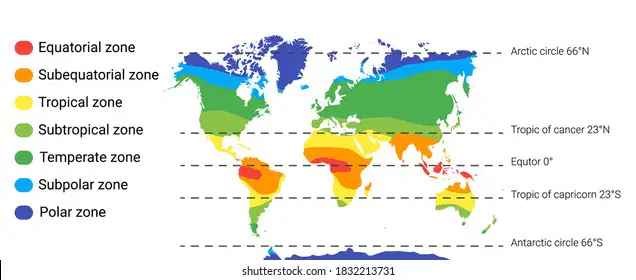
The tropics are located:

a)
Between 10°N and 10°S latitude
b)
Between 0° and 30° latitude
c)
Between 23.5°N and 23.5°S latitude
d)
Between 30°N and 30°S latitude
15.

The subtropics are located:

a)
Between 0° and 23.5° latitude in both hemispheres.
b)
Between 35° and 60° latitude in the Northern Hemisphere only.
c)
Between 23.5° and 45° latitude in the Southern Hemisphere only.
d)
Between 23.5° and 35° latitude in both hemispheres.
16.

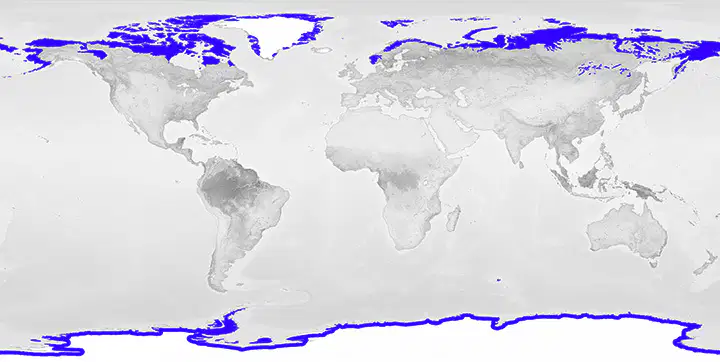
The tundra regions are typically located:

a)
in desert regions
b)
in temperate coastal areas
c)
in tropical rainforests
d)
in the Arctic and Antarctic regions, and some alpine areas