
 Worksheets
Intro to DNA
Total questions: 16
Worksheet time: 13mins
Name
Class
Date
1.
What are the 4 nitrogen bases?
a)
adenine, thymine, cytoplasm, and guanine
b)
adenine, thymine cytosine, and guanine
c)
adenine, thymine, cytosine, and gylcerol
d)
adenine, thymine, cytosine, and glucose
2.
Which of the following units are repeatedly joined together to form a strand of DNA?
a)
amino acids
b)
nucleotides
c)
fatty acids
d)
polysaccharides
3.
Guanine bonds with ______________.
a)
Adenine
b)
Guanine
c)
Cytosine
d)
Thymine
4.
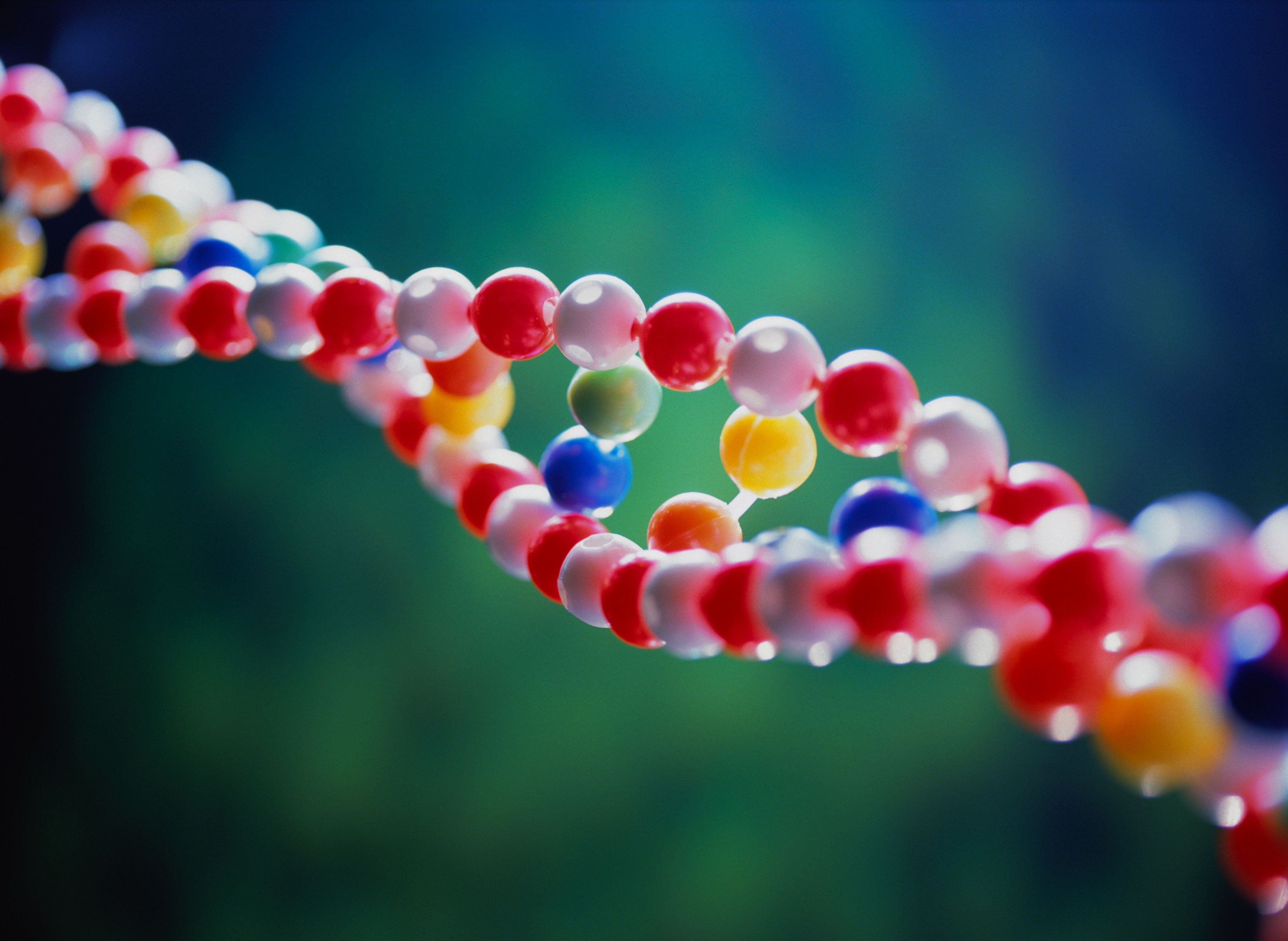
Why is DNA important?
a)
it is very small and very complicated
b)
it's in everything
c)
it serves as the blueprint for traits of all living things
d)
because we eat it every day for energy
5.
In eukaryotic cells, DNA is located in the ___.
a)
cell membrane
b)
vacuole
c)
chloroplast
d)
nucleus
6.
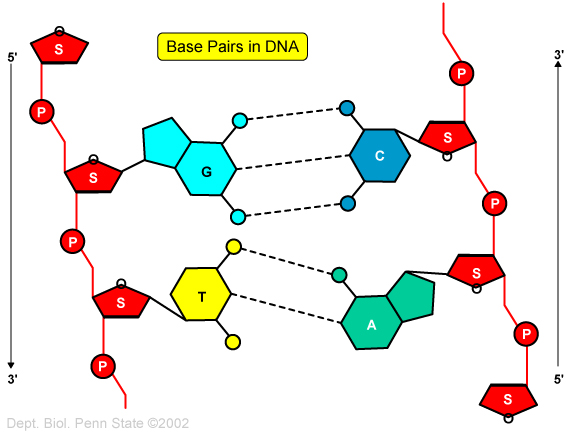
Nitrogenous bases are joined by which type of bond?
a)
polar bonds
b)
ionic bonds
c)
covalent bonds
d)
hydrogen bonds
7.
a chemical in a cell that contains genetic information
a)
DNA
b)
helicase
c)
lagging strand
d)
ligase
8.
unwinds the DNA code being copied in the cell
a)
helicase
b)
mutations
c)
transcription
d)
polymerase
9.
this is the daughter strand, created ad goes in the opposite direction
a)
lagging strand
b)
polymerase
c)
leading strand
d)
RNA
10.
Created continuously on the forward direction, it is the parent strand
a)
leading strand
b)
helecase
c)
lagging strand
d)
SSB protein
11.
a section of DNA that contains instructions for making a specific protein
a)
gene
b)
polymerase
c)
RNA
d)
translation
12.
permanent change in DNA
a)
mutations
b)
DNA
c)
leading strand
d)
gene
13.

Which of the following best describes a DNA molecule?
a)
double helix
b)
contains ribose
c)
made of amino acids
d)
contains Uracil
14.
What are the nucleotides made of?
a)
Sugar, Phosphate, nitrogen base
b)
Phosphate, Adenine, nitrogen base
c)
Thymine, Adenine, Cytomine
d)
Phosphate, Nitrogen, Adenine
15.
Which 2 molecules forms the sides (backbone) of the DNA ladder?
a)
deoxyribose and adenine
b)
deoxyribose and a hydrogen bond
c)
sugar and the nucleus
d)
deoxyribose (sugar) and phosphate
16.
Which shows the correct complementary base pairing for DNA?
a)
C-A, T-G
b)
A-G, C-T
c)
C-G, U-A
d)
T-A, G-C
100 %

