
 Worksheets
TX24-25 - Early Statehood [and exam review]
Total questions: 15
Worksheet time: 18mins

FAMOUS PEOPLE OF THE TEXAS REVOLUTION
-
(a) commander of the Texan army, went on to be 1st and 3rd President of Texas
(b) president and military leader of Mexico, captured at San Jacinto
(c) cavalry leader at San Jacinto, went on to be 2nd President of Texas
(d) messenger from the Alamo, leader of the Tejanos at San Jacinto

Put each of these events into the correct category: BEFORE, DURING, or AFTER the Texas Revolution.
-
WHEN COMPLETED, THERE SHOULD BE THREE [3] EVENTS IN EACH CATEGORY
the Fredonian Rebellion - Haden Edwards fights to make his colony independent
the Law of April 6, 1830 stopped immigration from the U.S. to Texas
the Turtle Bayou Resolutions explained why the Texans were supporting the Mexican constitution
the Battle of Gonzales showed the Texans they could beat the Mexican army and win independence
Sam Houston becomes the 1st President of Texas
Mirabeau B. Lamar becomes the 2nd President of Texas
Texas is annexed on December 29, 1845
Texans sign their Declaration of Independence on March 2, 1836
Santa Anna is captured at San Jacinto and gives the Texans independence

During the Texas Revolution, most of the events happened in the (a) region of Texas. The first battle at (b) showed the Texans they could defeat the Mexican army and win independence. Each battle that followed that first victory pushed the Mexican army farther away from (c) . The Texans managed to capture the Mexican president (d) after the battle of (e) .

Reorder the following ERAS of Texas History into the correct chronological order:
NATURAL TEXAS AND ITS PEOPLE
American Indian tribes adapted to the Texas environment
AGE OF CONTACT
Spanish and French explorers both claim land in Texas
MEXICAN NATIONAL
social and political unrest leads to war for Mexican independence
TEXAS REVOLUTION
Mexican officials imposed tighter controls on Texas, leading to the siege on the Alamo
Which TWO [2] regions of Texas are being described here? YOU MUST CHOOSE TWO [2] CORRECT ANSWERS.
-
REGION 1 - flat land for farming or ranching, area where MOST of the Texas Revolution happened
-
REGION 2 - flat land for farming or ranching, also known as the "Texas Panhandle" with the cities of Amarillo and Lubbock
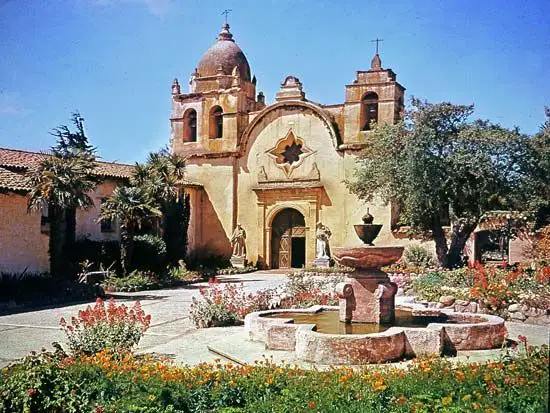
* GULF culture - fished along the shores of Texas
* PLAINS culture - rode horses and hunted bison
* PUEBLO culture - used adobe to build villages
-
During the Spanish Colonial Era, each of these groups had the chance to live in __?__ where they could learn about Catholicism [the religion of Spain] or learn new farming and ranching techniques.
presidios
missions
ranchos
palacios
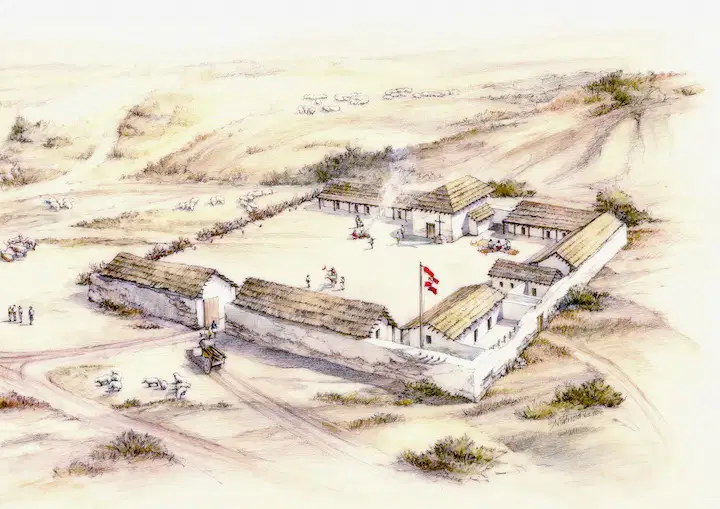
* Mission Corpus Christi de la Ysleta - built by Spanish friars near present-day El Paso
* Mission San Francisco de los Tejas - built by Fray Damian Massanet in far east Texas
* Mission San Antonio de Valero - "the Alamo", built in south-central Texas in 1718
-
Each of these Spanish missions were built to spread the religion and culture of Spain to local Indian tribes, teaching them Catholicism [the religion of Spain] and new farming and ranching techniques.
-
Every time they built a mission, the Spanish would also build a __?__ nearby to protect the missions and settlements.
presidio
palacio
rancho
edificios

Match the following different types of settlements to the correct GROUP of settlers.
group that came to Texas in the 1700s to help their country maintain the land they claimed in the "new world"
SPANISH SETTLERS
group that came to Texas in the 1820s, following empresario Martin de Leon and helping their country increase the population of northern Mexico
MEXICAN IMMIGRANTS
group that came to Texas in the 1820s, following empresario Stephen F. Austin and wanting to profit off the cheap land [raising the population of Texas]
ANGLO IMMIGRANTS

Look at the map provided. The Republic of Texas is shown in light blue. It was larger during that time period than it is today, though much of the shape of the eastern half of Texas remains the same. Which THREE [3] of these U.S. states were once a part of the Republic of Texas?
-
YOU MUST CHOOSE THREE [3] CORRECT ANSWERS
Oklahoma
New Mexico
California
Colorado
New York

Put these events from the Republic of Texas into the correct chronological order:
President HOUSTON makes treaties with Native Americans, deals with a significant debt, and uses Texas Rangers to protect against unfriendly natives
President LAMAR pushes American Indians out of Texas, increases the debt Texas owes, and sets aside land for public schools
President HOUSTON is re-elected, focuses on maintaining peace with American Indians and tries to decrease the debt that Texas owes
President JONES continues Houston's peace policy, tries to reduce government spending, and hands over Texas to the U.S. government
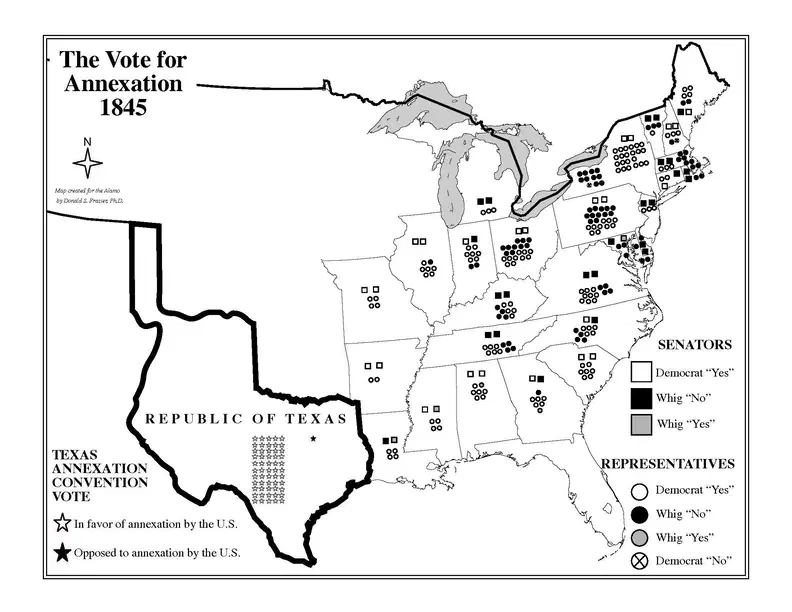
The annexation of Texas [happening in 1845] was supported in the Southern U.S. by Americans who also supported -
the expansion of slavery
the election of James K. Polk as U.S. President in 1844
the idea of "manifest destiny"
ALL of these are correct
Put the correct dates with each of these important events:
-
First event [on the left] - Texans sign their Declaration of Independence from Mexico
-
Second event [on the right] - Texas is annexed into the U.S. as the 28th state

During the 1800s, many immigrant groups came to Texas - including some from Germany, some from France, and even some from Czechoslovakia [a country in Europe]. But by far, the LARGEST immigrant group to come to Texas in the 1800s were Hispanic immigrants [mostly from Mexico].
-
Which of these choices gives a likely reason why Hispanic immigrants spread across the largest area of Texas?
many Hispanic immigrants followed empresario Martin de Leon to Texas in the 1820s
Mexico and Texas share a long border [the Rio Grande]
the first settlers to come to Texas were mostly Spanish or Mexican settlers
ALL of these answers are correct
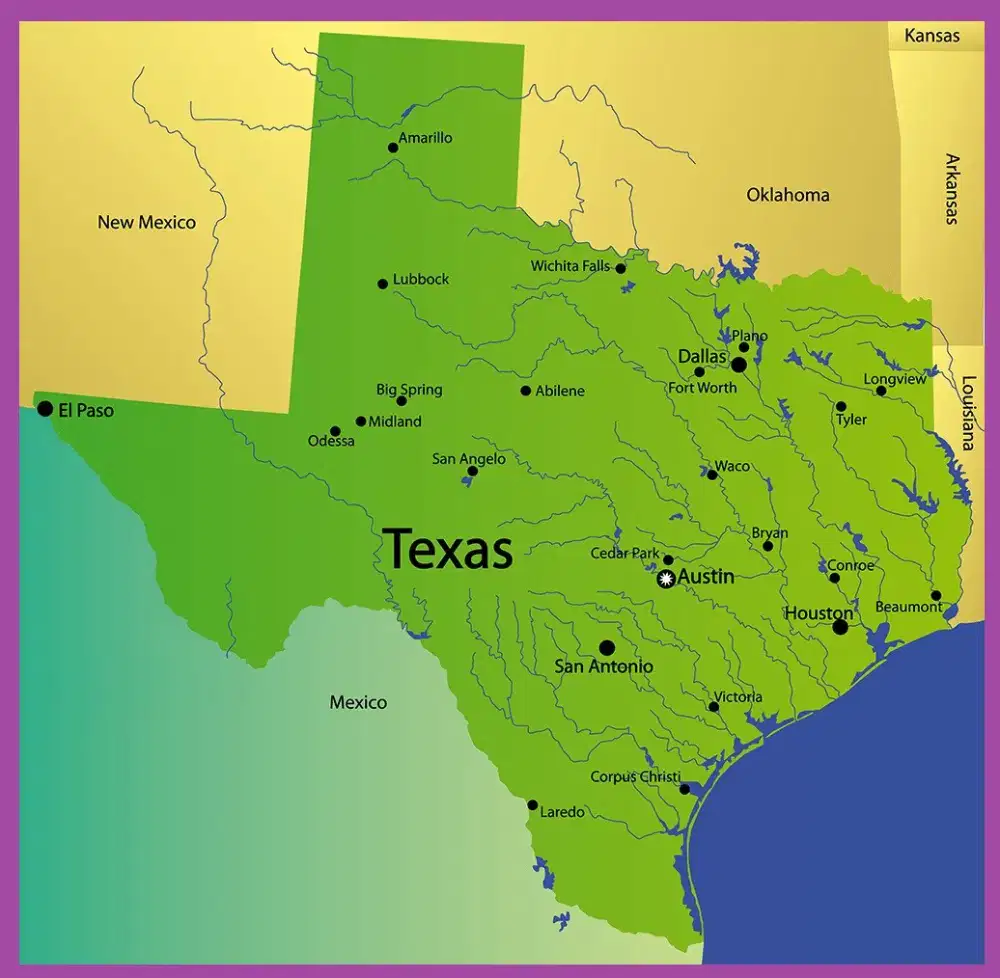
Why are so many cities in Texas close to a waterway?
-
YOU MUST CHOOSE THREE [3] CORRECT ANSWERS
early settlers established towns close to water because people need it to survive
early settlers would use the rivers as a form of transportation
early settlers wanted to be close to Native American villages
early settlers were putting the fresh water in bottles and selling it at local stores
early settlers needed the water to grow crops, and could also fish or hunt nearby

COMPROMISE OF 1850 [an agreement between northern and southern states]
-
Causes - the U.S. Congress couldn't agree on whether to ban slavery in new territories because they wanted to keep a balance between "slave" states and "free" states.
-
Effects - Texas gave up some of its lands in New Mexico, and the Fugitive Slave Law was enacted which could be used to take away the freedom of African Americans in "free" states.
-
The BIG issue that caused the Compromise of 1850 was -
the annexation of Texas as the 28th state in the U.S.
the Texas Revolution from Mexico, which concluded in 1836
the balance of slavery and its spread into new territories
NONE of these are correct

