
 Worksheets
Women in Egypt
Total questions: 22
Worksheet time: 19mins
Which pharaoh was the first female ruler?
Hatshepsut
Khufu
Osiris
Menes II
How did Akhenaten change Egyptian religion?
He introduced the concept of monotheism
He introduced the concept of misotheism
He introduced the concept of pantheism
He introduced the concept of doutheism
Which of these jobs were permitted only to men?

Both men and women wore makeup in Ancient Egypt. True or False.
True
False
Women in Egypt.... Choose 3
usually got married at the age of 12
were often chosen as pharaohs
could be priestesses
could own land
were seen as higher (better) then men.
Who were Hatshepsut and Cleopatra VII?
Egyptian goddesses
Egyptian gods
Priestesses
Pharaohs
How were Egyptian women treated differently than most other ancient civilizations?
They were the heads of their households
They were seen as equals under the law
They were buried with their husbands
Their spouses were chosen for them
What is Hatshepsut best known for?
good food
traveling
for her interests in trading and building

What are the names of two women Egyptians?
Ramses and Nefertiti
Thutmose and Nefertiti
Hatshesput and Nefertiti
Tutankhmaun and Nefertiti
What was Nefertiti's royal role?
Ambassador to Nubia
Chief wife of Akhenaten
Mother of Akhenaten's children
Chief housekeeper of Akhenaten
What did Nefertiti's political role involve?
Smiting, equal status as Akhenaten, participates in political ceremonies
Smiting, participates in religious ceremonies, creating buildings dedicated to Akhenaten
Participating in religious ceremonies, dedicating her life to Akhenaten and the Aten
Participating in political ceremonies and defeating Akhenaten's enemies
What is significant about the depictions of Nefertiti smiting?
It shows her importance to the Aten religion
It shows foreigners were belittled
It shows woman were physically strong
It was a depiction usually reserved for an Egyptian king
How does Amarna art indicate that Nefertiti and Akhenaten had the same status?
They were shown as a loving couple
They were always depicted together
They were depicted as the same size
They were both depicted in a palanquin
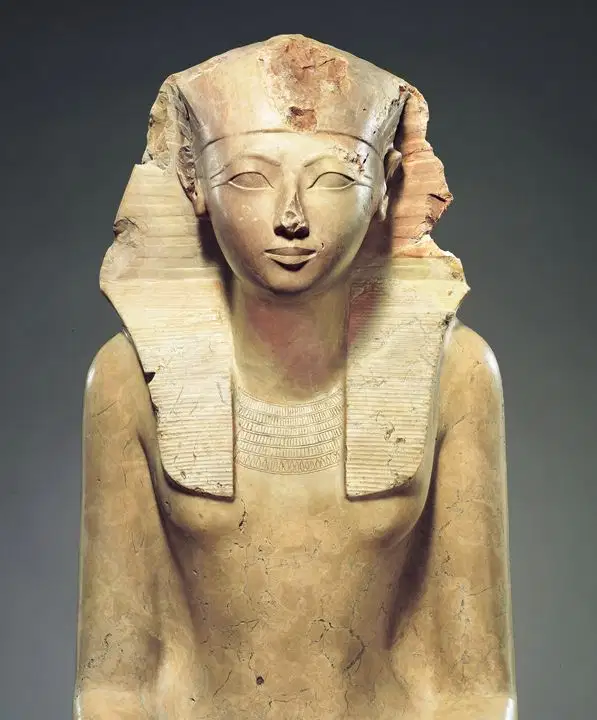
Pharaoh Hatshepsut was
The Pyramid Builder
A female pharaoh
The Patron of the Arts
A pharaoh during the Old Kingdom.

"She" was the 2nd pharaoh to not be buried in a pyramid. "She" was buried in the Valley of the Kings.
Pharaoh Ramses II
Pharaoh Khufu
Pharaoh Hatshepsut
Pharaoh Senusret I
The famous artwork of Nefertiti is a beautiful
painting
bust
sarcophagus
sculpture
Some historians believe Nefertiti may have been a princess from
Babylon
Greece
Sudan
Syria
Nefertiti and Pharaoh Akhenaten stripped Egyptian religion down from 2000 gods to just one god, the disc of the sun...
Amun Ra
Aten
Thoth
Bes
In Armarna art Nefertiti and her family often have skulls that look like
Lions
Giraffes
Aliens
Crocodiles

