
 Worksheets
Art History Midterm Review
Total questions: 116
Worksheet time: 1hrs 2mins
The Renaissance was marked by a renewed interest in ____?
Science
Ancient Greek and Roman culture
classical systems of government
Pagan belief
Humanism, which was intellectually what The Renaissance was based on, was all about __________.
the value of human beings and their capacities
Focusing on a religious theology that was more concerned with humanity
Believing all things started in the mind of man
Humanity being the most important species on earth
What was the theme of most early Renaissance art?
Anatomical images
Secular images
Christian images
Mystical Images
What did Italy look like at the beginning of the Renaissance?
A unified country
A collection of wealthy city states
A divided nation
A vassal state under the Ottomans
Which cities in Italy were the center of Renaissance artistic production?
Rome, Milan, Naples, and Verona
Venice, Milan, Naples, and Palermo
Venice, Milan, Siena, and Florence
Florence, Venice, Rome, and Palermo
Why was the emergence of oil paint as a medium significant to the Renaissance?
Slow drying time, richer colors, and the ability to work in layered glazes
Fast drying time, muted colors, and the ability to work in layered glazes.
Slow drying time, muted colors, and the ability to work in layered glazes
Fast drying time, richer colors, and the ability to work in layered glazes
True or false: Naturalism influenced Renaissance art.
True
False

Which city was the most prosperous In Italy during the Renaissance?
Siena
Venice
Florence
Rome
Which artwork below is Michelangelo's David?


This fresco is located in the Sistine Chapel, Vatican City.
Raphael's "School of Athens"
Michelangelo's "Creation of Adam"
Ghirlandaio's "Confirmation of the Franciscan Rule"
Botticelli's "Primavera"
Which family was famous for their patronage during the Italian Renaissance?
The House of Massimo
The Orsinis
The Medicis
The Sforza

Which artist sculpted the following bronze sculpture depicting "David"?
Donatello
Leonardo da Vinci
Michelangelo
Raphael
After Charles VIII invaded Florence, which city became the hub of artistic production during the High Renaissance
Rome
Venice
Paris
Palermo

Which artists is known as the "Renaissance Man", because he was so well-rounded in many studies of the Renaissance?
Donatello
Leonardo da Vinci
Michelangelo
Raphael
Which oil painting technique did Leonardo Da Vinci invent that meant "in the manner of smoke" that blurred edges and smoothed contours?
Sfumato
Scumbling
Alla Prima
Chiaroscuro

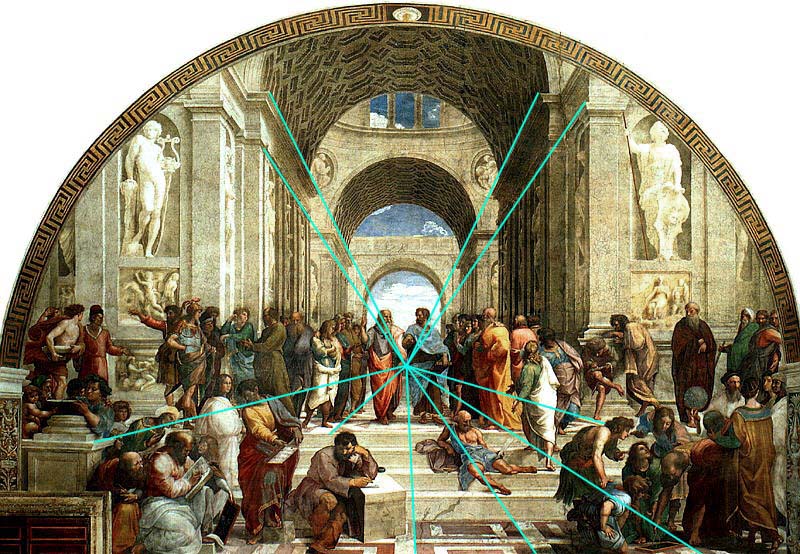
Who painted the Masterwork 'The School of Athens'
Michelangelo
Raphael
Donatello
Leonardo DaVinci

Who painted the ceiling and back wall of the Sistine Chapel?
Michelangelo
Leonardo DaVinci
Botticelli
Raphael

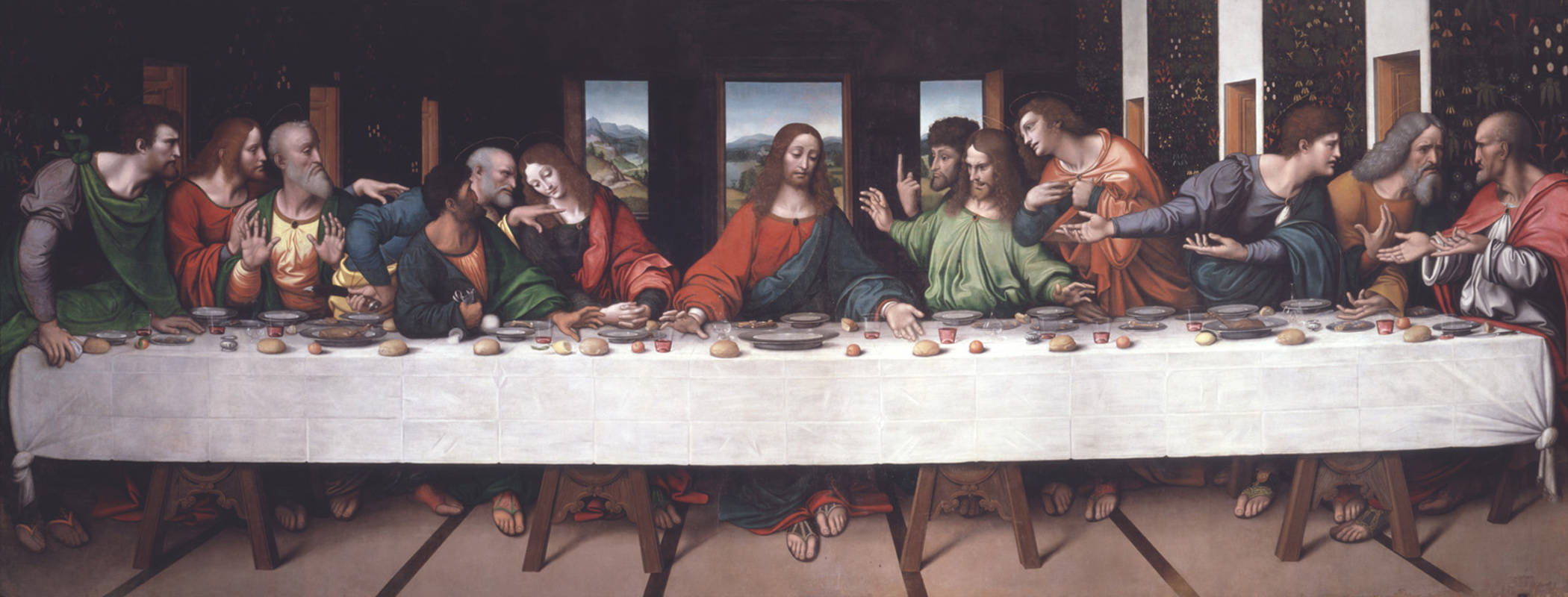
Who created this painting?
Botticelli
Michelangelo
Raphael
Leonardo DaVinci
True or False: Michelangelo considered himself a sculptor, not a painter
True
False
What subject was Raphael most well known for painting?
Jesus Christ
Ancient Greek myths
Madonna and Child
Garden scenes
The High Classical period of Greek art lasted
from 550 to 350 B.C.
from 450 to 400 B.C.
from 450 B.C. to 400 A.D.
from 550 B.C. to 350 A.D.
The Greek developed three architectural systems called orders:
the Doric, Composite, and Spartan
the Doric, Ionic, and Corinthian
the Doric, Spartan, and Composite
the Tuscan, Ionic, and Tuscan

The Temple of Zeus
The Pantheon

Kritos
Contraposto
Chiaroscuro
What allowed greek artists to have such a thorough understanding of anatomy?
Bodybuilding got its start in Ancient Greece so many men and women were muscular
Greek scientists made complex parchments detailing anatomy for reference
The men would exercise together at gymnasiums
They were the first artists to hire models

Identify this column
Ionic
Doric
Corinthian

Identify this column
Doric
Ionian
Corinthian

Identify this column
Doric
Ionic
Corinthian

What type of column is shown in the photo from the Greek era?
Doric
Ionic
Corinthian
Pericles most famous building project was...
(a)
Where is the Acropolis placed?
On top of a hill/mountain in Athens
On the coast of Athens
At the center of Athens
By the Temple of Zeus
Who funded the building of the Parthenon?
Sophocles
Hippocrates
Archimedes
Pericles
What are the three major periods of ancient Greece?
Classical, Hellenic, and Hellenistic
Geometric, Oriental, and Classical
Archaic, Classical, and Hellenistic
Archaic, Geometric, and Classical

How did the Hellenic period end?
The Greeks won the war against the Persians
The death of Phillip of Macedon
The death of Alexander the Great
When the spartans conquered Athens

What Greek period is this sculpture from?
Archaic
Macedonian
Hellenistic
Classical

What Greek period is this sculpture from?
Archaic
Macedonian
Hellenistic
Classical

What Greek period is this sculpture from?
Archaic
Macedonian
Hellenistic
Classical

This is
Athens
The Parthenon
The Acropolis
The Erechtheum

This is...
Athens
The Parthenon
The Acropolis
The Erechtheum

Which is NOT true of Greek Theaters?
The were built open aired and off of hills.
They were built to provide the best acoustics so everyone could hear.
Theater as very important to Greek societies.
They were built as free standing, circular structures
What were the very first Greek dramas about
The gods and greek heroes
Romance and intrigue
Making fun of Athenian politics
Introspective tragedies with psychological themes
List one or more of the three principles/ideas that Greek culture was founded on
(a)

Which goddess is this ancient wonder of the world a statue of?
Hera
Persephone
Minerva
Athena

What two materials is a chryselephantine made of?
Gold and Marble
Marble and Bronze
Ivory and Bronze
Ivory and Gold

What is the name of the structure seen here?
The Parthenon
The Arena
The Colossos
The Colosseum

Name the technique shown here using small peices of glass tesserae.
Mosaic
Mondrian
Moniped
Mindset
Mt. Vesuvius erupted in 79 AD and buried these two cities in volcanic ash.
Helena and Athens
Naples and Rome
Pompeii and Herculaneum
Florence and Caprese

What is the name of this structure built to honor all the Roman gods?
The Portcullis
The Parthenon
The Pantheon
The Panetone

What is this structure called?
Bridge
Aqueduct
Wall
Gate


The Column of Trajan was
carved with reliefs, depicting Trajan’s victorious campaign against the Dacians. It is a long spiralling narrative strip and includes more than 2,500 individual figures, among them the figure of Trajan is recurrent.
carved with reliefs, depicting Titus victorious campaign against the Judea, It is a long spiralling narrative strip and includes more than 5,500 individual figures, among them the figure of Titus is recurrent.
Which image best represents an oculus?


These two cultures greatly influenced Roman culture.
Greek and Macedonean
Persia and Egyptian
Etruscan and Greek
Greek and Egyptian

Name this monument
Arch of Constantine
Arch of Titus
Arc de Triomphe
Arch of Hadrian

Which Roman Emperor Built a Villa in Tivoli
Augustus
Nero
Vespasian
Hadrian
What technique did early artists use to paint cave walls?
Chewing animal fat (binder) and mixing it with crushed flowers (pigment) and blowing it onto walls
Dipping hands in seed oil (binder) and mixing it with minerals (pigment) to finger paint on walls
Chewing animal fat (binder) and mixing it with crushed up minerals (pigment) to blow onto walls
Dipping hands in seed oil (binder) and mixing it with crushed flowers (pigment) and blowing it onto walls
When was the golden age of Ancient Egypt
2040-1648 BC
1540-1295 BC
1295-1065 BC
31 BC


The largest Pyramid was made for which Pharaoh?
Khufu
Khafre
Sphinx
Tutankhamun

Pyramids were built for _____________.
Places to worship their gods.
Tombs for their Pharaohs.
Large three dimensional triangles in the sand.

The most famous Pharaoh's tomb that has been discovered was Tutankhamun's. True or False?
True
False

Most of the Ancient Egyptian Art we have in museums today is because they were discovered in tombs. True or False?
False
True

Hieroglyphs carved in stone are examples of:
Relief Sculpture
Sculpture in the round


Is this an example of High Relief, Low Relief, or Sculpture in the Round?
High Relief
Low Relief
Sculpture in the Round

Is this an example of High Relief, Low Relief, or Sculpture in the Round?
High Relief
Low Relief
Sculpture in the Round

Is this an example of High Relief, Low Relief, or Sculpture in the Round?
High Relief
Low Relief
Sculpture in the Round

Besides the Pyramids, where are many of the tombs of the Pharaohs?
Valley of the Kings
Mordor
Death Valley
Valley of the Nile

What is a description of Frontalism?
The face is from a side or profile view.
The eye is from a front view.
The arms and feet are from a profile view.
The shoulders and chest are from a front view.
All of the above.


Archaic period, Intermediate period, New Kingdom
Old Kingdom, Intermediate Period, New Kingdom

What is the Ka aspect of the Egyptian soul?
The part of the soul that travels to the afterlife
The part of the soul attached to an individuals name
The part of the soul that stays with the body and must be maintained
The part of the soul that represents someones shadow/capacity for evil

What is the Ba aspect of the Egyptian soul?
The part of the soul that stays with the body and must be maintained
The part of the soul that moves on into the afterlife
The part of the soul that is associated with the shadow/capacity for evil
The part of the Egyptian soul associated with their name

Who was the only female Pharaoh?
Cleopatra
Nefertiabet
Hatshepsut
Nefertititi

What is the title of the Egyptian masterwork?
Nebamun Wanders the Marshes
Nebamun Guiding His Family
Nebumun Beats Crane with Snake
Nebamun Hunting In The Marshes
The earliest example of christian art is found in _______ painted on the walls
The colosseum
Greek temples
Roman catacombs
The forum of Trajan
Which Mauryan emperor embraced Buddhism after the Kalinga War, influencing the art and architecture of the period?
Emperor Chandragupta
Emperor Ashoka
Emperor Bindusara
Emperor Harsha
What is the significance of the Lion Capital of Ashoka, and what do the four lions symbolize?
Wealth and prosperity
Power, courage, and the spread of Dharma
Peace and tranquility
Unity and strength
What type of structure, prominent during the Mauryan period, houses sacred relics and symbolizes the cosmic mountain?
Temple
Pagoda
Stupa
Monastery
During the Mauryan period, Buddhist art was largely aniconic. What does this term mean?
Depicting the Buddha in human form
Using abstract symbols to represent the Buddha
Using animal figures to represent the Buddha
Depicting the Buddha through natural landscapes
What was the role of Ashokan pillars, and what was inscribed on them?
To mark territorial boundaries; inscribed with military victories
To promote ethical governance and religious harmony; inscribed with Ashoka's edicts
To commemorate royal family events; inscribed with family lineage
To serve as astronomical markers; inscribed with celestial data
The Gupta period is considered the ‘Golden Age’ of India. What significant advancements were made during this period?
Development of nuclear technology
Advancements in art, literature, and science
Establishment of global trade routes
Invention of the steam engine
Which script was used to inscribe Ashoka's edicts on the pillars?
Devanagari
Brahmi
Sanskrit
Tamil
What does the term "Dharma" refer to in the context of Ashoka's edicts?
Wealth accumulation
Moral law and ethical governance
Military conquest
Religious rituals

What do the cave art images tell us about the people that made them?
They were likely hunters.
They weren't very creative people.
They were likely farmers.


What technique did early artists use to paint cave walls?
Chewing animal fat (binder) and mixing it with crushed flowers (pigment) and blowing it onto walls
Dipping hands in seed oil (binder) and mixing it with minerals (pigment) to finger paint on walls
Chewing animal fat (binder) and mixing it with crushed up minerals (pigment) to blow onto walls
Dipping hands in seed oil (binder) and mixing it with crushed flowers (pigment) and blowing it onto walls

For what purpose did prehistoric people make art?
To connect with and have power over the animals they hunt
To tell stories of their great hunts to tribesmen
To practice art for fun
To remember the dead animals slain in the hunt
In what century was the first cave painting discovered?
14th
16th
18th
19th
What do the cave art images tell us about the people that made them?
They were likely hunters.
They weren't very creative people.
They were likely farmers.
What technique did early artists use to paint cave walls?
Chewing animal fat (binder) and mixing it with crushed flowers (pigment) and blowing it onto walls
Dipping hands in seed oil (binder) and mixing it with minerals (pigment) to finger paint on walls
Chewing animal fat (binder) and mixing it with crushed up minerals (pigment) to blow onto walls
Dipping hands in seed oil (binder) and mixing it with crushed flowers (pigment) and blowing it onto walls
For what purpose did prehistoric people make art?
To connect with and have power over the animals they hunt
To tell stories of their great hunts to tribesmen
To practice art for fun
To remember the dead animals slain in the hunt
In what century was the first cave painting discovered?
14th
16th
18th
19th

