
 Worksheets
Vegetable Industry #1B: Plant Production Pathways
Total questions: 32
Worksheet time: 17mins

Plant Production Pathway
Production
Processing
Distribution
Consumer
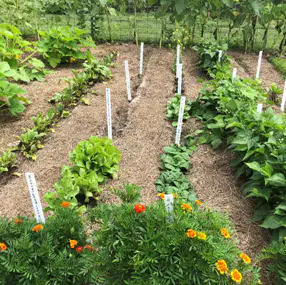
Phase/stage when:
*fields/growing media are prepped
*crop varieties to be planted are selected
*pest and weed control
*growing season, irrigation, harvesting...
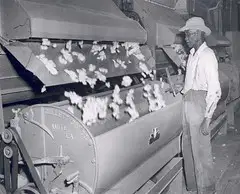
The method of converting the original, raw product into a final product ready for distribution and consumption.
Stage where cleaning, portioning, and packaging take place.

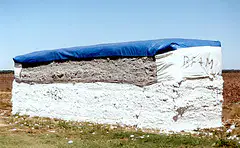
Stage/phase that involves:
*storage requirements
*shelf-life is determined
*transportation to final selling destination is accomplished

Most common vehicle used to transport food in the US.
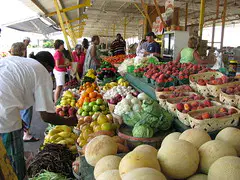
Stage/phase where produce is connected to the consumer at wholesale outlets, restaurants, and retail stores or farmers' markets.
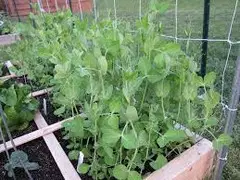
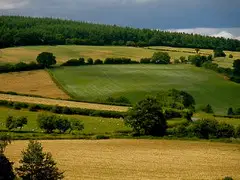
This most common type of farming system world-wide is often called "in ground growing".
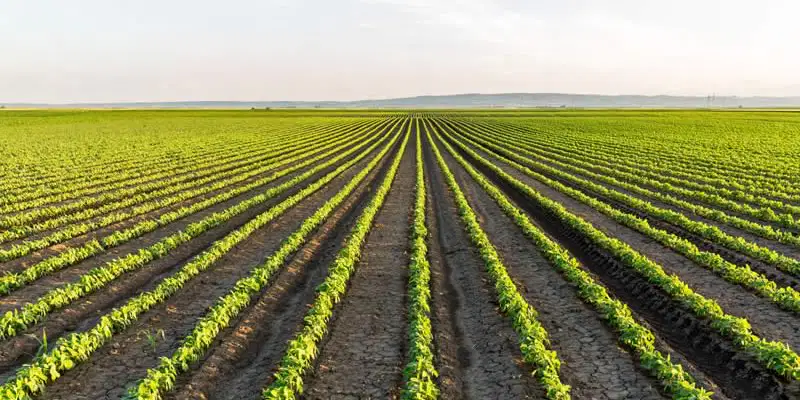
Monoculture agriculture is where one kind of crop is grown over extensive areas of land.
Monoculture agriculture decreases crop yields.
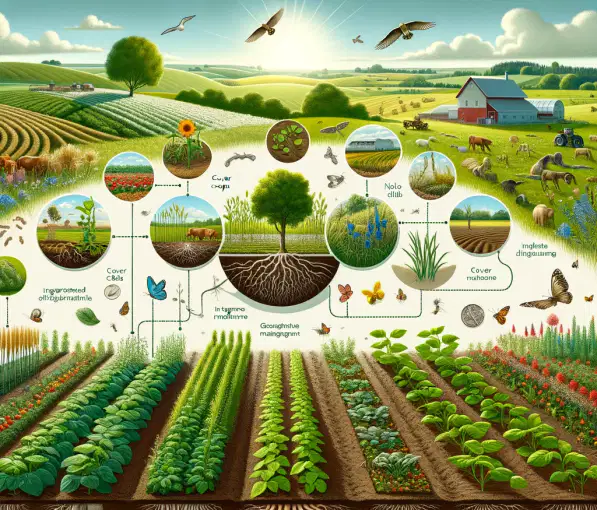
Sustainability in vegetable agricuture includes
Practices that maintain ecological balance, provides healthy habitat, and does not degrade the environment.
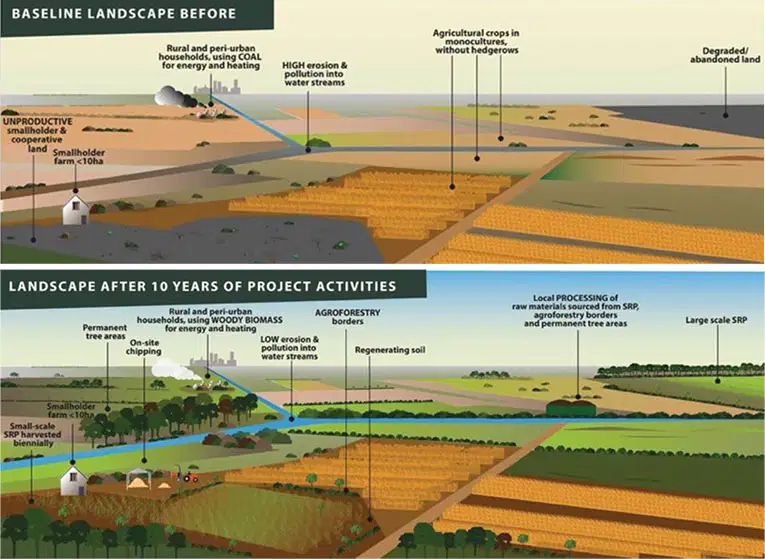
Restoration agriculture systems include
Monoculture farming: one crop grown over large areas
Intense chemical fertilizers and pesticide application
Intensive confined animal feeding operations (CAFO's)
Agroforestry, cover cropping, crop rotation, rotational grazing, organic amendments
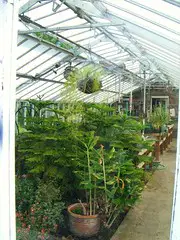
A clear (plastic or glass) building protects plants and seedlings from cold and other environmental factors, extending the growing season and productivity. There is more initial cost to these systems (beyond owning the land) compared to open field systems.
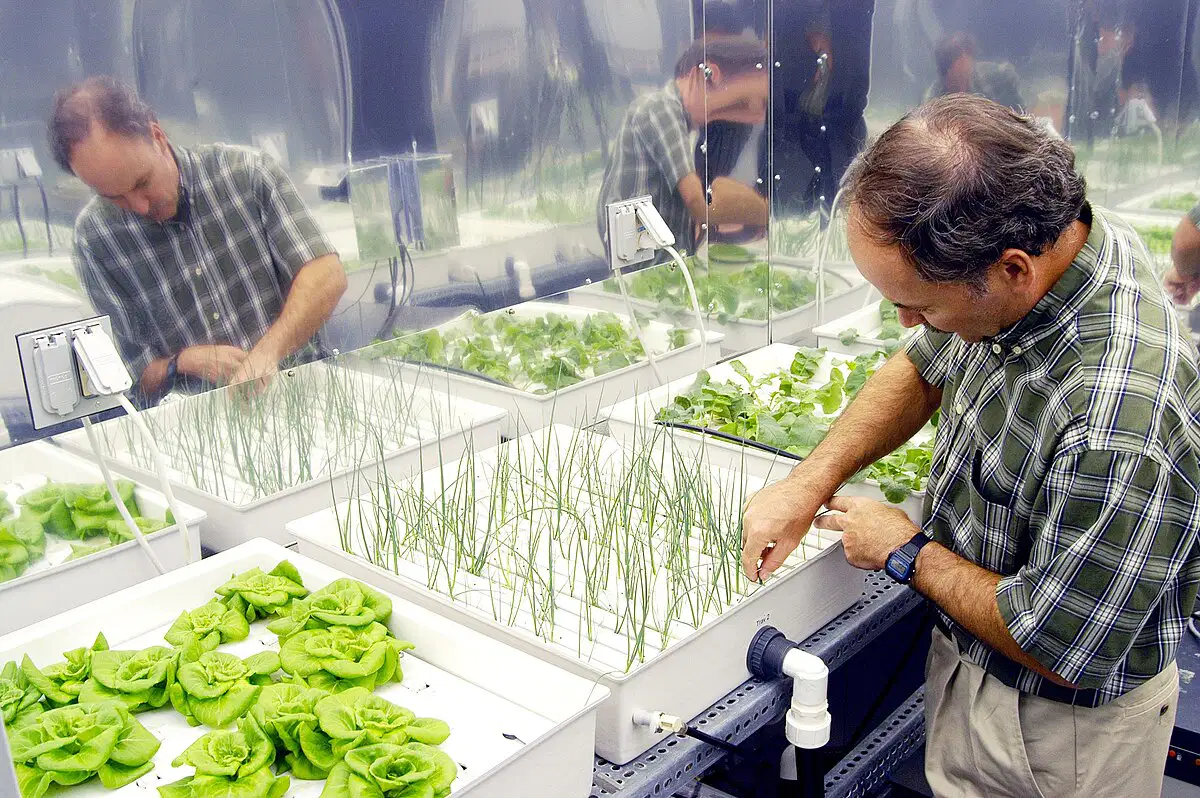
Plants grown in a non-soil media, with a continuous flow of nutrient-rich water pumped through. Crops with roots that grow efficiently under water thrive in this system.
*Uses way less water (because the water is recirculated)
*Can grow many more plants in a smaller space
*A much faster growth rate.
*Protection from temperature extremes and pests.
(Disadvantage: more expensive to set up initially.)

The stuff your plants grows in is called __________________________ .
growing media
aquaponics
greenhouse

Rock wool, sand, perlite, coconut coir, gravel, vermiculite... the non-soil stuff you grow your plants in besides water in hydroponics.
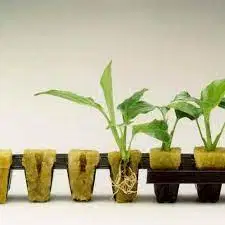
This hydroponic medium is manufactured from molten rock and the growing slabs ensure the product is sterile: free from weed seeds, pests and pathogens.
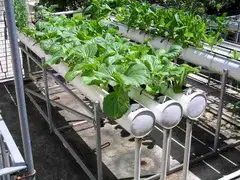
A type of hydroponics that has plants with their roots in a soil-less medium and reaching down into a shallow channel or tank of nutrient rich water.
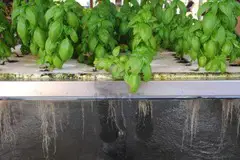
This horizontal hydroponic system consists of tanks 6 to 12 inches in depth holding a large volume of nutrient solution. Plants are grown on floating styrofoam rafts where the plants are placed in the holes and their roots grow down into the water.
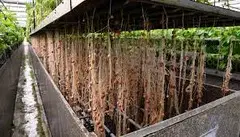

Aquaculture is part of agriculture, and produces all of the following except
aquaria fish
clams and oysters
market fish
vegetables
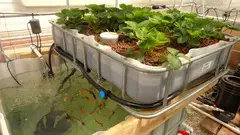
These systems combine aquaculture with hydroponics (growin plants without soil), using the fish waste as a natural fertilizer for the plants.
The water flowing through the plants is filtered and cleaned for the fish!
Aquaponics is a way to grow plants, while also ___________________________ .
remaining vegan.
building up the soil.
raising fish.
raising birds.
Which of the following is NOT a form of hydroponics?
raised bed systems
horizontal systems
aeroponics
aquaponics
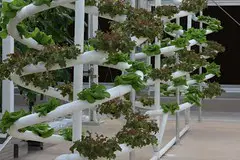
vertical systems
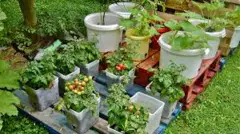
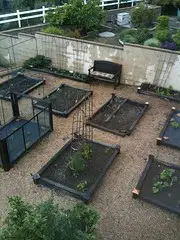
Popular with homeowners because it avoids soil issues and takes up less space, this form of garden design that improves soil drainage and quality, reduces weeds, and presents a barrier to pests.
Soil or compost is piled on the surface of the natural ground and a wall is built around the pile.

