wayground logo

Free Printable Worksheets

Font size

S
M
L
XL
Worksheets

C.I. Investigation 5

Total questions: 20

Worksheet time: 24mins

Name
Class
Date
1.
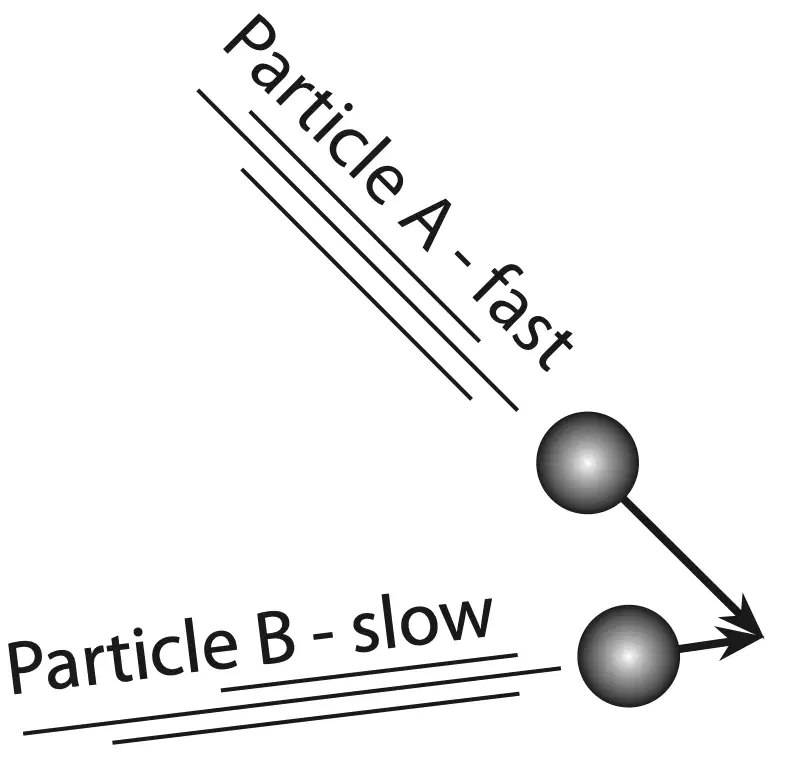
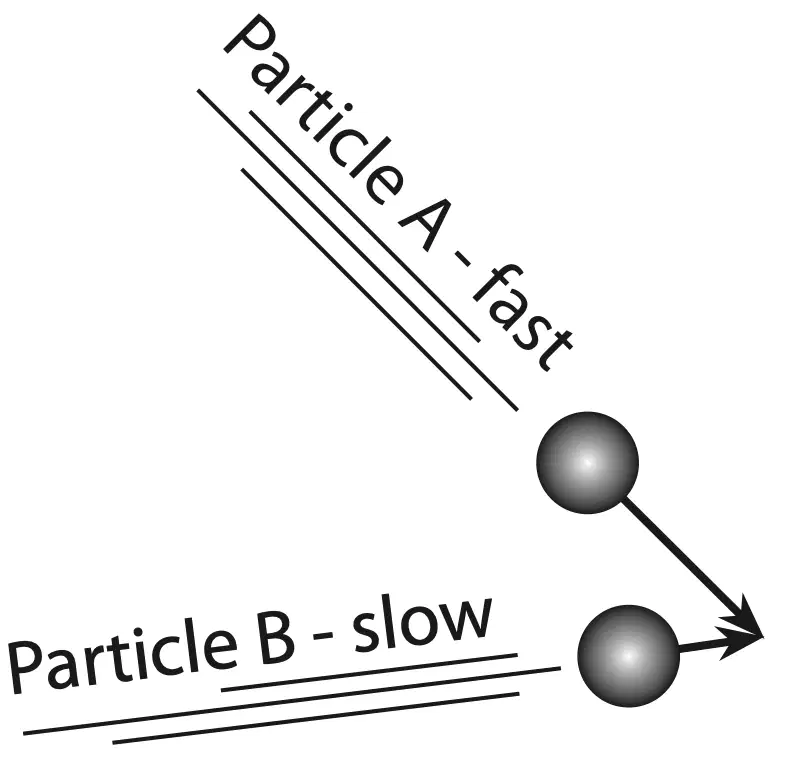
A fast-moving particle (A) and a slow-moving particle (B) collide. Which particle has more kinetic energy before the collision?
a)
Particle A
b)
Particle B
c)
A & B have the same kinetic energy.
2.
A fast-moving particle (A) and a slow-moving particle (B) collide. What happens to the kinetic energy when the particles collide?
a)
Energy transfers to particle A
b)
Energy transfers to particle B
c)
Energy transfers to both particles.
3.
A fast-moving particle (A) and a slow-moving particle (B) collide. Which particle has more kinetic energy after the collision?
a)
Particle A
b)
Particle B
c)
A & B have the same kinetic energy
4.
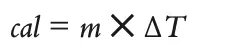
A student heated 50 ml of water from 0°C to 60°C. How much energy did she use to heat the water? Remember:
a)
60 cal
b)
-60 cal
c)
3000 cal
d)
-3000 cal
5.
A student places a warm can of fruit juice in a bucket of ice water. What happens to the particles of juice?
a)
The number of juice particles decreases as energy transfers via ice water.
b)
Energy flow decreases the size of the juice particles
c)
Cold energy decreases the motion of the juice particles
d)
Energy flow decreases the space between the juice particles
6.
A baker has 2 identical cakes. One cake is hot (40°C) and the other is at room temperature (20°C). He places both cakes next to each other on the same 10°C plate. What happens to the energy in the cakes.
a)
Only the hot cake transfers energy to the plate
b)
The plate transfers energy to the room-temperature plate
c)
Both cakes transfer energy to the plate
d)
Neither cake transfers energy to the plate.
7.
When two volumes of liquid at different temperatures are mixed, the final temperature is ____________ of the two samples.
a)
hotter than the hot sample
b)
colder than the cold sample
c)
an average of the two samples
8.
The kinetic energy in hot water moves __________ than/as kinetic energy in cold water
a)
slower
b)
faster
c)
at the same speed
9.
The movement of energy from one place to another is called__________.
a)
kinetic energy
b)
energy transfer
c)
conduction
10.
The greater the kinetic energy of particles in a sample the ___________ the sample is.
a)
colder
b)
hotter
11.
Energy transfers between particles when they_________.
a)
slide past each other
b)
bounce off of opposite corners
c)
collide
12.
Energy transfer that results from particle collisions is called ___________.
a)
convection
b)
conduction
c)
energy
13.

Energy always move from ________ energy to _________energy.

(a)  
14.
For science temperature is measured in ____________.
a)
°Celsius
b)
Calories
c)
°Fahrenheit
15.
Heat is measured in_________.
a)
°Celsius
b)
Calories
c)
°Fahrenheit
16.
The number of particles gaining energy will always be _________ as the number of particles losing energy.
a)
higher
b)
lower
c)
the same
17.
When a system is in balance, and there is no energy being transferred, the system is said to be in ___________.
a)
a happy place
b)
equilibrium
c)
limbo
18.
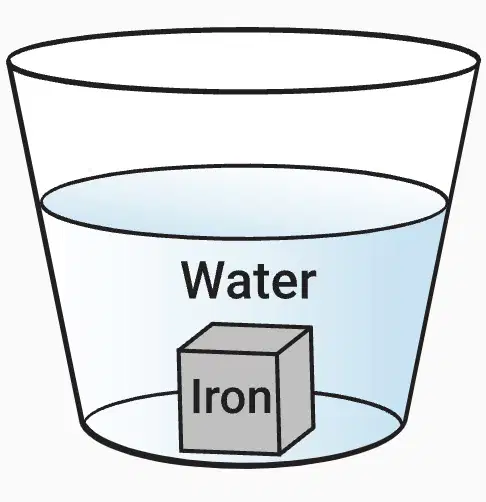
The iron cube and water in this system are at the same temperature. Which particles have higher kinetic energy
a)
The water particles
b)
The iron particles
c)
They both have the same.
19.

A student pours milk into a mug filled with hot chocolate. Tell whether each statement is true or false about the energy of the milk and hot chocolate

Categorize the following

Energy flows from the hot chocolate to the cold milk

The kinetic energy of the milk particles increases

Energy flows from the cold milk to the hot chocolate

The kinetic energy of the hot chocolate particles increases

True
False
20.

Particles in a solid table and in the air of a classroom are at the same temperature. Decide whether each statement is true or false

Categorize the following

The particles in the table and in the air have the same kinetic energy

The air particles interact differently than the table particles do

The particles in the table are not moving and the air particles are

Particles in a gas always have more average kinetic energy than those in a solid

True
False