
 Worksheets
Supply & Demand Unit Review
Total questions: 37
Worksheet time: 34mins
When the price of a product increases, there is
a shift in demand.
movement along the demand curve.
a change in elasticity of demand.
no effect on quantity demanded.
On the demand curve, price and quantity demanded are
inversely related.
directly related.
unrelated.
not relevant.
During the Dust Bowl of the 1930’s, many farmers’ agricultural goods were destroyed. What happened to the market for agricultural goods?
Increase in demand
Decrease in demand
Increase in supply
Decrease in supply
What is the Law of Supply?
When demand goes up, supply decreases.
Supply shifts to the right due to technology.
When price increases, quantity supplied decreases.
When price increases, quantity supplied increases.
Which of the following explains the Law of Demand?
When prices go down, people have an increased income.
When the price of a good increases, people tend to buy substitutes instead.
People prefer inferior goods during a recession.
People often buy eggs and bacon together.
Which of the following pairs of goods are substitutes?
Jelly & Jam
Eggs & Bacon
Apples & Broccoli
Mugs & Candles
Which of the following pairs of goods are complements?
Jelly & Jam
Eggs & Bacon
Apples & Broccoli
Mugs & Candles
When consumer income decreases,
demand for normal goods increases.
demand for normal goods stays constant.
demand for inferior goods increases.
supply for inferior goods increases.
Assume peanut butter and jelly are complementary goods. When the price of jelly increases, what will happen to the demand for peanut butter?
It will decrease.
It will increase.
It will remain constant.
Complementary goods only affect the supply curve.
The cost of wood increases sharply. What happens to the supply for pencils?
It will increase due to producer expectations.
It will decrease due to producer expectations.
It will increase due to cost of inputs.
It will decrease due to cost of inputs.
War has broken out! What happens to the market for weapons?
Supply increases due to number of producers.
Supply increases due to changes in technology.
Supply increases due to international events.
Demand decreases due to government policy.
What is market clearing price?
Qs>Qd
Qd>Qs
Qs=Qd
None of the above.
Which of the following signifies a shortage?
Qs>Qd
Qd>Qs
Qs=Qd
None of the above.
Which of the following signifies a surplus?
Qs>Qd
Qd>Qs
Qs=Qd
None of the above.
An effective price ceiling causes which of the following?
Equilibrium
Surplus
Shortage
Market Reform
An effective price floor causes which of the following?
Equilibrium
Surplus
Shortage
Market Reform
Which of the following is an example of a fixed cost?
Electricity
Money
Raw materials
Building rent
Which of the following is an example of a variable cost?
Raw materials
Profit
Building rent
Surplus
If a good has elastic demand, an increase in price will result in
a small decrease in quantity demanded.
a large decrease in quantity demanded.
a small increase in quantity demanded.
a large increase in quantity demanded.
If a good has inelastic demand, an increase in price will result in
a small decrease in quantity demanded.
a large decrease in quantity demanded.
a small increase in quantity demanded.
a large increase in quantity demanded.
What is profit?
Revenue
Gross Revenue
Cost of Inputs minus Revenue
Revenue minus Cost of Inputs
When supply shifts to the right, what will happen to the market equilibrium price?
Price increases
Price decreases
Price remains constant
It depends on the cause of the shift.
When demand shifts to the right, what will happen to the market equilibrium price?
Price increases
Price decreases
Price remains constant
It depends on the cause of the shift.
When supply shifts to the left, what will happen to the market equilibrium price?
Price increases
Price decreases
Price remains constant
It depends on the cause of the shift.
When demand shifts to the left, what will happen to the market equilibrium price?
Price increases
Price decreases
Price remains constant
It depends on the cause of the shift.

What is the equilibrium price & quantity?

Suppose the government set a price control at $20. Would it be an effective price ceiling or floor? Why?

Would the $20 price control cause a shortage or a surplus?
At $20, how much (quantity) would the shortage or surplus be?
Who would the price control more likely help: producers or consumers? Why?
Explain how producers respond to the following situations. Be sure to connect back to market equilibrium. a. How do producers respond to a shortage? b. How do producers respond to a surplus? c. How do producers respond to market equilibrium?
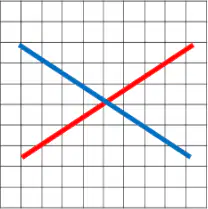
The government decides to perpetually pay farmers to NOT grow as many crops. What happens to the market for crops the following year?
Increase in Supply
Decrease in Supply
Increase in Demand
Decrease in Demand
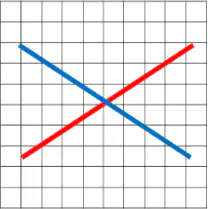
A popular social media influencer says that flip flops are the ugliest thing to put on your feet. What happens to the market for flip flops today?
Increase in Supply
Decrease in Supply
Increase in Demand
Decrease in Demand
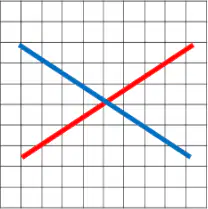
The price of the bridge toll goes up today. What happens to the market for public transportation today?
Increase in Supply
Decrease in Supply
Increase in Demand
Decrease in Demand
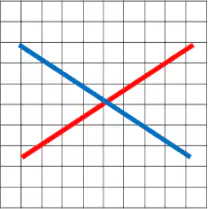
The cost of leather goes down sharply. What happens to the market for leather belts today?
Increase in Supply
Decrease in Supply
Increase in Demand
Decrease in Demand
The market for fast food has really taken a nose-dive. As a result, several fast food joints have closed their doors. What happens to the market for fast food today?
Increase in Supply
Decrease in Supply
Increase in Demand
Decrease in Demand
It’s Wednesday and Black Friday is on the horizon. What happens to the market for TVs today?
Increase in Supply
Decrease in Supply
Increase in Demand
Decrease in Demand

