
Font size
 Worksheets
Water Molecule Quiz
Total questions: 26
Worksheet time: 23mins
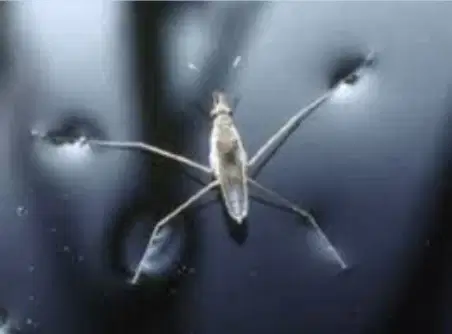
Why can insects "walk on water"?
Their weight breaks the cohesion of water molecules
Their weight does not break the cohesion of water molecules
Their weight increases the adhesion of water molecules
Their weight decreases the adhesion of water molecules
What is the property called that holds molecules of different substances together?
Cohesion
Adhesion
Evaporation
Condensation
Water _____is the property of water molecules to be attracted to each other, which. This property gives water its stickiness.
Repulsion
Cohesion
Diffusion
Osmosis
What is the significance of water's ability to store energy?
It makes water heavier
It affects weather and climate
It changes water's color
It makes water evaporate faster
What is a liquid that dissolves a substance called?
Solvent
Solute
Solution
Suspension
What percentage of Earth's water is fresh water?
10%
5%
3%
1%
What causes dew to form in the morning?
Evaporation
Condensation
Precipitation
Collection
Water Cycle (Hydrologic Cycle)
water that fills the cracks and spaces in underground soil and rock layers
the process by which water on the ground surface enters the soil
The continuous movement of water on, above, and below the surface of the Earth
the falling to earth of any form of water (rain or snow or hail or sleet or mist)
Infiltration
water that fills the cracks and spaces in underground soil and rock layers
the process by which water on the ground surface enters the soil
The continuous movement of water on, above, and below the surface of the Earth
the falling to earth of any form of water (rain or snow or hail or sleet or mist)
Runoff
the falling to earth of any form of water (rain or snow or hail or sleet or mist)
the change of a substance from a liquid to a gas
the change of state from a gas to a liquid
water that flows over the ground surface rather than soaking into the ground
Why can water absorb more energy than many other substances?
Because it is a solid
Because it has a high specific heat
Because it is a gas
Because it is a metal
Precipitation
the falling to earth of any form of water (rain or snow or hail or sleet or mist)
the change of a substance from a liquid to a gas
the change of state from a gas to a liquid
water that flows over the ground surface rather than soaking into the ground
Transpiration
the emission of water vapor from the leaves of plants
the change of state from a gas to a liquid
a body of rock or sediment that stores groundwater and allows the flow of groundwater.
the upper level of the saturated zone of groundwater
Where would you find salt water?
a large lake, like Lake Superior
a sea
an alpine glacier
in coastal rain
Groundwater
water that fills the cracks and spaces in underground soil and rock layers
the process by which water on the ground surface enters the soil
The continuous movement of water on, above, and below the surface of the Earth
the falling to earth of any form of water (rain or snow or hail or sleet or mist)

Evaporation
the falling to earth of any form of water (rain or snow or hail or sleet or mist)
the change of a substance from a liquid to a gas
the change of state from a gas to a liquid
water that flows over the ground surface rather than soaking into the ground


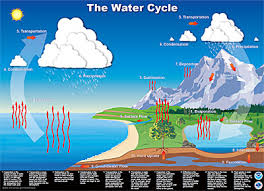

The sun will cause water in the puddle to change from _____ ?
a gas to a liquid
solid to a liquid
a liquid to a gas
a liquid to a solid
Condensation
the falling to earth of any form of water (rain or snow or hail or sleet or mist)
the change of a substance from a liquid to a gas
the change of state from a gas to a liquid
water that flows over the ground surface rather than soaking into the ground
When clouds fill with water and can't hold anymore, the water falls from the clouds as -
precipitation
clouds

