
 Worksheets
Year 7 Ancient Rome 2
Total questions: 112
Worksheet time: 1hrs 11mins

Which of the following is NOT an advantage of Rome's location on the Tiber River?
Access to fresh water supply
Easy transport of goods to the sea
Carries away human waste from the city
River provides energy to drive watermills

The name of the river that Rome is located on is
The Rhine
The Tiber
The Po
The Danube

The Tiber links the city of Rome to...
The port of Ostia
The port of Pompeii
The port of Subura
The port of Naples

Where does the river that runs through Rome originate? (the source of the river)
The Appennine Mountains
The Alps
The Atlas Mountains
The Po Valley

Ostia was a town located...
On the coast, many day's journey from Rome
Inland, deep in the Appennine Mountain range
On the coast, a short journey from Rome
On the other side of the Appenine Mountains, many months journey from Rome
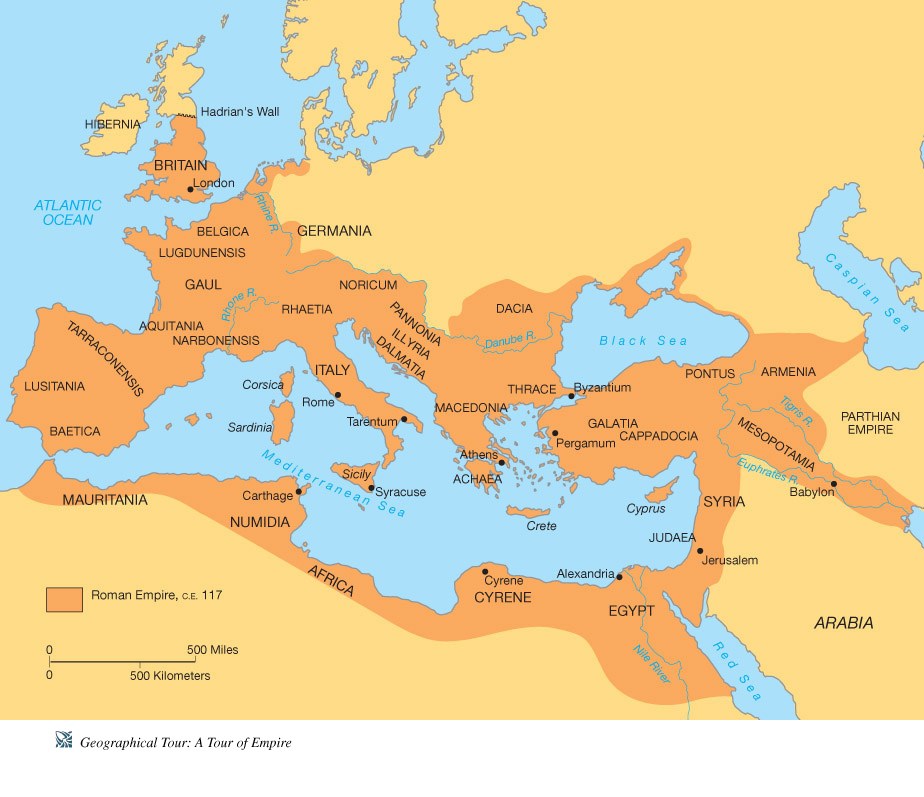
These three features were the main Southern boundaries of Rome's Empire (in Africa).
Danube, Nile & Syrian Desert
Atlas Mountains, Sahara Desert, Libyan Desert
Rhine, Danube, Alps
Syrian Desert, Nile, Atlas Mountains
This natural feature gave Rome access to food & trade.
The Alps
The Apennines
The Mediterranean
The Po Valley

Which of these is NOT a mountain range?
Danube
Alps
Appennines
Atlas

The Syrian Desert is located in
Europe
Africa
Asia
Italy
Which of these is NOT an advantage Rome had related to its location in the middle of the Mediterranean Sea?
Access to food sources
Access to trade
A mild climate
Access to oil

The city of Rome is built on _____ hills.
2
3
5
7
'Via' was the Roman (Latin) word for
Bridge
Field
Road
Square
A 'basilica' was a Roman
Bathhouse
Temple
Theatre
Marketplace
An 'aqueduct' is used to transport...
Water
Grain
People
Electricity

The Tarpeian Rock was used by Romans ...
To sunbathe
To execute traitors
As a final defensive refuge
For military practice
The main mountain range that runs down the middle of the Italian peninsula is
The Atlas Mountains
The Alps
The Apennines
The Pyrenees
The city of Rome was located in the region of ______________, which is now found in modern ___________________
Latium, Italy
Etruria, Italy
Cappodocia, Turkey
Attica, Greece

What continent is 8?
North America
Africa
Europe
Australia

What sea is #1?
Mediterranean Sea
Adriatic Sea
Gulf of Mexico
Red Sea

What River is number 5?
Tigris
Tiber
Nile
Adriatic

What mountains make up #7?
Olympic
Alps
Mt. Hood
Mt. Everest

What is #4?
Rome
Persia
Greece
Macedonia

What is the continent labeled 11?
Europe
Australia
Africa
South America
Which government/period saw Rome's most wealth and at its largest empire. During this period one leader ruled over the people. During this period Christianity spread throughout Europe, Asia, and Africa.
Empire
Monarchy
Democracy
Republic
The first democratic government to be created after the fall of Rome was the United States almost 1,300 years after the Roman empire fell.
True
False
What are 4 things the Ancient Roman left for Western Civilization?
Direct democracy, English/Spanish, art, Christianity
Food supply, oligarchy, Hellenism, architecture
Representative democracy, English/Spanish, architecture(buildings and creation of cement), Christianity
English/Spanish, Christianity, Direct Democracy, architecture
What helped Ancient Rome become an empire?
Its victory of Carthage in the Punic Wars. After the Punic Wars Rome was able to control the surrounding rim of the Mediterranean Sea.
When Romulus killed Remus and built his new city in Rome, 15 miles inland on the Tiber River.
It had a representative democracy.
It had a direct democracy.
What continent is 8?
North America
Africa
Europe
Australia
What sea is #1?
Mediterranean Sea
Adriatic Sea
Gulf of Mexico
Red Sea
What River is number 5?
Tigris
Tiber
Nile
Adriatic
What is the continent labeled 11?
Europe
Australia
Africa
South America
What is one major DIFFERENCE between the geography of Greece and Italy
one has seas and the other doesn't
one has a river and the other doesn't
one has mountains and the other has none
one has deserts and the other doesn't
How did the Mountains impact the Roman civilization?
It provided them with food
It provided them with protection against invaders
It helped create different city-states in the Roman empire
In order to have fresh water in their cities, Rome used...
Patricians
Twelve Tables
forums
aqueducts
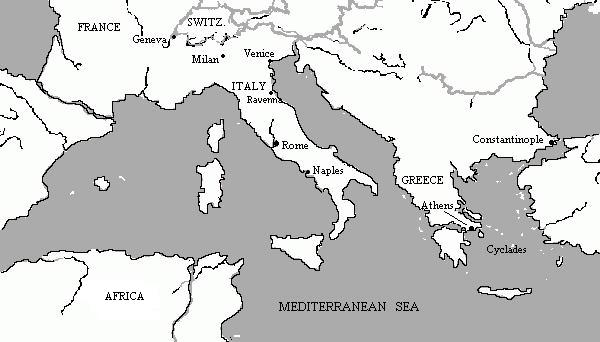
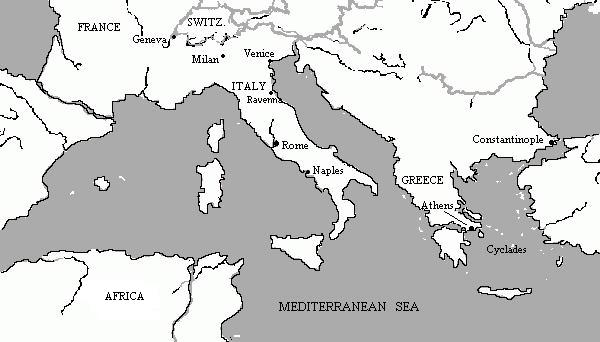
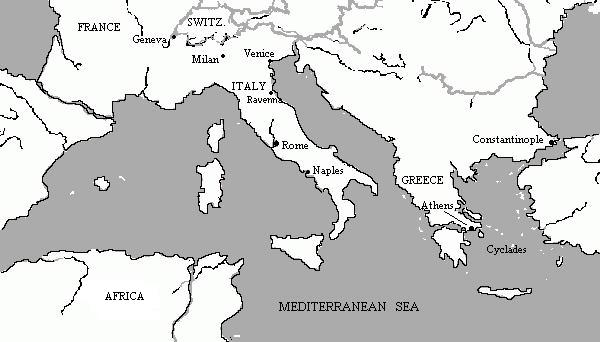


Which letter marks the Mediterranean Sea?
A
B
C
D

Which number marks Rome?
1
2
3
4
These two rivers are located in the Italian Peninsula (choose 2).
Rhine River
Danube River
Po River
Tiber River
These two rivers helped mark the northern boundary of the Roman Empire. (choose 2)
Rhine River
Danube River
Po River
Tiber River
The body of water to the east of Italy is the
Tyrrhenian Sea
Adriatic Sea
Baltic Sea
Dead Sea
An island in the Mediterranean Sea off the southwest tip of the Italian peninsula
Elba
Rhodes
Majorca
Sicily
This body of water is located furthest west of the Roman Empire
What would be the advantage of Rome being located near the Tiber River?
It provided a source of fresh drinking water and easy transportation for trading
Romans farmed in the river
What would be the advantage of Rome being near the Alps and Apennines mountains?
What would be the advantage of Rome having rich, volcanic soil?
What river was crucial for the early settlers of Rome?
Tiber River
Amazon River
Ganges River
Nile River
How many hills offered a natural defensive barrier for Rome?
Three
Ten
Seven
Five
Which mountain range protected Rome during the winter months?
The Alps
The Rockies
The Andes
The Himalayas
What was the primary use of the Tiber River for early Romans?
Waste disposal
Fishing competitions
Trade and food
Recreational activities
What was the primary benefit of Rome's central location in the Mediterranean?
Center of trade
Cultural exchange
Military advantage
Tourism
What is a peninsula?
Water
A beach
A piece of land almost surrounded by water or projecting out into a body of water.
It's a river
What does Italy look like on the map?
Looks like a boot
It looks like sea
Looks like earth
Has nothing in common
Where is Rome located?
Mediterranean Sea
Atlantic Ocean
Pacific Ocean
Artic
What were one of the benefits of the Geographical Location of Ancient Rome?
It could get to conquer European territories.
They were more popular for their geography
They had nice views
Nothing
Roma benefited a lot from its ___________________?
Geographic location
The rivers.
The seas.
The mountains
What are the limits of Ancient Rome?
It is bordered to the north by the Alps, to the east by the Adriatic Sea and the Mediterranean, and to the west by the Tyrrhenian Sea.
It is bordered to the north by the Adriatic Sea and the Mediterranean, to the east by the Alps and to the west by the Tyrrhenian Sea.
It is bordered to the north by the Tyrrhenian Sea, to the east by the Alps mountain range and to the west by the Mediterranean Sea.
None of the above.
What were the benefits of the Rio Tiber?
It was a source of fresh water and rich soil needed to support the development of Rome's people, animals, and crops.
With the Tiber River people could walk, and make trips easily.
The river Tiber brought fish what people could eat.
None of the above.
Where is the Tiber River located?
Baetulo
Italy
Corfinium
Asculum
What river runs through the city of Rome?
Nile River
Tiber River
Danube River
Seine River
Which mountain range runs down the length of the Italian Peninsula?
Alps
Pyrenees
Apennine Mountains
Carpathian Mountains
What sea is located to the south of Rome?
Black Sea
Red Sea
Mediterranean Sea
Baltic Sea
Which of the following is a major geographical feature of Ancient Rome?
Sahara Desert
Tiber River
Amazon Rainforest
Rocky Mountains
The Apennine Mountains are located in which country?
Greece
Italy
Spain
France
Which body of water was crucial for trade and military activities in Ancient Rome?
Atlantic Ocean
Mediterranean Sea
Indian Ocean
Pacific Ocean
What is the primary river that provided water and transportation for Ancient Rome?
Euphrates River
Tiber River
Ganges River
Thames River
Which mountain range provided a natural barrier to the east of Rome?
Andes Mountains
Apennine Mountains
Ural Mountains
Himalayas
The city of Rome is located on which continent?
Asia
Africa
Europe
North America
Which river was central to the founding and development of Rome?
Tigris River
Tiber River
Mississippi River
Yangtze River

