
 Worksheets
C2 - Atoms, Elements and Compounds - Revision
Total questions: 98
Worksheet time: 2hrs 45mins


X2Y
X2Y2
X2Y4

X2Y
X2Y2
X2Y4


Q28. Potassium and bromine chemically combine to form the compound potassium bromide. During formation, each bromine atom…..1….. one electron which is completely …..2….. from the outer shell of the potassium atom. The …..3….. force of attraction is formed from the attraction between the opposite charges on each ion. What words correctly fill gaps 1, 2 and 3?


Q41. Which row provides a correct description of the properties of metals?
Q42. Which statement correctly describes the structure of macromolecules?
This is any combination of two or more atoms from different elements that are chemically combined.
compound
mixture
element
pure substance
This number tells you how many protons are in each atom of a specific element and how many electrons there are in each unreacted atom from that element.
atomic number
atomic mass
number of electrons
chemical symbol
Which statement is true about a mixture?
A mixture can be described by a chemical formula
A mixture can be broken down into its basic substances through physical methods
A mixture is created through a chemical reaction
A mixture cannot be broken down into simpler substances
What is a compound?
Two or more than two different elements chemically bonded together.
Two of the same elements bonded together.
A mixture of different substances.
Two substances stuck together with glue.
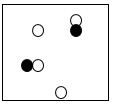
A mixture of a compound & an element
Select the correct definition for an element.
The smallest part of an element that can exist.
A substance made of only one type of atom.
A substance made of more than one type of atom that are chemically bonded together.
A substance made of more than one type of atom that are not chemically bonded together.
Select the correct definition for a compound.
The smallest part of an element that can exist.
A substance made of only one type of atom.
A substance made of more than one type of atom that are chemically bonded together.
A substance made of more than one type of atom that are not chemically bonded together.
Select ALL elements from this list.
Carbon dioxide (CO2)
Hydrogen (H2)
Nitrogen (N2)
Hydrochloric acid (HCl)
Iron (Fe)
Select ALL compounds from this list.
O2
CO2
HCl
CH4
Fe

How many electrons does a Si atom contain? (click to see image)
Nucleon is the name of ?
Protons and Neutrons
Protons and Electrons
Electrons and Neutrons
Protons only
Neutrons only
What is the electronic configuration of Lithium?
2.8.8
2.2.2
2.8.5
2.1

How many electron shells (energy levels) does this atom have?

The electronic configuration of Ca is?
2,8,8,2
2,8,8,8,8,6
2,8,8
2,8,8

Mg (12) is belong to ...
Group I
Group II
Group VIII
Period 2
Period 1

In the Periodic Table, an element is arranged in group depend on ...
the number of valence electrons
the number of shells occupied by electrons
the number of electrons in the innermost shell
the atomic number (number of protons)

In the Periodic table, an element is divided into period due to its ...
atomic number
mass number
number of valence electrons (electrons in the outer most shell)
number of shells occupied by electrons
The atomic mass number of an atom helps people know about ... (Choose ALL correct answers)
the number of protons
the number of protons and electrons
the number of protons and neutrons
the number of nucleons
the number of neutrons and electrons
The Valence electrons is known as
the number of protons in the nucleus
the number of electrons in the innermost shells
the number of electrons in the outermost shells
the number of shells occupied by electrons
The Valence shell is known as
the mass number of the atom
the number of electrons in the innermost shells
the outermost shells of the atom
the number of shells occupied by electrons
the innermost shells of the atom

A Sulfur ions has the atomic number of 16.
The number of electrons in the Sulfur ion is ...
14
16
18
20
An atom lose (give out) electron(s) and turns into ...
a positive ion
a negative ion
a neutral atom
What is the difference between two isotopes of Neon: Neon-20 and Neon-22?
They have different numbers of electrons.
They have different numbers of neutrons.
They have different atomic numbers.
No difference.
If a proton is added or removed from an atom, what happens?
It becomes a different element.
It becomes a different isotope.
Nothing happens.
Which of these determines the identity of an atom?
proton
neutron
valence electron
protons and neutrons
If X is the symbol for an element, select the two symbols represent isotopes of the same element.

7735X

7937X

8136X

8135X

Noble gases are...
Happy and stable because they have full valence electrons
Happy BUT UNSTABLE because they are gases
Not happy because they don't want to be noble
Not happy but stable because they are group number 18

Why do all bonds form?
An atom want to have full filled outermost shell and becomes more stable
so an atom can become unstable and tend to change.
so the number of protons and electrons can be equal.
so they can be able to gain neutrons.
Valence electrons are found
in the outermost shell (energy level)
in the innermost shell (energy level).
in any electron shell.
in the nucleus of the atom.
An atom with 1 valence electron 'needs' to have a full shell, so it can either gain 7 electrons or lose 1.
Which is more likely to occur?
nothing
gain 7 electrons
give out (lose) 1 electron
How do covalent bonds form?
by sharing electrons between a metal and a non-metal atoms
by donating or receiving electrons in the outermost shell
by sharing electrons between two or more than two non-metal atoms
by donating or receiving protons
How many valence electrons does Boron (B) have? (you can use The Periodic Table)
1
2
3
4
When an atom loses (an) electron(s), it becomes a ... (choose all that apply)
positive ion
negative ion
cation
anion
Atoms are most stable when their outer shell is full or complete.
true
false
How are ionic bonds formed?
by the transferring of electrons
by sharing of electrons
by the transferring of protons
by sharing of neutrons
Group numbers on the periodic table help us determine
number of valence electrons
state of the element (solid, liquid, gas)
the number of shells covered by electrons
the melting point of the element
Water (H2O) is an example of ...
molecular compound (covalent compound)
ionic compound
a pure element
a mixture
Table Salt (NaCl) is an example of ...
ionic compound
covalent compound
a mixture
a pure element
Atoms involved in a covalent bond are not charged, while atoms involved in an ionic bond are charged (negative or positive)
true
false
Ionic bonds form between metals and ...
(a)
If an atom has no charge, which of the following must be true?
It has more neutrons than protons or electrons.
There are only neutrons inside the atom.
Its number of protons is equal to its number of electrons.
The neutrons in the atom outnumber the electrons and protons.
Why don't noble gases form bonds?
Noble gases do form bonds
They all have a full outermost shell and be stable
They only bond with each other
What charge will a Neon ion have?
+1
-1
-8
Neon does not form ions.
MgO has
Ionic bonding
Metallic bonding
Covalent bonding
Predict what type of bond would form between Mg and Cl.
Ionic
Covalent
Metallic
Polar Covalent
If an atom loses two electrons, what charge will it have?
+2
-2
+1
-1

Using the image, identify what type of chemical bond would most likely be formed. (choose all that apply)
An ionic bond because there are positive and negative ions.
A covalent bond because the electrons are being shared.
An ionic bond because it happens by transfer of electron
An ionic bond because it happens between two non metals.
CH4, this compound has ...
ionic bond
covalent bond

What do atoms do to become anions?
lose electrons
gain electrons
lose protons
gain protons
Properties of ionic bonds ... (choose all that apply)
are strong bonds
are weak bond
have both low melting and boiling points
have both high melting and boiling point
have high conductivity when they are in solid state

