
 Worksheets
Semester 1 Exam 2024-2025
Total questions: 208
Worksheet time: 17hrs 20mins
All living things are composed of. . . .(building blocks of living things)
Energy
Cells
Atoms
Bugs
Which is NOT an example of adaptation?
camels have humps that store water for the dry days
night animals have special eyes to see in the dark
fishes developed gills to breath underwater
an elephant gives birth to one offspring
Whales used to have legs, and a pelvis can still be found in their skeleton. However, after millions of years, they no longer have legs.
Grow and develop
Homeostasis
Respond to stimuli
Evolutionary Adaptation

An illustration and a dichotomous key are given. What is the correct classification for this organism?
Class Insecta
Order Amblygygi
Order Araneae
Order Scorpiones



A
B
C
D

A
B
C
D

A
B
C
D

A
B
C
D

A
B
C
D

A
B
C
D

A
B
C
D

A
B
C
D

A
B
C
D

A
B
C
D

A
B
C
D

A
B
C
D

A
B
C
D

A
B
C
D

A
B
C
D

A
B
C
B

A
B
C
D

A
B
C
D

A
B
C
D

A
B
C
D

A
B
C
D

A
B
C
D

A
B
C
D

A
B
C
D

A
B
C
D

A
B
C
D

A
B
C
D

A
B
C
D

A
B
C
D

A
B
C
D

A
B
C
D

A
B
C
D

A
B
C
D

A
B
C
D

A
B
C
D

A
B
C
D

A
B
C
D

A
B
C
D

A
B
C
D

A
B
C
D
Where in plant and animal cells does aerobic respiration take place?
Mitochondrion
Chloroplast
Ribosomes
Vacuole
In which structure found in a plant cell does photosynthesis take place?
(a)
Identify the role of ribosomes
Control the cell activity
Contain water and store molecules and ions
Control what substance can enter and leave the cell
Protein synthesis
Identify the structure not found in bacteria
Ribosomes
Nucleus
Cell membrane
Cell wall
Identify the structure found in a bacterial cell
Vacuole
Mitochondrion
Plasmid
Chloroplast
State the term for the watery liquid found in all cells in which many substances are dissolved
(a)
Identify the structure found in plant AND bacterial cells
Mitochondrion
Cell wall
Nucleus
Plasmid
Chromosomes are made from which chemical substances?
(a)
Identify the structure that contains water and dissolved molecules and ions
Vacuole
Chloroplast
Ribosomes
Nucleus

Identify the cell in the image
Animal
Plant
Eukaryote
Bacteria

The diagram shows an incomplete plant cell.
Which part of the cell is missing?
Cell membrane
Cell wall
Chloroplast
Vacuole

Which diagram shows one organ only?
A
B
C
D
Which part of a cell contains the genetic material?
The cell membrane of an animal cell.
The cytoplasm of an animal cell.
The nucleus of a plant cell.
The vacuole of a plant cell.
In the pancreas, there are groups of cells that make insulin. What describes these cells?
An organ inside an organism
An organ system inside an organisms
Cells within a cell wall
A tissue inside an organ

The diagram shows a cell from the stem of a plant. Which of the labelled parts would NOT be found in a cell from the root?
Choroplast
Cell wall
Cytoplasm
Vacuole
What is the heart?
Cell
Tissue
Organ
Organ system

The diagram shows a liver cell. Which structures are also found in a root hair cell in a plant?
X, Y and Z
X only
Y only
Z only
Why is the epidermis of a leaf an example of a tissue?
The cells all have a similar structure and function.
The cells allow light to pass through.
The cells allow water to enter them.
The cells are covered by a waxy cuticle.

The diagram shows a cell from a plant leaf.
Which parts are NOT found in animal cells ?
1 and 2
2 and 3
3 and 4
4 and 5

The diagram shows some internal parts of the human body. What do these parts form?
Tissue
Organ
Organ system
Organism

The diagram shows a student’s drawing of two guard cells. Which label line is NOT correct?
A
B
C
D

The diagram shows a section through a leaf. Which structure is an organ and which structure is a tissue?
Organ = P
Tissue = S
Organ = Q
Tissue = R
Organ = R
Tissue = P
Organ = S
Tissue = Q

The diagram shows plant cells. Which two labelled parts are partially permeable?
P and Q
Q and R
R and S
P and S
Which of the following is NOT an organelle?
Chloroplast
Nucleus
Cell Wall
Mitochondrion

Which diagram shows a plant cell?
A
B
C
D
Which of these structures is present in both plant and animal cells?
Cell wall
Chloroplast
Mitochondria
Permanent vacuole
Where in the cell does protein synthesis occur?
Nucleus
Ribosome
Mitochondria
Chloroplast
Where in the cell does aerobic respiration occur?
Nucleus
Ribosome
Mitochondria
Chloroplast
Which cell structure contains DNA in plant and animal cells?
Nucleus
Ribosome
Cytoplasm
Chloroplast
Which of the following organelles is involved in photosynthesis?
Nucleus
Ribosome
Cytoplasm
Chloroplast
Which of these is the correct sequence for levels of organization in an organism?
Tissue → Organ → Organism → Organ system → Cell
Cell → Tissue → Organ → Organ system → Organism
Cell → Organ → Organ system → Tissue → Organism
System → Organ → Tissue → Cell → Organism
What is the main function of the vacuole in plant cells?
To produce proteins
To store cell sap and maintain cell rigidity
To protect the cell from pathogens
To control the cell's activities
Which part of the cell controls the movement of substances in and out of the cell?
Nucleus
Cell wall
Cell membrane
Cytoplasm
Which of the following is a correct characteristic of prokaryotic cells?
They have a true nucleus
They have membrane-bound organelles
They lack a cell membrane
They lack a nucleus
In a multicellular organism, cells with similar structures and functions form what?
Organs
Tissues
Organelles
Organisms
Which statement correctly describes the cell wall in plant cells?
It is made of protein
It regulates the movement of substances in and out of the cell
It is made of cellulose and provides structural support
It is made of chitin and provides structural support
Which three types of organisms have a cell wall?
animals
plants
bacteria
fungi
viruses
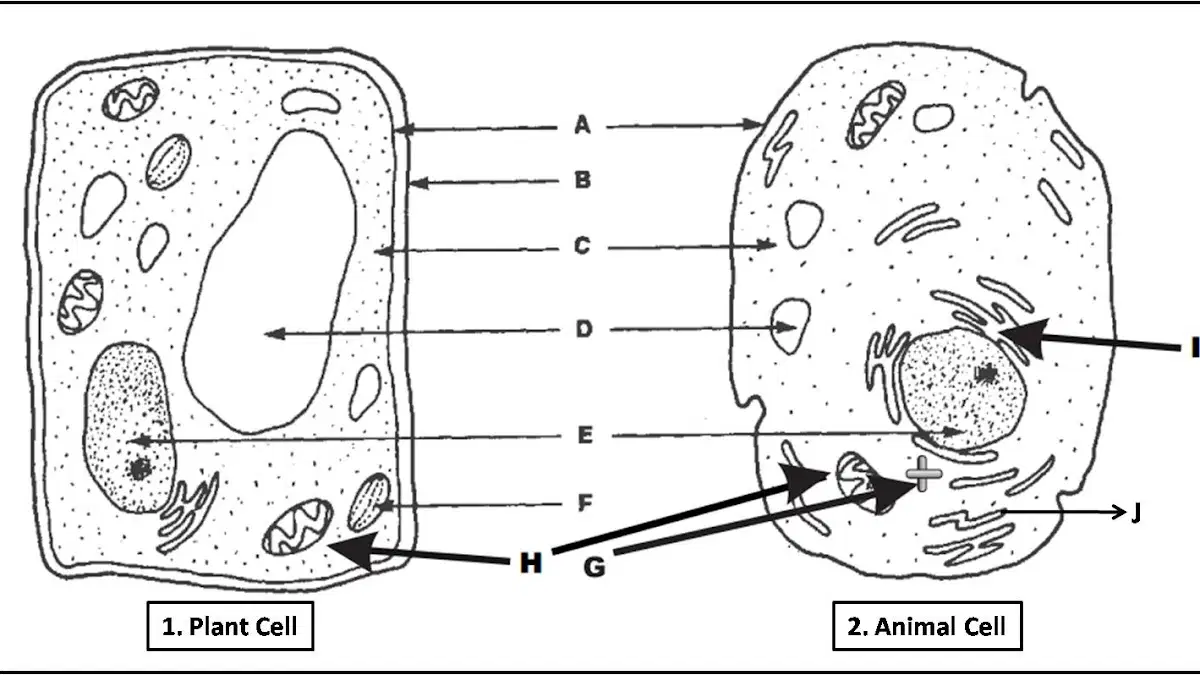
What is C?
chloroplasts
cytoplasm
vacuole
nucleus
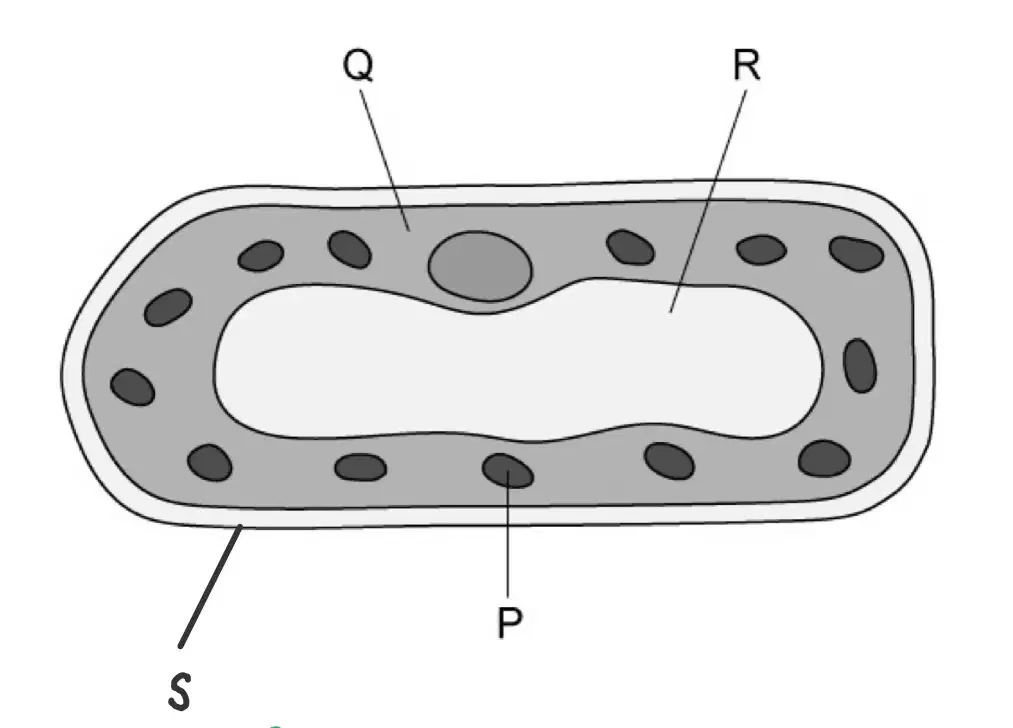
Which part of the cell labelled in the diagram is where most chemical reactions happen in a cell?
P
Q
R
S
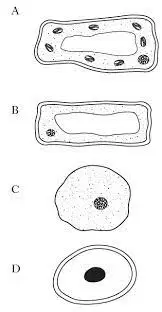
Which cell is an animal cell?
A
B
C
D

Active Transport
Osmosis

Active and passive transports both

Diffusion and osmosis are examples of (a) transport.


Osmosis is the movement of _____ across a semi-permeable membrane.
Semi-permeable means ...
some molecules can pass through but some cannot
all molecules can pass through it


In which type of cellular transport do substances move across a cell membrane without the use of energy?
Passive Transport
Active Transport
Endocytosis
Exocytosis
... is the movement of water molecules from a solution with a high concentration of water molecules to a solution with a lower concentration of water molecules, through a cell's partially permeable membrane.
(a)
True or False:
In PASSIVE TRANSPORT, energy is required.
True
False
In ACTIVE TRANSPORT, substances move from:
High concentration to low concentration
Low concentration to high concentration

Endocytosis transporting substances to inside of a cell
Facilitated Diffusion with a carrier protein
Active Transport with a carrier protein
Osmosis with a semi-permeable membrane
Which one is the definition of active transport?
movement of particles through the cell membrane from a region of lower concentration to a region of higher concentration using energy in the form of ATP.
passage of water molecules from a region of their higher concentration to a region of their lower concentration through a partially permeable membrane
net movement of molecule from a region of higher concentration to region of lower concentration. Molecule down a concentration gradient
net movement of molecule from a region of lower concentration to region of higher concentration. Molecule down a concentration gradient


Active transport across a cell membrane from low to high concentration requires (a)
During ... , substances move from low to high concentration area with the help of energy.
(a)
Active transport is the movement of large materials across a cell membrane from ______ to ______ concentration
(a)


Which choice correctly identifies the process responsible for the movement of each type of molecule represented in the diagram?
Oxygen = active transport
Oxygen = diffusion
Oxygen = active transport
Oxygen = diffusion

Which CELL contains MORE particles than are found in the surrounding solution?
Left
Center
Right


Enzymes are an example of
Lipids
Carbohydrate
Protein
Nucleic Acid
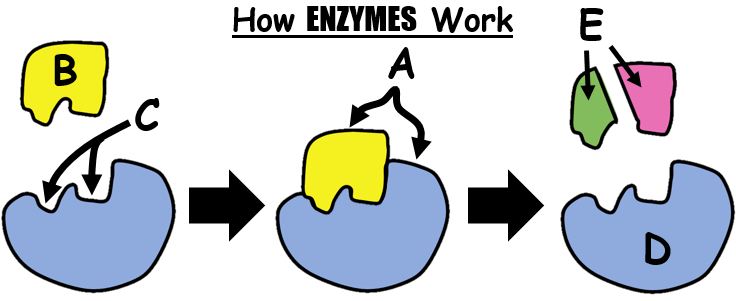
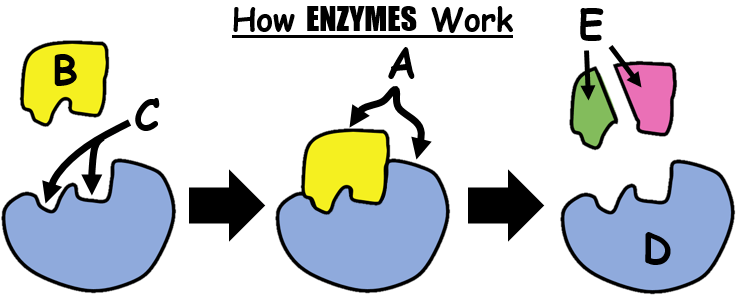
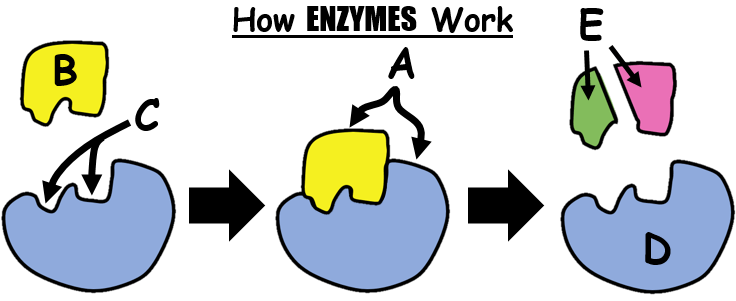
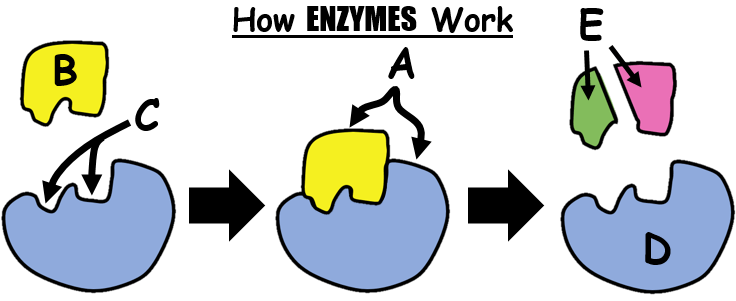
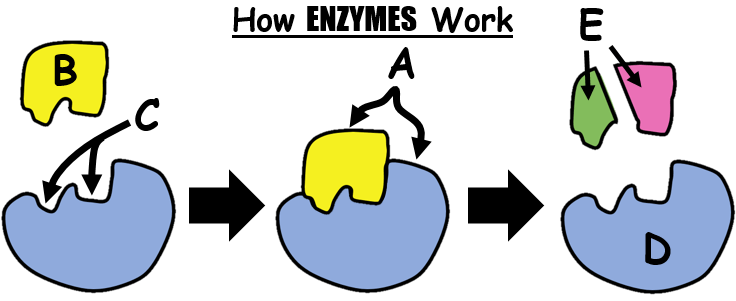
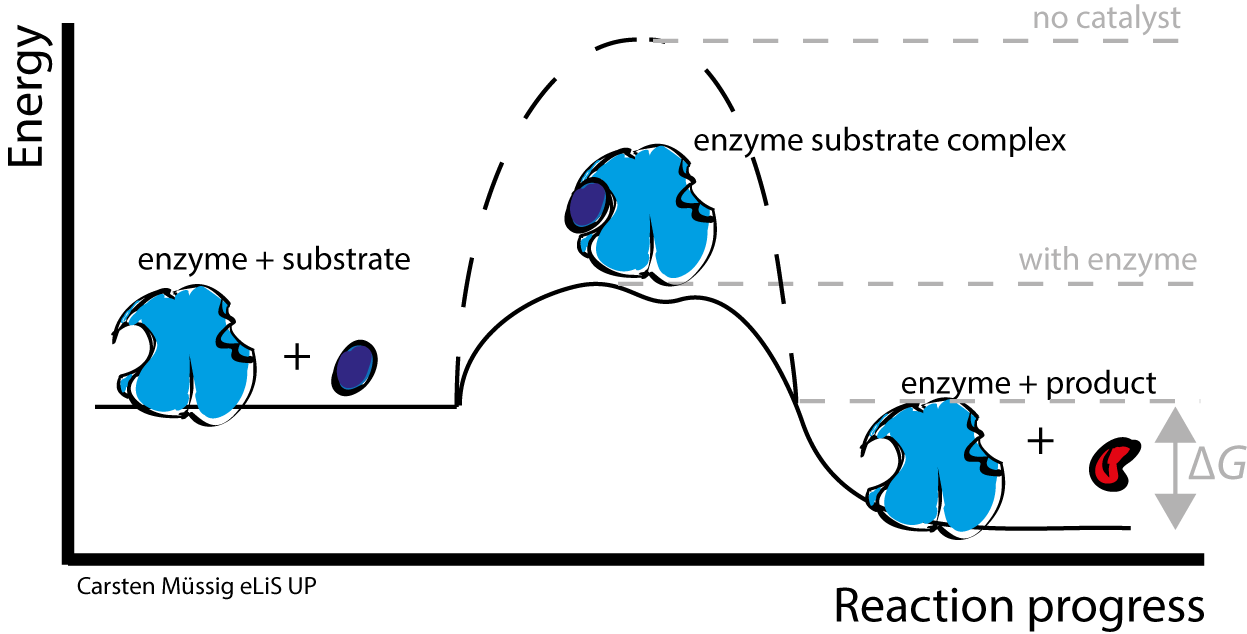
What happens when enzymes are heated to a high temperature?
The enzymes die.
The shape of the enzyme are changed and it denatures
The enzymes' amino acid sequence changes.
The enzymes remain the same
Which of the following best explains why enzymes are necessary for reactions in our cells?
The reactions are too slow to meet the needs of the cell if enzymes are missing.
Enzymes supply the oxygen necessary for the reactions.
Enzymes change reactants from solid to liquid during the reactions.
The reactions take up too much space in the cell if enzymes are missing.
Changes in pH and temperature can ___________________ an enzyme which causes it to lose its shape and affects its function.
puncture
denature
double
delete
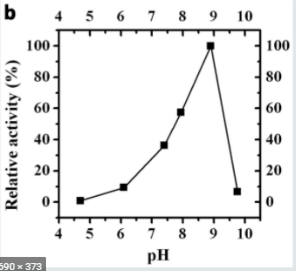
What is the optimal pH for this enzyme?
6
10
9
7
The ____________________ mechanism describes how each substrate must fit into the enzyme.
lock and key
hammer and nail
jigsaw puzzle
seesaw
Where do substrates bind to an enzyme?
calcium channels
active site
receptor molecules
voltage-gated channels

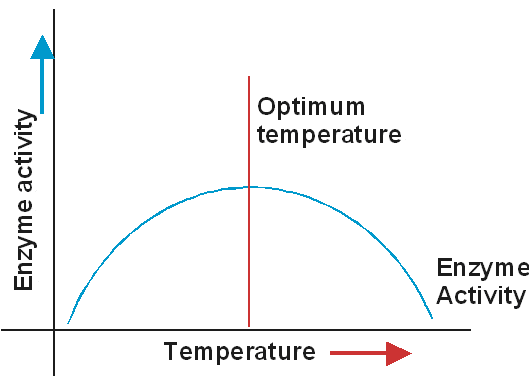
What is the optimal temperature of this enzyme?
60
40
70
30

Identify the process in the image used to transport substances into and out of cells
(a)
Identify the process that involves the net movement of water across a partially permeable membrane
Phagocytosis
Diffusion
Osmosis
Active transport

Identify the process in the image
(a)
Identify the process used to move oxygen into a cell
Osmosis
Active transport
Phagocytosis
Diffusion

Identify the structures in the image that give the lining of the small intestine a very large surface area for the absorption of digested food
(a)
Identify the process that moves substances against the concentration gradient
Active transport
Diffusion
Osmosis
Phagocytosis

Identify the structures in the image that are found in lungs and give them a very large surface area for gas exchange
(a)
Molecules and ions possess which type of energy that causes them to move randomly?
Heat
Chemical
Kinetic
Light
Identify the process that requires the cell to use energy
Diffusion
Active transport
Osmosis
Gas exchange

Identify the process in the image that has occurred due to the plant cells being placed in a very concentration salt solution
(a)
All living things are composed of one or more cells.
True
Falso
The ________ controls the movement of materials into and out of the cell.
cell membrane
nucleus
cytoplasm
mitochondrion
What structure in a plant cell enables the cell to capture energy from the Sun?
cell wall
chloroplast
mitochondrion
central vacuole
Which type of cell can make its own food?
animal
plant
In which organelle are molecules packaged in preparation for distribution throughout the cell?
mitochondrion
vacuole
cytoskeleton
Golgi apparatus
____________ is the gel-like substance found in a cell?
cytoplasm
chlorophyll
water
The _______________ surrounds the cell material.
chromosome
cell membrane
cytoplasm
Lysosomes in the cell work to
get rid of wast
provide protein
store all information
What is the basic unit of structure and function in all living things?
cell
organism
atom
plasma
The __________ is the control center of a cell.
mitochondrion
nucleus
vacuole
Which cell part protects and provides shape for a plant cell?
nucleus
mitochondrion
vacuole
cell wall
The splitting of a cell into two separate cells is
division
mitosis
diffusion
The __________ produces energy in the cell.
mitochondrion
nucleus
vacuole
What is the smallest unit of any organism that is capable of independent function?
tissue
cell
organ
muscle
The DNA is found in the ________ of a prokaryote.
cytoplasm
nucleus
An individual's "fingerprint" is carried by the
cell membrane
DNA
mitochondria
RNA
Both plant and animal cells have a cell membrane.
True
False
Which statement about plant and animal cells is correct?
Animal cells are irregular in shape; plant cells are regular in shape.
Animal cells are regular in shape; plant cells are irregular in shape.
Both animal and plant cells are irregular in shape
Both animal and plant cells are regular in shape.
Suppose you were to examine plant and animal cells under a microscope. Which structures would you find in both cell types?
cell wall, endoplasmic reticulum, and Golgi body
cell wall, cytoplasm, and Golgi body
nucleolus, ribosomes, and endoplasmic reticulum
all of the above
A cell membrane works to
store all information
give the cell support
keep thing in and out of the cell
get rid of waste
Which type of large, biological molecule are enzymes made of?
(a)
What is the name of the part of an enzyme that binds to the substrate molecule?
(a)
What is the name of the molecule that can bind to the active site of the enzyme?
(a)
What word describes any substance that speeds up a chemical reaction but do not get changed or used up themselves?
(a)
What 3 letters are found at the end of the names of most enzymes?
(a)
Which element is not found in carbohydrates?
Carbon
Nitrogen
Oxygen
Hydrogen
Which element is not common to both proteins and lipids?
Carbon
Nitrogen
Hydrogen
Oxygen
What is the name of the building block that proteins are made from?
Amino Acid
Fatty acid
Glycerol
Simple sugar
Which of the following factors would not affect the rate of an enzyme-controlled reaction?
Temperature
pH
Concentration of enzyme
Concentration of product
Concentration of substrate
Which statement is true about enzymes?
The shape of an enzyme's active site matches the shape of its substrate
Enzymes are used up in biological reactions
Enzymes work faster at higher temperatures
Every enzyme has one specific substrate that it breaks down or builds up.

The graph shows the effect of temperature on an enzyme. Which statement explains the trend from 10-70oC?
As temperature increases, enzyme activity increases
70oC is the optimum temperature for this enzyme
As temperature increases, enzymes become denatured.
As temperature increases, enzyme activity decreases.
As temperature increases, molecules gain more kinetic energy and have more successful collisions
What does the term optimum mean for enzyme temperature? Select the best description.
The lowest temperature at which the enzyme works to form enzyme-substrate complexes
The temperature which gives the highest enzyme activity forming the maximum number of enzyme-substrate complexes
The highest temperature before denaturing occurs
Which of these statements about enzymes is true?
Temperature does not affect their activity
They can be reused
They lower the activation energy of a reaction
Which statement about the optimum pH for an enzyme is correct?
It is the pH at which the enzyme's activity is greatest with the maximum number of enzyme-substrate complexes being formed
It is the same for all enzymes
It is the pH at which the enzyme cannot be damaged by heat
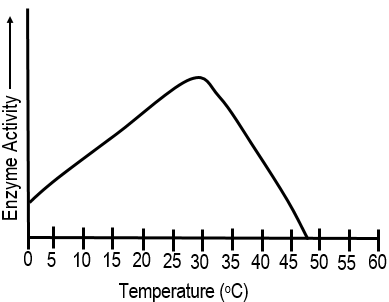

What is the optimal pH for this enzyme?
6
10
9
7
Changes in pH and temperature can ___________________ an enzyme which causes it to lose its shape and affects its function.
puncture
denature
double
delete

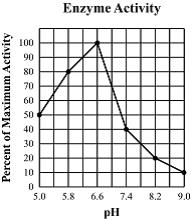
The graph shows how the activity of an enzyme changes over a range of pH values.
Which of the following conclusions can be drawn from this graph?
The optimum pH of the enzyme is 5.8
The optimum pH of the enzyme is 6.6
The enzyme’s activity continually increases as pH increases from 5.0 to 9.0
The enzyme’s activity is greater around pH of 8.0 than around pH of 5.0
Once a new product leaves an enzyme, the enzyme is unchanged and ready for the next substrate. What is this called?
fragile
reusable
specific
catalyst
At high temperatures enzyme activity declines because of:
Denaturation
Enzyme death
Movement
It doesn´t

