
 Worksheets
Earth's Rotation Revolution
Total questions: 19
Worksheet time: 12mins
The Earth’s rotation results in the day and night cycle causing the apparent movement of the Sun across the sky. Therefore, the Sun rises in the east and sets in the west.
How many hours does it take the Earth to complete one day and night cycle?
What would change if Earth rotated on its axis more slowly than it does now?
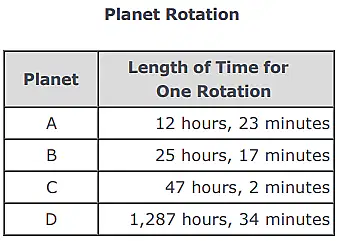
Which of the planets listed above has a length of rotation closest to the length of one rotation of the Earth?
During an investigation, students stand facing directly towards a lightbulb in the center of the room. The teacher asks the students to turn around slowly so that the light shines directly on the back of their heads.
What period of time in the day and night cycle does this part of the investigation model?
Noon 6 HOURS
Midnight 24 HOURS
Sunset or evening 12 HOURS
48 HOURS
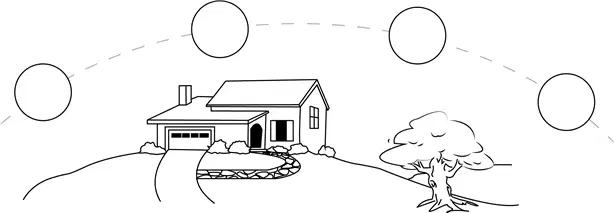
Which model below presents the most accurate explanation for the apparent movement of the Sun across the sky as shown above?
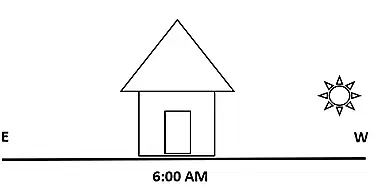
What could be done to make this diagram more accurate?
Change the time from 6:00 AM to 6:00 PM.
add clouds
replace the sun and moon
move the sun above the house
Which statement best describes why the Sun appears to be falling from the sky as day turns into night?
Which materials would most accurately model the light from the Sun causing the day / night cycle on Earth and the Moon phases?
A flashlight for the Sun, a large beach ball for the Earth, and a large beach ball for the Moon.
A flashlight for the Sun, a large beach ball for the Earth, and a small golf ball for the Moon.
A laser pointer for the Sun, a large beach ball for the Earth, and a small golf ball for the Moon.
.A laser pointer for the Sun, a large beach ball for the Earth, and a large beach ball for the Moon.
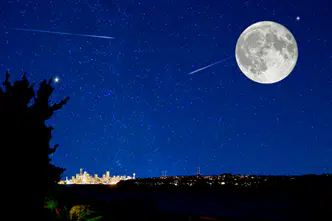
Why is the Sun NOT visible?
The Sun stops creating light at night.
That side of the Sun has rotated away from the Earth.
The Moon blocks the Sun from view.
The side of the Earth pictured has rotated away from the Sun.
Astronauts in the International Space Station observe the Earth from space. The Earth produces no light, yet can be seen in space.
What description of the properties of the solar system best explains the observations?
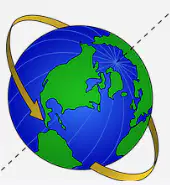
As the Earth moves in the direction of the arrows, what change will occur?
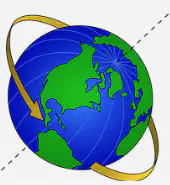
The Earth continuously rotates on its axis while moving in orbit around the Sun. About how long does it take for the Earth to make a complete rotation on its axis?
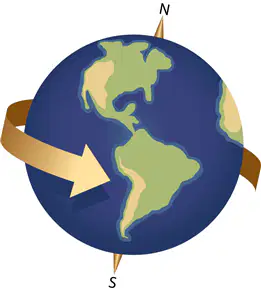
Part B
Which of these cycles is a direct result of the Earth's rotation?
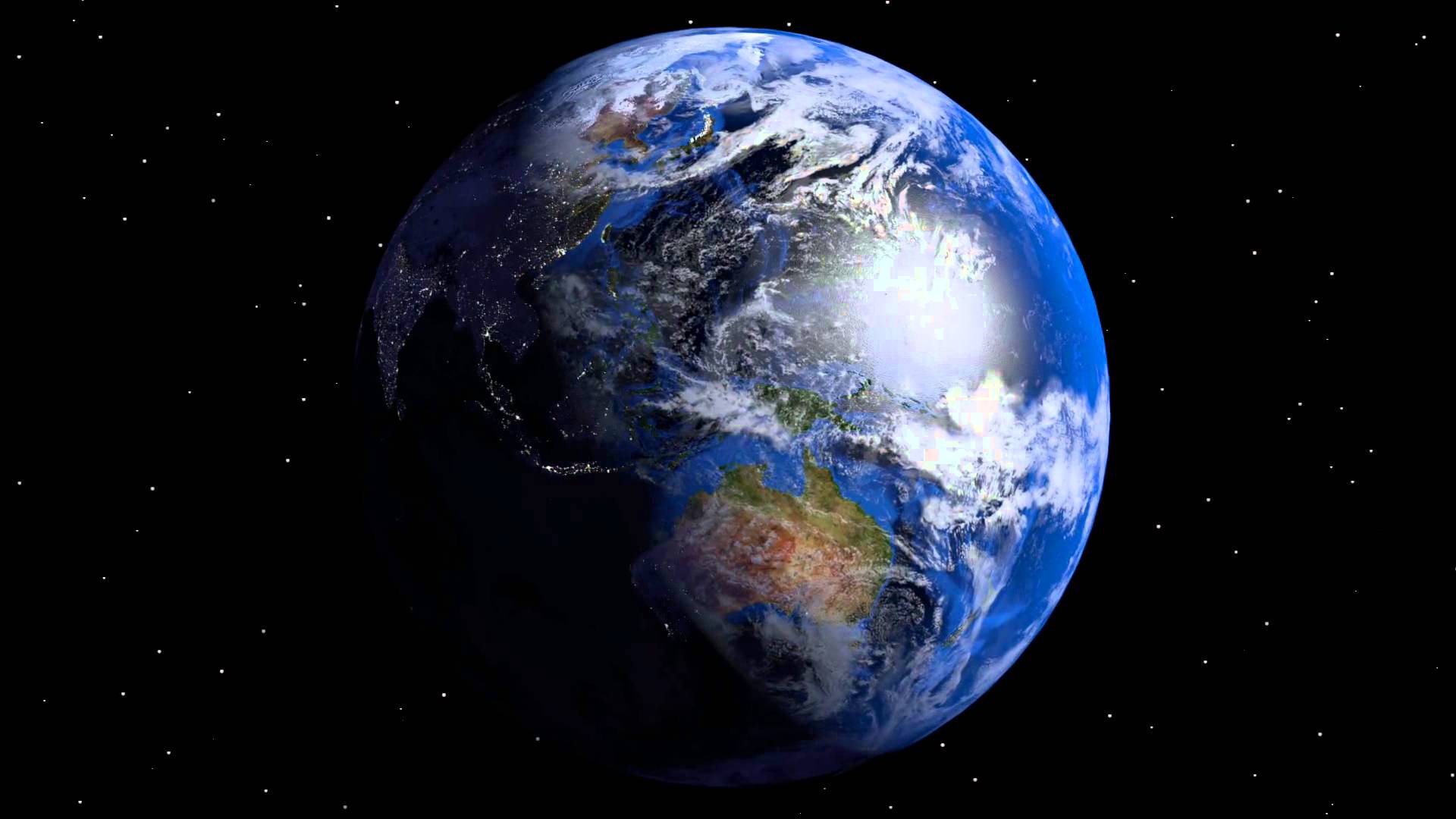

When viewed from above, the Earth revolves around the Sun in which direction? (The Earth also rotates in the same direction.)
clockwise
counterclockwise
it doesn't move
An imaginary line that Earth rotates around.
Axis
Mason Dixon Line
North Pole
Revolution
A student builds a model of the solar system that includes a sphere representing Earth. The sphere turns in a full circle on its axis. By using a model of Earth that spins on its axis, the student can best demonstrate...
the cycle of the four seasons
the aging of a star
the passing of a year
the cycle of day and night

