
 Worksheets
Quiz on the Law of Conservation of Mass
Total questions: 22
Worksheet time: 4hrs 40mins

The amount of matter in an object is its (a) .

Write a balanced equation for the assembly of a bicycle. (a) + (b) + (c) + (d) → (e)
FW2HP2

Please state the Law of Conservation of Mass in your own words.

Mass is conserved in physical but not chemical changes in matter.
True
False
New substances are formed when the (a) of substances are rearranged during a (b) reaction. The law of (c) of mass states that the total number of atoms of each (d) is not created or destroyed during a chemical reaction. Instead, the atoms are (e) to form new substances.

When a candle burns, all that remains is a small puddle of wax. The puddle of wax has less mass than the original candle. The rest of the candle’s mass was
destroyed
changed to gasses
measured incorrectly
none of above

A puddle of water slowly shrinks in the sun. After a few hours, the puddle has dried up completely. Is this an exception to the Law of Conservation of Mass? Please explain.

Fire destroys the mass of the fuel that it burns.
True
False

Assume that 3 grams of compound A reacts with 6 grams of compound B.
A solid white precipitate is produced during this reaction, and some gas is also released. The precipitate has a mass of 2 g. What is the mass of the gas that was produced? Please show all your work.

The products of a chemical reaction can never have greater mass than the reactants.
True
False
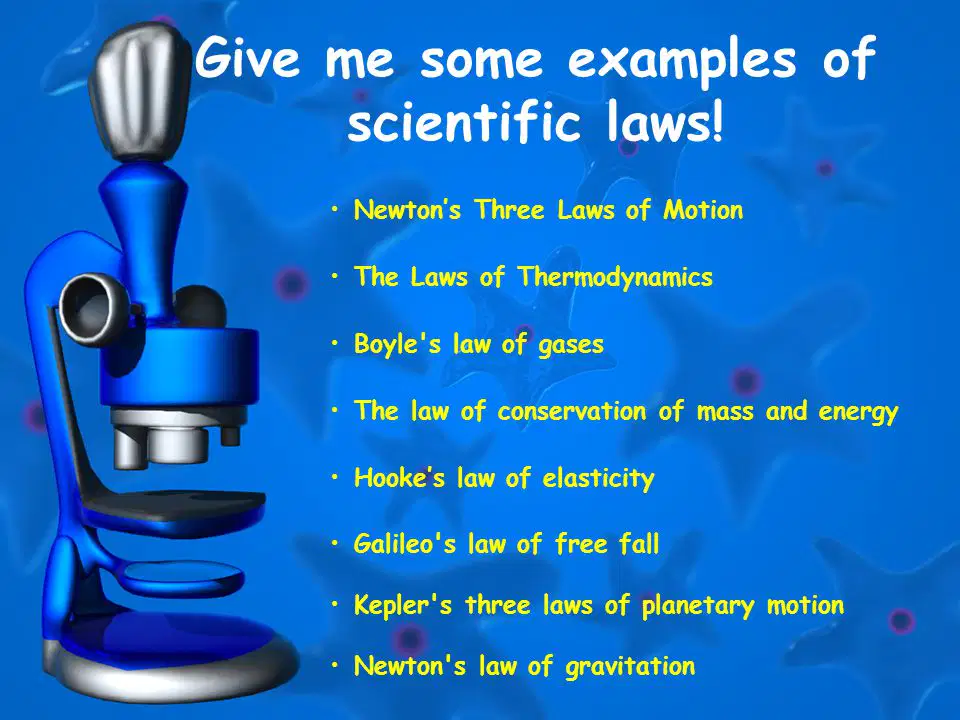
In science, a law is
A rule governing what you are permitted to do.
A general rule about how the physical universe works.
A legal document that describes a rule of conduct.
A statute enacted by a legislative body.
What is true about a substance with a lot of mass?
It contains a lot of matter.
It has a large volume.
It has a high density of particles.
It has low frequency.

Sodium & chlorine combine to form sodium chloride, known as table salt. Na and Cl are:
Producers
Products
Reactionaries
Reactants

4 grams of hydrogen and 32 grams of oxygen will combine to form:
36 grams of water
28 grams of hydroxide
32 grams of oxygen
36 grams of deuterium
Identify which are the products and reactants
Which of the following describes a chemical reaction?
Oxygen interacts with iron to form rust
Ice melts into liquid water
Frozen carbon dioxide sublimates into gas
Rocks split apart after myriad years of weathering

Balance this equation:
(a) Fe + (b) O2 --> (c) Fe2O3
How many HCl molecules do you need to balance this equation?
2Mg + (a) HCl ---> 2MgCl2 + 2H2

Number of C: (a)
Number of H: (b)
Number of O: (c)
Balance this equation (a) N2 + (b) H2 --> (c) NH3
In 3P2O5, there are (a) phosphorus (P) atoms and (b) oxygen (O) atoms.
Drag and drop the coefficients that balance this equation 2 Fe + (a) Cl2 ----> (b) FeCl3

